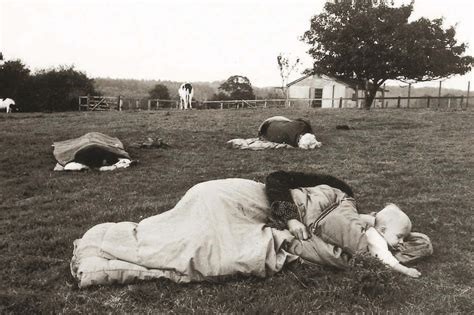
The picture is of my first wife Signe sleeping in a field with Storm, my daughter, in 1974. I have never seen this photo before. Storm died of cot death that winter. Someone posted the picture on Facebook today. Not that they realised. People slept in the field at Purdies farm when participating in Susan Hiller’s Dream Mapping. This was in the art festival at Purdies – where the Theatre of Mistakes was based. Here you can find the blog of The Theatre of Mistakes.
The farm belonged to my mother. My fiction – inspired by Storm – is THE DISTANCE MEASURED IN DAYS – now published (1921) by Grey Suit Editions UK.
There is also The Distance Measured in Days – which is actually an early version – done as an e-book: it is on my blog under fiction.
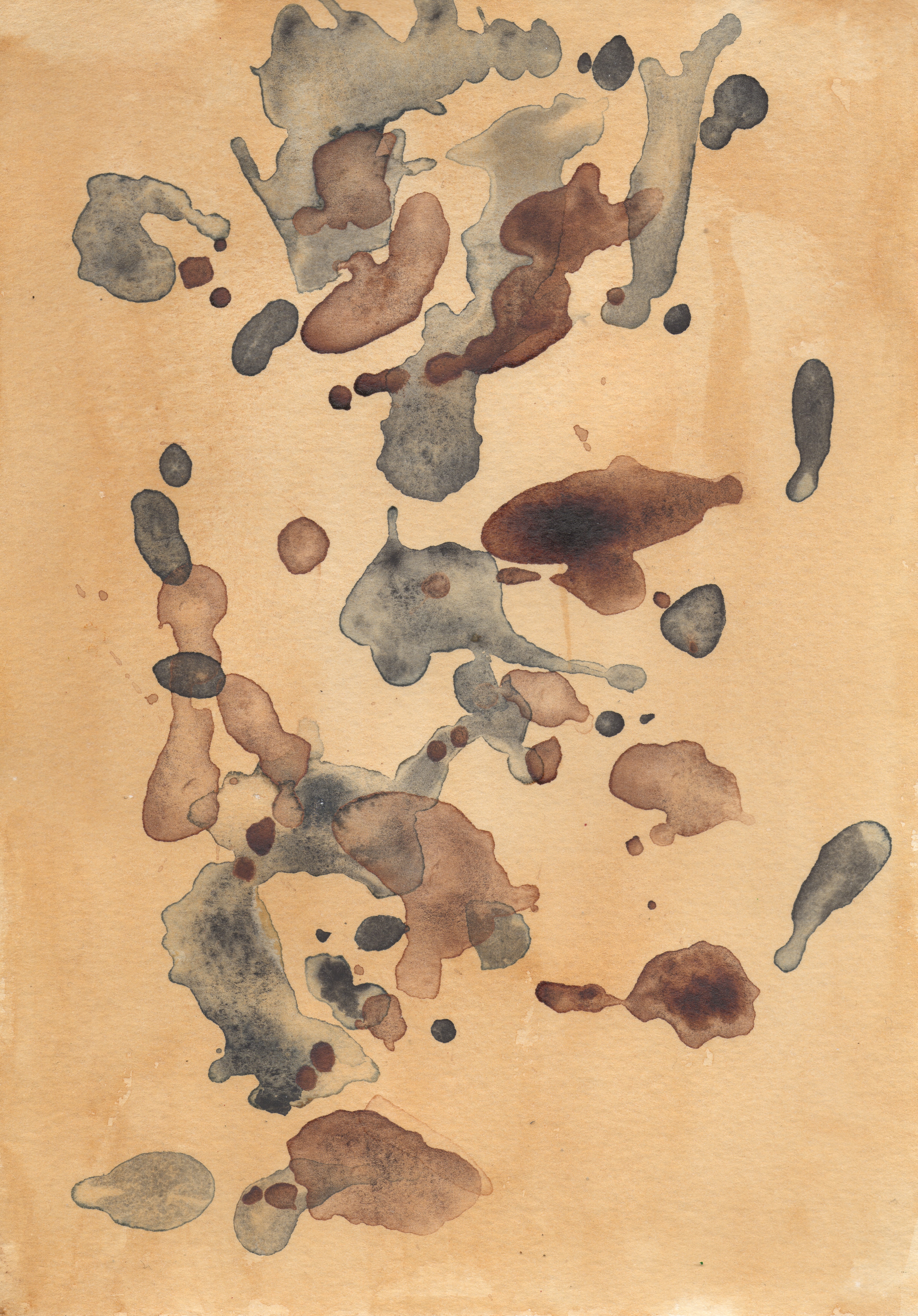
“Look at walls splashed with a number of stains, or stones of various mixed colours. If you have to invent some scene, you can see there resemblances to a number of landscapes, adorned with mountains, rivers, rocks, trees, great plains, valleys and hills, in various ways. Also you can see various battles, and lively postures of strange figures, expressions on faces, costumes and an infinite number of things, which you can reduce to good integrated form” (Leonardo da Vinci)
Still, according to Wollheim, a difference remains between pure imaginative projection into or onto things, and pictorial seeing-in. Thus in order to avoid the impression of arbitrariness, Wollheim is required to introduce a further element: while in standard perception, we may virtually project everything into everything, pictorial seeing-in is only successful, when we see in the image what the artist wanted us to see in it. Or, to put it yet differently, Wollheim speaks of a “standard of correctness”, and this standard, he goes on explaining, is entirely defined by “the maker of the representation, or ‘the artist’ as he is usually called” (Wollheim 1980, 205). A depictional seeing is only successful if and when we see exactly what the maker or ‘artist’ wanted us to see in it.
From Seeing-as, seeing-in, seeing-with: Looking through pictures (2020)
Emmanuel Alloa – [from a significantly expanded version of a paper first published in the Proceedings of the 33rd International Ludwig Wittgenstein-Symposium in Kirchberg, vol. 2, 2011. New version forthcoming in: Handbook of Image Studies, ed. K. Purgar, Palgrave Macmillan 2021].
I question Wollheim’s assertion that a depictional seeing is only successful if and when we see exactly what the maker or ‘artist’ wanted us to see in it.I also question the parallel assertion that a narrative poem is only successful when we grasp exactly what the poet wanted us to understand from it. Wollheim covers his remark by adding “depictional” – as I add the word “narrative” – but I am not arguing for abstraction. Jackson Pollock pushed figuration beyond the figurative, just as Mondrian had done years before, with his “abstracting” colours, shapes and movement from an apple-tree.
Sponsored largely by the CIA, with the aim of proving to the Soviets that Western artists were free to do whatever they liked (blithely ignoring the fact that there was plenty of abstraction actually being done by both Russian and Serbian artists during the cold war period), husky New Yorkers were cocks of the walk in the art world, back in the day. But the US very largely ignored European innovators, such as Henri Michaux, who were coming from a different angle to that of abstract expressionism – as defined by Clement Greenberg.Whereas in the “action painting”, sometimes called “gestural abstraction”, associated with Pollock, paint may be spontaneously dribbled, splashed or smeared onto the canvas, rather than being applied with a specific figurative purpose in mind, the resulting work was supposed to emphasize the physical act of painting itself as an essential aspect of the finished work or concern of its creator. Stuart Brisley made very energetic performance art out of painterly action. The image was mainly of him in the action of his making his painting, while his result was an abstract record of his effort.
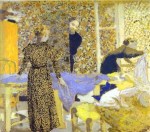
This is not the case with Michaux. Inspired by Mescalin, Michaux’s dribbles are oracular. The difference is that the French painter’s work has more in common with Aldous Huxley’s essays – The Gates of Perception and Heaven and Hell – than with Greenberg’s theoretical emphasis on the materiality of the result. Huxley reminds us of the work of Vuillard, of how pattern can materialise into a scenic reality – as with pointillism. We put the image together in our minds.
Remember that Friedrich von Schlegel, the brilliant theorist of Jena romanticism wrote an essay On Incomprehensibility. Schlegel maintained that all art should be incomprehensible when viewed in its own time, and that ensuing generations should be able to discover meanings in the work that were unapparent to its initial audience, for this would extend the duration of its significance.
What I am arguing here is that Michaux’s version of the incomprehensible is fundamentally opposed to the incomprehensibility we encounter in a Jackson Pollock. Michaux’s hallucinogenic ink marks are suggestive. We see into his paintings, and we see that which we project through our own imaginations – which may not be what the artist “meant us to see” – indeed Michaux is not asserting intention – as Wollheim would have the artist do. There is an aspect here of an artistic game – as in the work of Arcimboldo – where vegetables may become a face. But with Arcimboldo, as with Escher later, the engagement in a visual game is too deliberate to be considered a result generated by mindlessness.
In “psycho-paintings” such as those by Michaux, the artist relinquishes control. Yet street scenes emerge, crowds cross traffic-lights. Imaginary writing suggests unreadable poetry. In other work in this genre, blots become islands, paintings seem like maps. Where Pollock loathed the idea that a viewer might see a cow in one of his action paintings, having pushed as far as he could into abstraction to release himself from the figurative, Michaux employs abstraction to release the suggestions that may be perceived in his fields of stains and squiggles – and that demonstrates a fundamental difference between European modernism and North American modernism in the post-war period.
I think it is this that has enabled artists to perceive visions in the anti-picturesque. Pieter de Hooch could see something wonderful to paint in the corner of some dingy yard. John Ashbery possessed a wonderful painting by Jane Frielicher which was simply the table she used as the ‘arena’ for painting – it looks as if it has a marble top which she uses as a palette, and there are jars filled with brushes and squeezed tubes and a roll of masking tape.
Incarcerated in a hostile country during WW2, and rendered catatonic by circumstance, Vaslav Nijinsky made drawings which are like dances for his hands. They read as if they were sketches for choreography. The automatic methods that certain artists employ enable the viewer to plumb barely considered fields of figuration.
x x x
I shake drops of water out of a salt-cellar I keep for this purpose. I take a brush and touch these drops with pigment. Other drops may be added after the initial ones have dried. And when the painting is done I am surprised to be reminded of my mother’s lab. She was a veterinary scientist, and she would let me look through her microscope at the slide below, where some aberrant cell might be infecting another. There was no intentionality involved here. And this brings up another issue: I can’t see what I am getting at while I am doing it!
This brings us back to the visions generated by hashish, mescaline, peyote, lysergic acid or what you will. It is shamanistic art. Visionary painting. As for myself, I tend not to get stoned when I engage in making visual art or poetry. Instead, there is an engagement with the process, the washes, the splatters and bleeds, and sometimes, if working while the paint already on the sheet is still wet, I have no idea what will result when everything dries. It is like “the fog of war” – and the notion that a great general can get an idea of what is going on in the turmoil in a coup d’oeil, at a glance – not when his adjutant brings him the stats. Even his glance is more of an instinctual hunch, which he gets to, whichever way he looks at the battlefield. And similarly, with art done in this way, why should one establish a way up?
And so, I accept the blindness. And I imagine a story by Borges – about a painter who began on a canvas he could never find the way out of. In the essay quoted above, Emmanuel Alloa alludes to something perhaps being got at here: “Some artists may spectacularly fail in offering an artefact that would enable them to realize their intention – most famously, Balzac’s painter Frenhofer in The Unknown Masterpiece who kept covering his canvas to the point of unrecognizability.”
It is possible that the cave people painted in the dark. After all, there is very little soot from torches on the ceilings of the caves. Whether true or not, I like the idea of painting in the dark. And sometimes, I admit, I get stoned in order to look at what I have ended up with, after it is done. I like to be surprised, by my own work as much as by the work of others. So now perhaps you can see why I take issue with Wollheim’s intentionality.
x x x
Can a lack of intentionality be applied to writing – streams of consciousness, automatic writing? The trouble, as I see it, is that words have defined edges. Thus they are easily recruited into sentences and distinct concepts. Streams of consciousness do not necessarily get away from deliberation. Of course there can be word games, so favoured by the fans of Oulipo – but it can all get a bit too neat, while the game-aspect can become predictable, and instead of mindlessness we get artfulness (as with Escher and Arcimboldo). Both music and painting can be more fluid than verbal contiguity, and the fluidity allows for a wealth of accidents, messes, mixtures of this and that.
Well, I have pondered this question for years, and I have engaged in many forms of abstract and experimental writing but I still find the notion of “unintentional poetry” enigmatic. Rhyme introduces chance into verse, for sure, and the repetitions of a sestina may steer the poet towards the unexpected phrase, but it still feels more difficult to evade the conceptual – since the sentence itself is a concept. Concrete poetry fell between two stools – between being a poem and being a picture. Is there any way to do it, to create accidents with language as Michaux can create accidents in ink?
I turn the question inside out and consider visual forms which do not allow for plastic fluidity. Mosaics for instance, or, in today’s terms, digital imaging. In both cases, the image is created by discrete ‘bits’. Surely, in the case of working with the tesserae that make up a mosaic, a mindless way of working could be applied? This leads me on to consider the speculum form hit upon by Julia Copus, in which the lines of verse one are simply repeated in reverse in verse two. The speculum is closely related to a form I named a statheron – after the Greek word for balance. In a statheron, there are no remainders. A word must be used twice or an equal number of times. It cannot be used an odd number of times. So you can have fourteen definite articles, but not thirteen. You can use the word ‘smile’ twice, or four times, but not three times. A speculum is obviously a statheron. Taking a hint from pointillism, one might be able to create poems mindlessly by assembling varying amounts of similar words – so we are not talking about statherons, strictly speaking, just making poems out of a variety of heaps of the same word. Seven ‘smiles’, five definite articles, three identical gerunds, a single use of the word “tomato”… and so on. Thus one might assemble a palette of words, even employing some chance method to do so, and generate a poem without intention but with a limited vocabulary. Using exactly the same heaps of words, one might generate a second verse. Perhaps in this way one might end up with a mosaic which generated the meanings the reader projected into it. At least it might circumvent the intentionality Wollheim was eager to establish in visual art; an intentionality insisted on by F. R. Leavis and reiterated so meanly in the field of poetry by Ian Hamilton and his cronies, in the latter half of the last century.
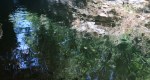
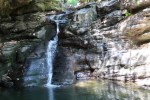
ALBI
At a pool where the fall we divine shakes a radius
That supports water-boatmen, butterflies practise their dances.
Kayak-balanced rapids cannot spin a broken
European relationship which a precarious trunk
Bound by briars requires to clear the surface. Dangle this reflection.
x
Kicking up her shins, she demonstrates the flutter of it.
Days in garlic flavour foetal escargots. Their spines
Prove drunk on one rotating axis. The butterflies jiggle a jungle.
Next, a rodent traces a maze through the trellis above us.
Me, I follow her notch through deeper paths,
x
While on the Tarn my splashes envelop her paddle.
However much we watch the couple sidestep here,
Come hell or high water, we can’t use this winding back.
The hornet drunk on rotting figs didn’t mean to share my trouser leg.
Strangling a fallen trunk, vines in spirals riddle my bons mots.
x
Situations such as shooting rapids spin her kayak, winding back
The trick of it in garlic. Now a peeper traces aphids through the jungle.
Water-boatmen share the pool with a creeper. Watching airborne seeds,
I bungle my share of our feet. What rotates this radius? Your torque.
The buoy tethered to a river-bed spins as it floats while
x
Grounded to a theme sunk in deeper situations winding back
Its chain. Walk to her beat. Share the river’s ground.
We gaze out at a hush. A stationary surface. Escargots ooze
Up a trunk rotting below a clutter of butterflies – drunk splashes
Of white which deeper clumps accentuate here. Her leg
x
In spins, her notch in torque, she demonstrates the trick.
Next, our fallen river floats into a European pool
Sharing a botch of kayaks. He capsizes. My kayak grates on a rock.
Spiral bungle mashes this botch into a crisis.
Now a rotting clump accentuates aphids, hornet-hell.
x
Are we as amazed by it as the rodent is by our dance?
Axis is a balanced air where no burns of the shins occur.
How figs swell perpetuates their hornet relationship.
By our bons mots we reflect our European roots,
These being as precarious as the surface is for water-boatmen.
x
Anthony Howell
If you got this far you may enjoy the accompanying slideshow
The days are mirrors, wall to wall, behind barres…
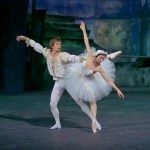
Margot appears in our boys’ class.
Come, she says, I need to practise for Giselle.
Have we heard correctly?
x
Yes. She beckons…me, and maybe Nick.
She offers hands. Each cups her underneath.
We lift, that is, she flies up into our palms.
Release the hands. Above, she lifts her arms.
x
Then she alights, she thanks us, then is gone.
Later, from the wings, I watch her swan.
Rudi threatens Von Rothbart, slips his crossbow
Just behind the flat, kneels on stage
x
To catch her in full flight. Then Rothbart’s back
On the ramp again. Crossbow, quick –
And Rudi has it but – it’s caught behind my leg
And there’s a crack, and he says ‘Shit’ in Russian
x
As I leap aside so that he can leap onstage and aim,
Crossbow mercifully intact. Thankful for that,
I retire to the peasants’ basement dressing-room,
As Tchaikovsky culminates over the tannoy.
****
Excerpts of a letter Rudolf Nureyev wrote, to the dance community about his own life as a dancer, while dying of AIDS:
“It was the smell of my skin changing, it was getting ready before class, it was running away from school and after working in the fields with my dad because we were ten brothers, walking those two kilometers to dance school.
I would never have been a dancer, I couldn’t afford this dream, but I was there, with my shoes worn on my feet, with my body opening to music, with the breath making me above the clouds. It was the sense I gave to my being, it was standing there and making my muscles words and poetry, it was the wind in my arms, it was the other guys like me that were there and maybe wouldn’t be dancers, but we swapped the sweat, silences, barely.
For thirteen years I studied and worked, no auditions, nothing, because I needed my arms to work in the fields. But I didn’t care: I learned to dance and dance because it was impossible for me not to do it, it was impossible for me to think I was elsewhere, not to feel the earth transforming under my feet plants, impossible not to get lost in music, impossible not not to get lost in music using my eyes to look in the mirror, to try new steps.
Everyday I woke up thinking about the moment I would put my feet inside my slippers and do everything by tasting that moment. And when I was there, with the smell of camphor, wood, tights, I was an eagle on the rooftop of the world, I was the poet among poets, I was everywhere and I was everything.
I remember a ballerina Elèna Vadislowa, rich family, well taken care of, beautiful. She wanted to dance as much as I did, but later I realized it wasn’t like that. She danced for all the auditions, for the end of the course show, for the teachers watching her, to pay tribute to her beauty.
Two years prepared for the Djenko contest. The expectations were all about her. Two years she sacrificed part of this life. She didn’t win the contest. She stopped dancing, forever. She didn’t resist. That was the difference between me and her. I used to dance because it was my creed, my need, my words that I didn’t speak, my struggle, my poverty, my crying. I used to dance because only there my being broke the limits of my social condition, my shyness, my shame.
I used to dance and I was with the universe in my hands, and, while I was at school, I was studying, arraising the fields at six am, my mind endured because it was drunk with my body capturing the air.
I was poor, and they paraded in front of me, guys performing for pageants, they had new clothes, they made trips. I didn’t suffer from it, my suffering would have been stopping me from entering the hall and feeling my sweat coming out of the pores of my face. My suffering would have been not being there, not being there, surrounded by that poetry that only the sublimation of art can give.
I was a painter, poet, sculptor. The first dancer of the year-end show got hurt. I was the only one who knew every move because I drank in, quietly, every step. They made me wear his new, shiny clothes and dictated me after thirteen years, the responsibility to demonstrate. Nothing was different in those moments I danced on stage, I was like in the hall with my clothes off. I was and I used to perform, but it was dancing that I cared.
The applause reached me far away. Behind the scenes, all I wanted was to take off the uncomfortable tights, but everyone’s compliments and I had to wait. My sleep wasn’t different from other nights. I had danced and whoever was watching me was just a cloud far away on the horizon.
From that moment my life changed, but not my passion and need to dance. I kept helping my dad in the fields even though my name was on everyone’s mouth. I became one of the brightest stars in dance.
Now I know I’m going to die, because this disease doesn’t forgive, and my body is trapped in a pram, blood doesn’t circulate, I lose weight. But the only thing that goes with me is my dance my freedom to be. I’m here, but I dance with my mind, fly beyond my words and my pain. I dance my being with the wealth I know I have and will follow me everywhere: that I have given myself the chance to exist above effort and have learned that if you experience tiredness and effort dancing, what if you dance sits for effort, if we pity our bleeding feet, if we chase only the aim and don’t understand the full and unique pleasure of moving, we don’t understand the deep essence of life, where the meaning is in its becoming and not in appearing.
Every man should dance, for life. Not being a dancer, but dancing. Who will never know the pleasure of walking into a hall with wooden bars and mirrors, who stops because they don’t get results, who always needs stimulus to love or live, hasn’t entered the depths of life, and will abandon every time life won’t give him what he wants. It’s the law of love: you love because you feel the need to do it, not to get something or to be reciprocated, otherwise you’re destined for unhappiness. I’m dying, and I thank God for giving me a body to dance so that I wouldn’t waste a moment of the wonderful gift of life.”
Thanks to Nick Graham for posting on FB
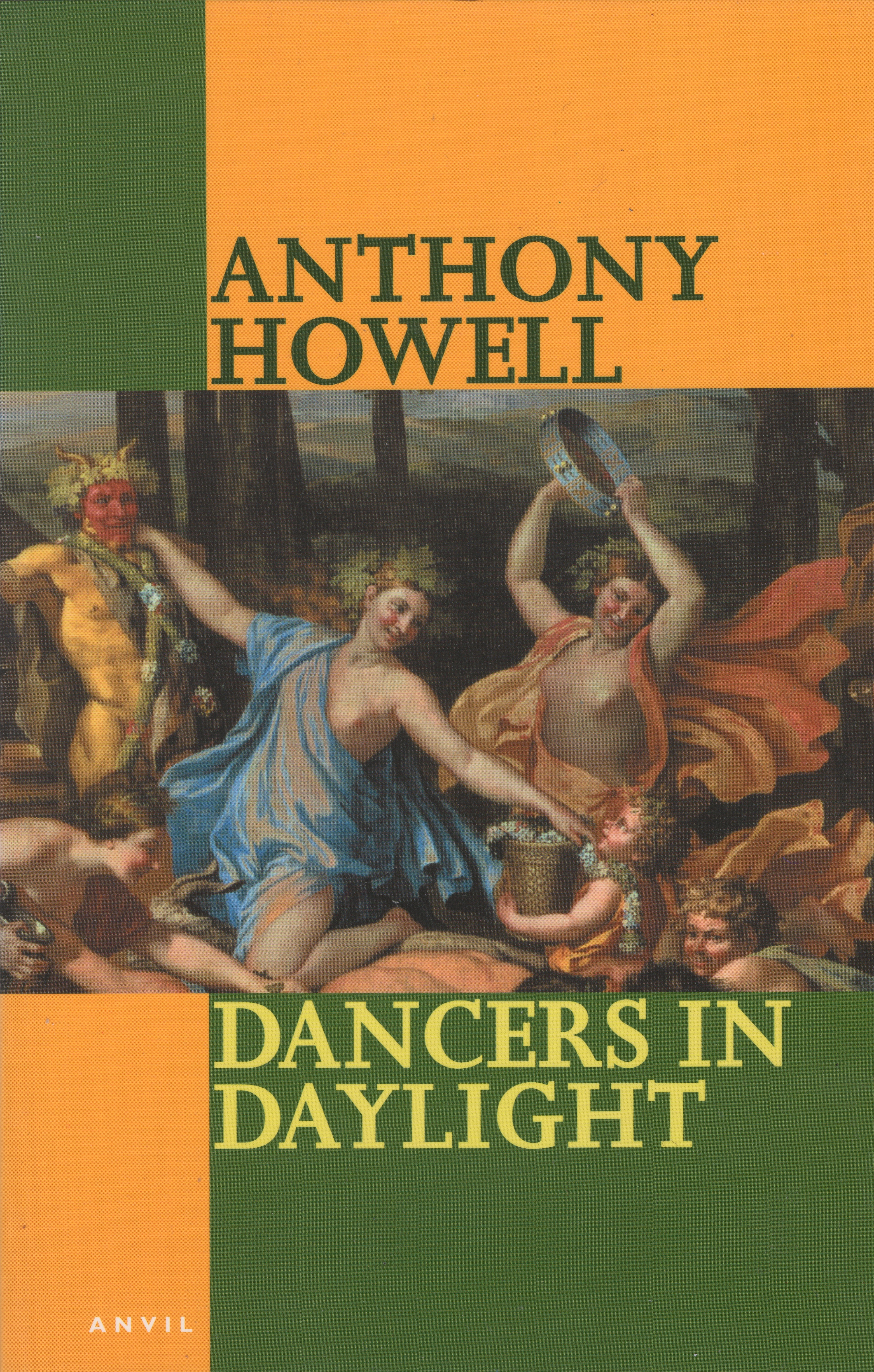
The title poem of my collectionDancers in Daylight is inspired by my own memories of this legendary dancer.
Very pleased to announce the publication of a new E-book
Temptation in Whispers – written in 1971 – and now published by Argotist Ebooks
Just click that link, then scroll down to find the ebook!
Temptation in Whispers was written at a time when I was deeply committed to the notion of “abstract poetry”. This was neither simply “sound poetry” nor “concrete poetry”. I was interested in working with limited vocabularies and permutations. In those days I was engaged in finding a way of writing in key with innovation going on in other purlieus of art – Philip Glass’s musicians had stayed in my studio on their first visit to London, and I had conducted the first British radio interview with John Ashbery. Several times I visited Clark Coolidge in New Lebanon and often hosted readings by poets associated with the New York School. My work was contemptuously dismissed by the British poetry establishment, and this manuscript proved impossible to publish.
Best read aloud, this is writing with sound, and it is aware of its “look” – but there is always an element of change that moves it, I hope, towards a readability that goes beyond the sound and the look of it. But it is more like a tapestry than something one needs to begin at the beginning of. Like a tapestry, you can begin looking at it from anywhere, yes, since it can be looked at as much, if not more, than it need be read, for I am weaving threads, assembling a mosaic of patterns.
And other novels can be found under the fiction category on this blog. There are also ebook versions of two Grey Suit publications – see https://greysuiteditions.co.uk/
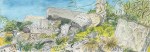
Selinunte was an ancient Greek city on the south-western coast of Sicily in Italy. Its mighty ruins remain, situated between the valleys of the Cottone and Modione rivers.
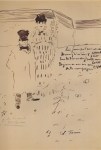
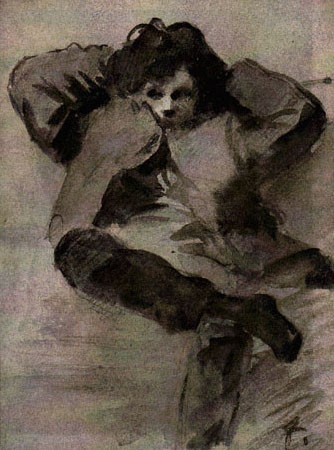
The poem came out in 1890, but was written around 1871 (time of the Franco-Prussian War – when Forain was a friend of Rimbaud and Verlaine). However it was wrongly given the title “A Rogue takes a Stroll in the Country” by Huysmans in his Modern Art. Forain did a notebook of watercolors inspired by each verse of this poem, and this is one of the two which survive. He also did this wonderful sketch of Rimbaud.
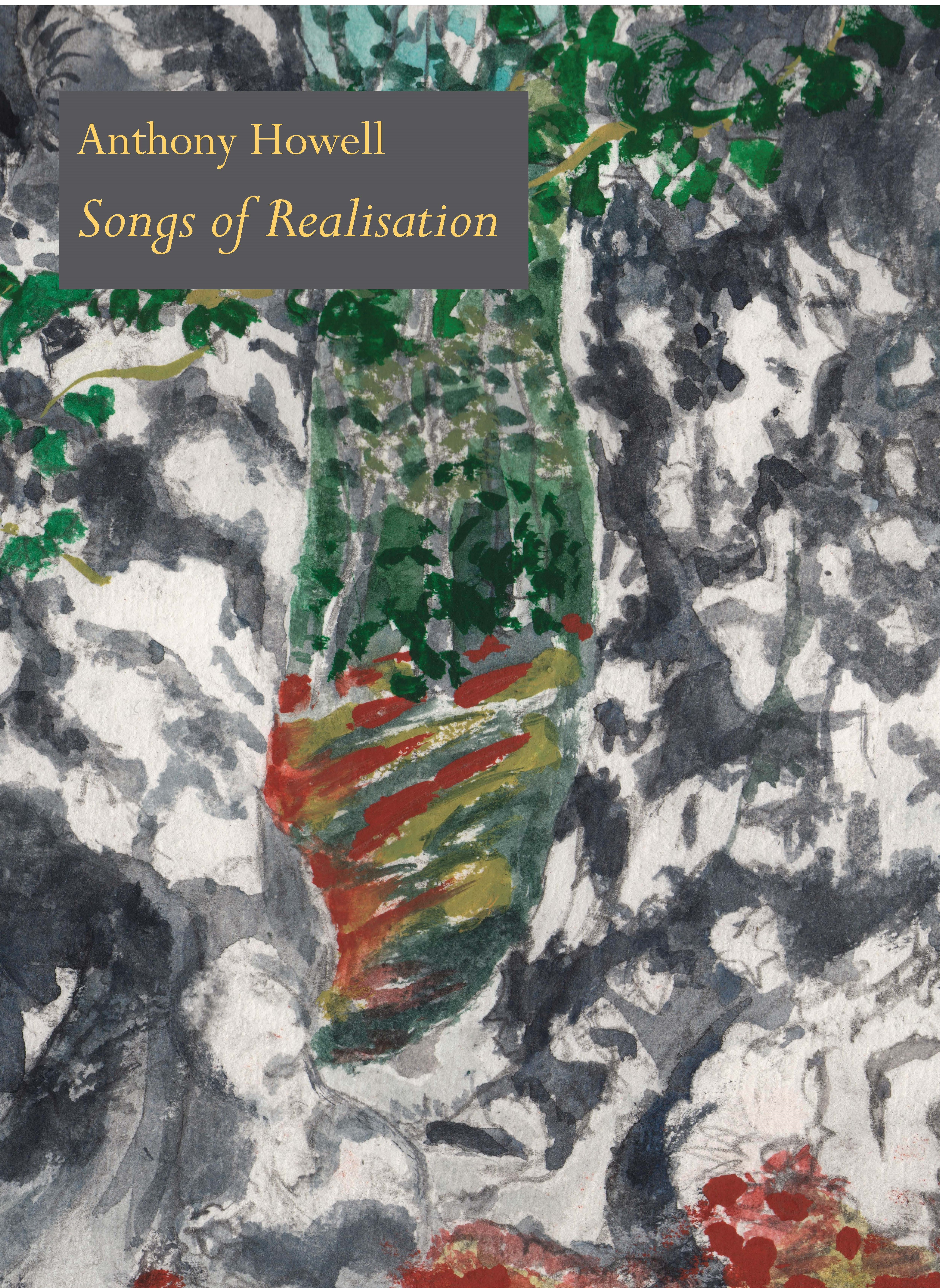
Many of my Indian readers (and others) may enjoy my most recent collection of poems – Songs of Realisation. These three long poems celebrate what is on the earth, what is below the earth and what is above the earth. At the time I wrote them I was immersed in Wendy Doniger’s book about Shiva.
The first poem is called Epping – the name of the forest close to where I live. The second is called Chauvet – after the prehistoric cave – and the third is called Hubble– after the telescope in orbit (the link to the poem is to the archive of the Journal of Poetics Research who first published it).
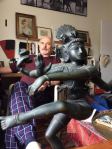
Shiva, the dancer, the epitome of equilibrium, is a leitmotif that threads through all of these poems. Here is the conclusion of Epping, as the sun goes down over a lake in the forest, and Epping forest becomes one with all forests at night:
…The underground exposed, the overhead submerged;
The living interred and the buried re-appearing.
Red ripples cross the black shallows. Beyond,
There’s a darker ink to the depths. The trees are arterial webs,
Delicate as coral in the enlarging glow. Again, there’s a violent
Beating – rapid approach from a neighbouring inlet.
The neck is spear or trumpet, sounding its attack.
x
As this aggression is acted out, the cover thickens
Into night while embers glow within the water.
Stains of lichen deepen ashore. Distant flocks wheel tighter
Then come banking into spray. Crested and be-ruffed,
The duck drift closer to the sluice. Branches dip into reflections.
The shadow of the wood is encroaching on the sunset.
And sunset striped with silhouettes engenders fearsome tigers:
x
Tigers that slide through a forest from which
The night never departs. Evergreen night below the Himalayas;
Utterest dark its natural pelt; its fastnesses like dungeons;
Its pines erect; each needled bough secreting a tart odour.
Those that are felled will be contested. Mountainous
Taiga is sacred; massed against the brink of crags;
Nourishing the cordyceps and shading the azalea.
Wild legions of spruce. Chir pine, laurel and juniper,
Stands of fir and widening sweeps of cedar.
All sorts of spiky Chinese conifer. Night woods,
Where we venture in to milk it of its turpentine –
The terebinth – bleeding the trunk, or at least,
Making it ejaculate. Or do people get high on it?
x
Scales compacted, ripening its male or female seeds,
Cone-like consciousness expands and opens to release these.
The shape of the pineal gland resembles both the clitoris
And a cone. Located at the centre of our brain,
This primal eye belongs to our earliest Self.
It opens in his trance, with his seed about to spill
As the civet cat its spray, as the terebinth its resin.
Holly as ever stiff in the leaf, waxed to its spikes,
Indomitable, and wound about his antlers by the shaman:
x
He who can cure the headaches of elephants, woader
Of spirals and whorls, crescents, worms and the eyes of wolves,
With din drums to beat out the trances that dream up
The universe in the heads of foxes: many paws go dangling
From his groin. Renewing his strength in the instant
That he spends it, yet with the force of a thwarted urge,
He loiters in the pinewoods, poaches the verderers’ wives,
And loses his lingam in order that it may become
A universal promise of fertility, priapic wand and axle
Of infinity. All generation and seeding comes to a stop
Then quickens in the winter’s heart. Stretched across zero,
His drum-skin vibrates – the universe being that membrane.
So he makes a ring of stars: his drum creates creation
With the same step as his flame reduces it to ashes.
x
The instant passes. “Now we are gamut and fulcrum
Joined in the clinch of space and time – game of a god
With his consort. Whenever we tremble with passion
The whole foundation trembles. Terrible omens arise –
A rain of bloody bones comes down, fierce winds blow,
Comets fall, and no one reads the Vedas. Once we created
Creatures prone to immortality: creatures like ourselves,
Blazing, blazing with energy, carrying skulls and drinking Soma,
Their seed drawn up in chastity, each having thousands of eyes,
Of such terrible gaze no one could look upon them:
Great tigers of great power – projecting endless desire.
Now, though, we undo desire by giving you the enjoyment:
Drink, and thirst is gone; spout, and spouting’s done.”
x
All over the earth, as the sun goes down,
Lakes and ponds turn gold. A flaming drop has entered them.
Molten water matches sky and the clouds like islands
Floating there, while islands nesting underneath
Are clouds adrift on flame. Rings where a duck has dived
Or a fish has leapt interconnect as a female sun
Tosses her last wild locks at the night. Then serpents
Writhe across silver. Deer come to drink. And a tiger
Crouches by the bank, lapping up the moonlight.
x
The book is available from the outlets below. It also contains poems about Tottenham, where I live, in London, and poems inspired by my childhood.
Click Link to High Window Press for sales details (by scrolling down for my books on the link High Window Press). This title can also be purchased from Tangoshiva on Ebay.





 anthonyhowelljournal