
Further Thoughts on Deep Art
I like to think of what I do as a departure from modernism. I do what I call Deep Art. I see its precedent in Leonardo da Vinci’s advice to gaze at a wall to imagine what you may in its blemishes and accidents, and I see it in the strange paintings of Victor Hugo, which began as ink blotches that he worked into, perhaps revealing the suggestion of a gothic landscape. Deep Art has been anticipated by the surrealists, it could be argued, though Hugo predates them, so it is actually earlier than surrealism. Basically Deep Art is going in the opposite direction to modernism. It begins with some involuntary chaotic action, splotches, blots, found chaos, a spill or even a confused photograph. The artist then works into that chaos to attempt to get somewhere. Not necessarily to a figurative result but at least to a feeling of resolution in the artist’s mind.
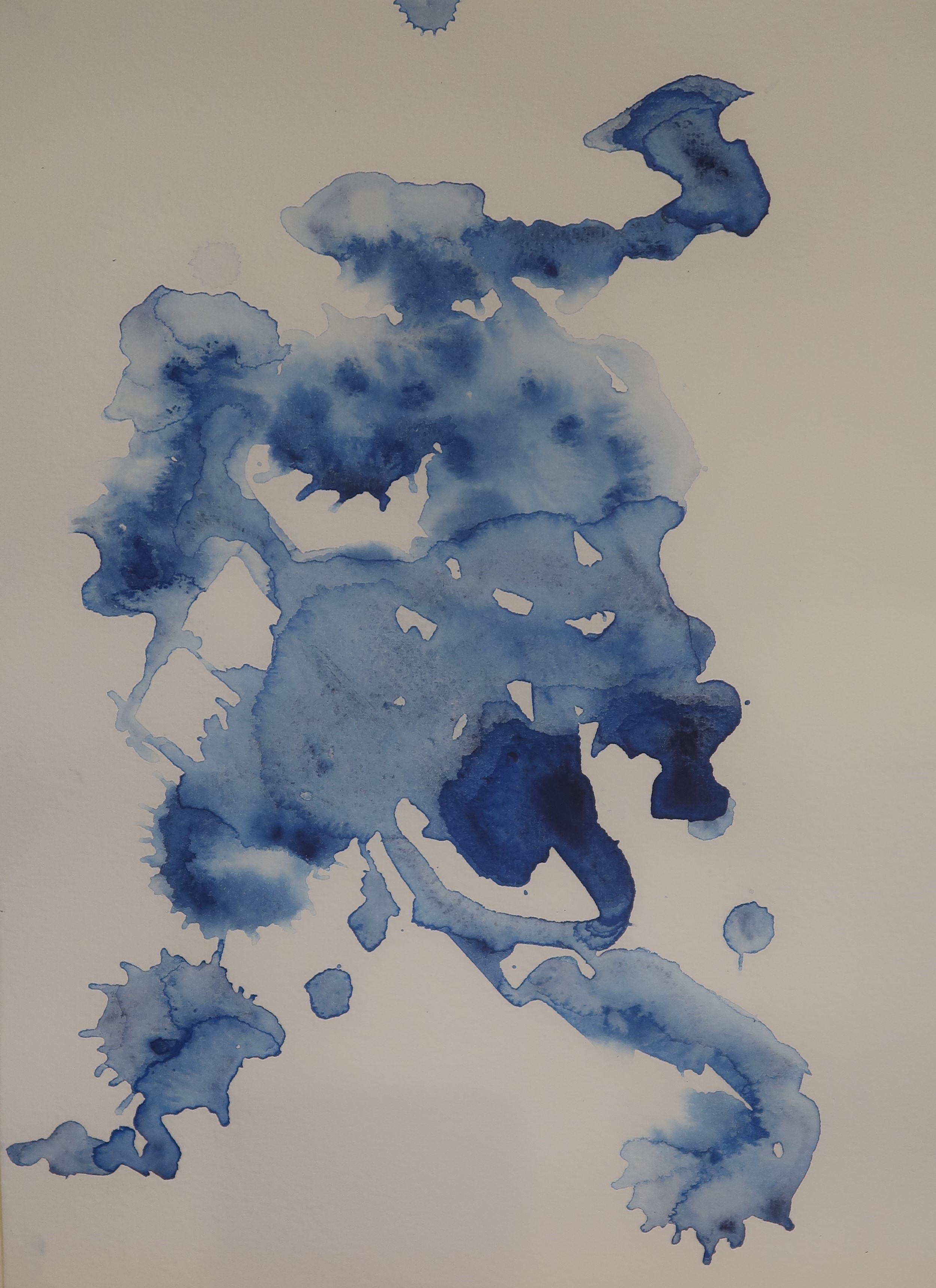
In the heyday of modernism, back in the sixties or before that, modernism embraced progress. Though causing horrific manifestations when applied to warfare, progress was still something which could lead to a Utopian reshaping of society. Progress led away from old-fashioned figurative depiction towards abstraction. So it led from articulate coherence towards a comprehension of underlying structure, rhythm and the abstraction of forms – stimulating an understanding of the nature of our senses, as exemplified by the non-narrative repetitions of Gertrude Stein or by Mondrian beginning from an apple tree and abstracting from it until he discovered in its structure some harmony of lines. Finally, artists did not want their abstractions to be “read into” – since they existed as pure rhythm; word impacting against word or colour striking colour. Jackson Pollock would have been furious if one had looked into one of his abstract paintings and said, I think I can see the backside of a cow.
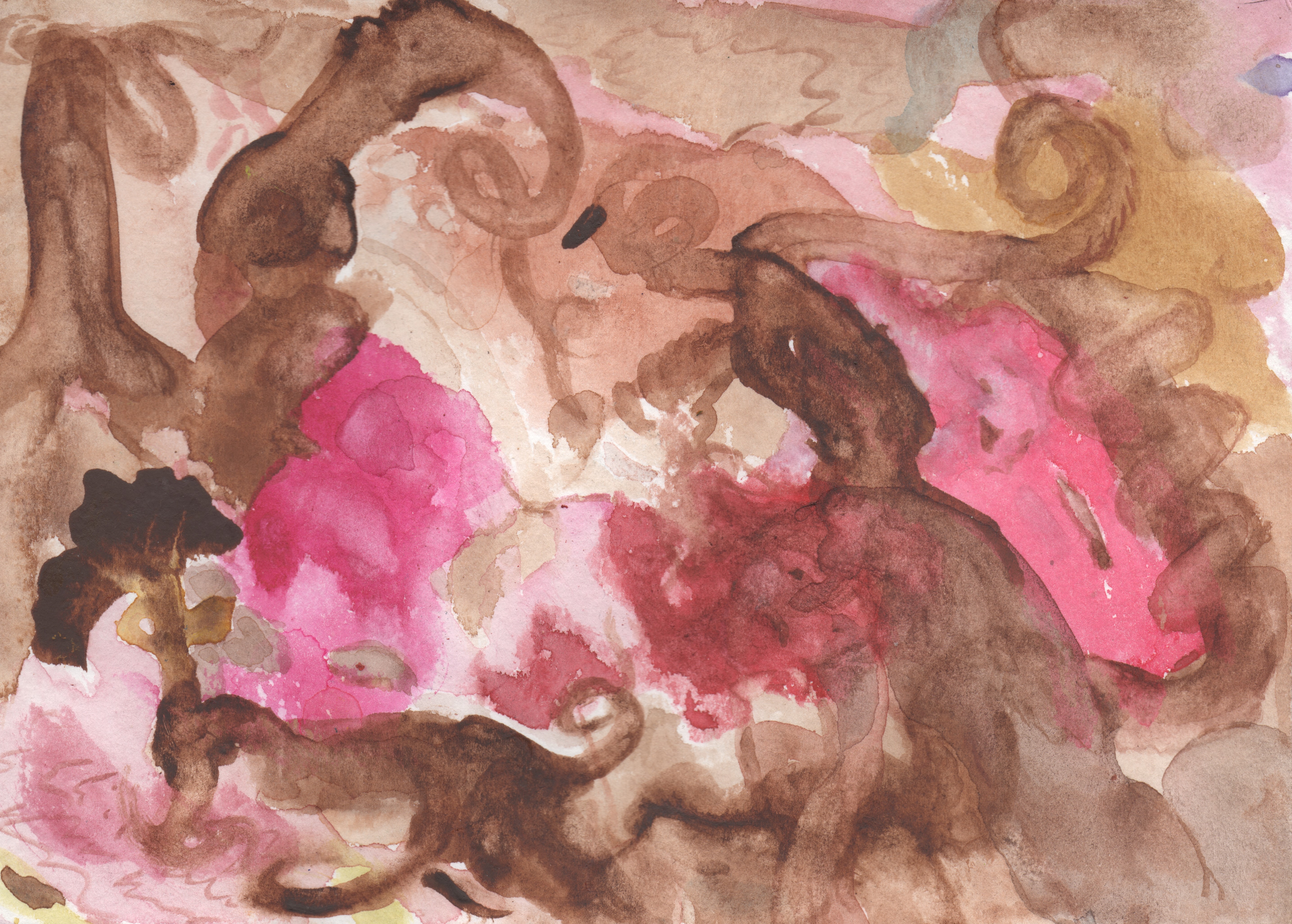
However deep art is a departure from that pursuit of progress. We no longer have faith that progress will solve the world’s ills. In fact progress chooses to abet capitalism. A world of total surveillance is portended, reinforced by AI and hostile to procreation in a post-industrial world. Progress has become a suspect word, and therefore deep art retreats from progress, not into nostalgia for a previous way of making art, but into an ideal of degrowth, epitomised by turning away from profit-motivated expansion on an ever larger scale. Instead, it focuses in on a realm where the accidental prompts suggestion. However abstract it might initially appear, a piece of deep art invites being looked into more deeply. It is like a Rorschach test – it is open to suggestion. I reiterate: deep art is a departure. It is alchemy. Its primary aim is for the artist to lose consciousness of self in the engrossment of making art. It looks into the tea-leaves. It makes something out of chaos. It welcomes quantum connections.
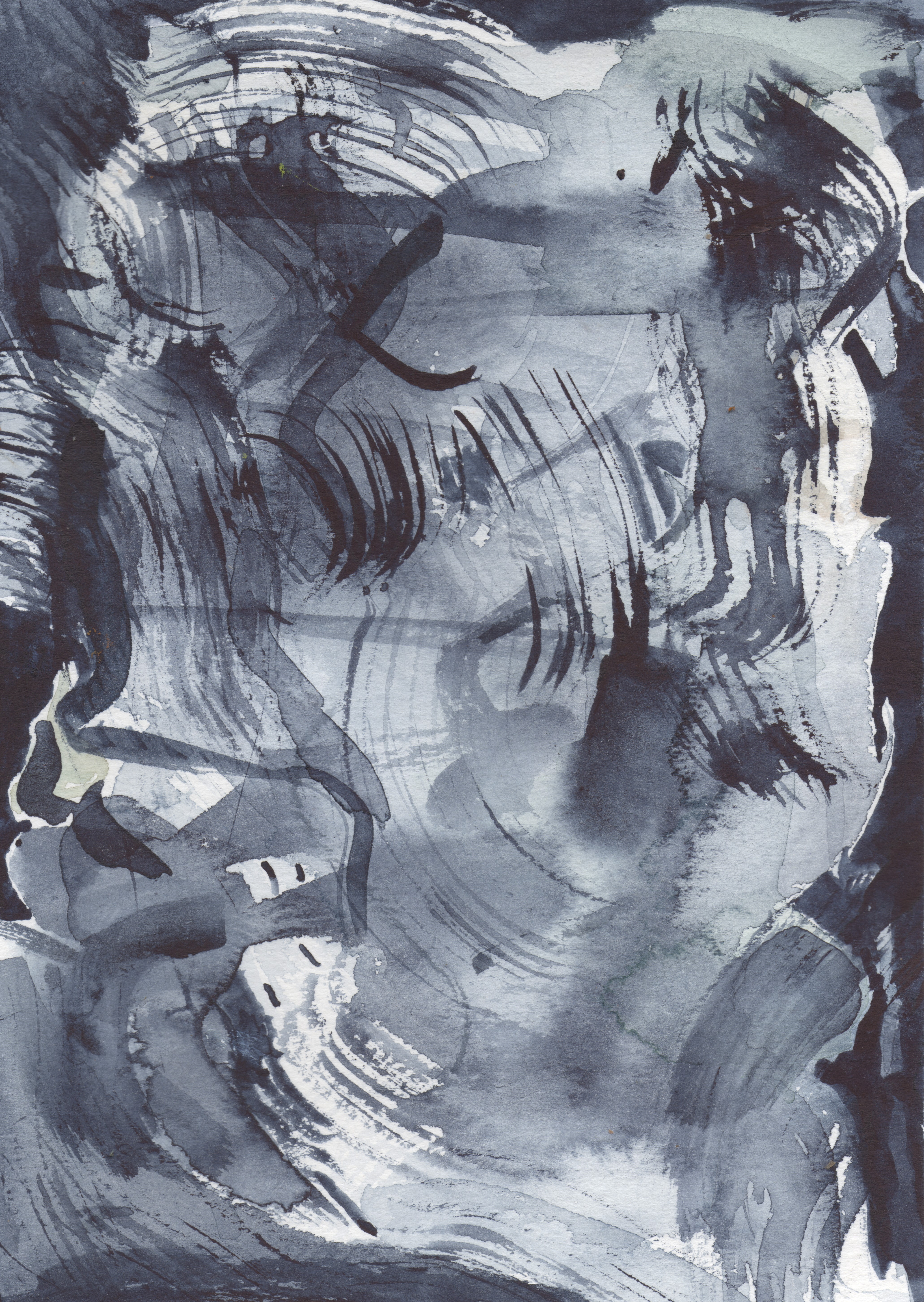
But then an ironic question arises. This chaos out of which the art emerges, yes, it may be or may not be symbolic of the observable world, but, just as the soothsayer needs the tea-leaves for prediction, the chaos needs to be plastic, made of ink on specific paper, or made of cut-ups as in the work of William Burroughs. The stuff to puzzle over has to be brought into existence before the alchemy can begin. So this initiates the initial artistic or poetic struggle. What is to be spilt? How is this chaos to become an actual material? How do you enable a random expression to manifest itself?
So initially, one must find a way to circumvent the intentional. From da Vinci to Cage, artists have recognised the inspiring power of chance. A serendipitous agglomeration can be a fertile ground. In visual art one can adopt a strategy such as drawing with the eyes closed. That is something one can’t really do with words – though the surrealists experimented with automatic writing. Nevertheless it is hard to write a word without intending it.
So differences emerge. In art, in order to wrestle with the arbitrary or derive a result from cacophony, what is required first is that some arbitrary spillage or dissonance be created – I am impressed by the orchestra of the elephants in Thailand. Some chaotic basis has to be made manifest. This is not as easy as it sounds. The way of making the initial chaos that will ultimately generate the work is what distinguishes one artist in this vein from another.
x
Deep art values improvement but not progress. Modern art was Utopian about the future. Deep art retreats from desire for that Utopia. Existentially, deep art has to have presence. Deep art is also down to earth. It is about self-sustainability. The artist sustains the life chosen to be led. But it has to have presence. Presence is the generation of a certain attention unto itself. As if the art had a gaze.
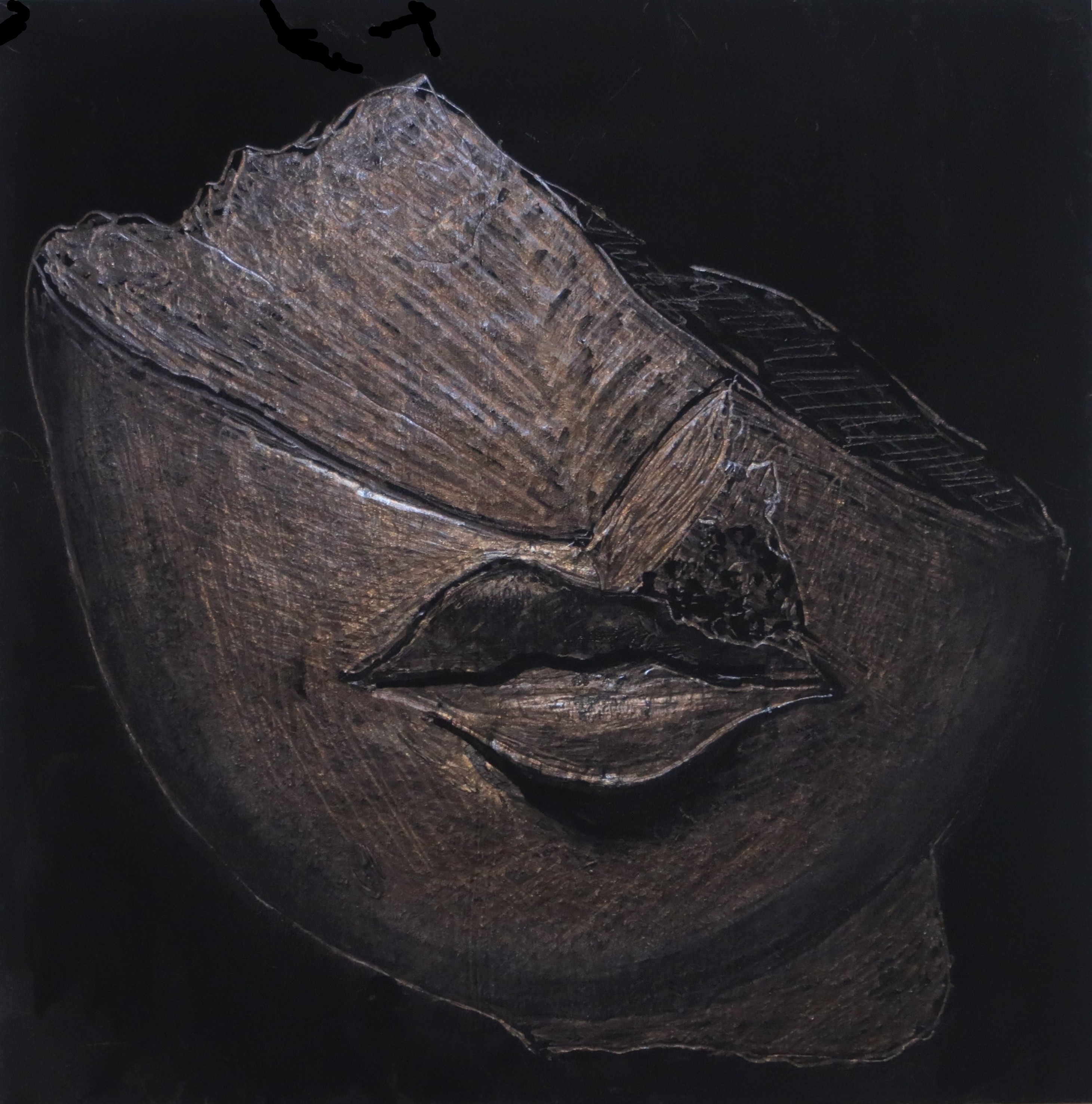
I look into my idea for deep art. Then I consider the art I am making. First it must be said I have many arts. Even within visual art I work in several different ways. It is feasible to consider presenting the two styles simultaneously. I can be in more than one world.
Reflect on where we are at. We are in the actual world and the hyperreal. We now experience virtual love-making. And we may relax to war footage. We are in an actual world and doped-up on a media world we are sucked into by the screen. Each of us has more than a single world to digest. At a deeper level, there is that aspect of a curve that cannot be measured; that capitalized Real, which slips between the gaps left between words and numbers.
Imbued with the suggestion of that Real, deep art becomes present, and is filled with presence. Steeped in it. Figuration versus abstraction is a gone debate. Presence is what matters.
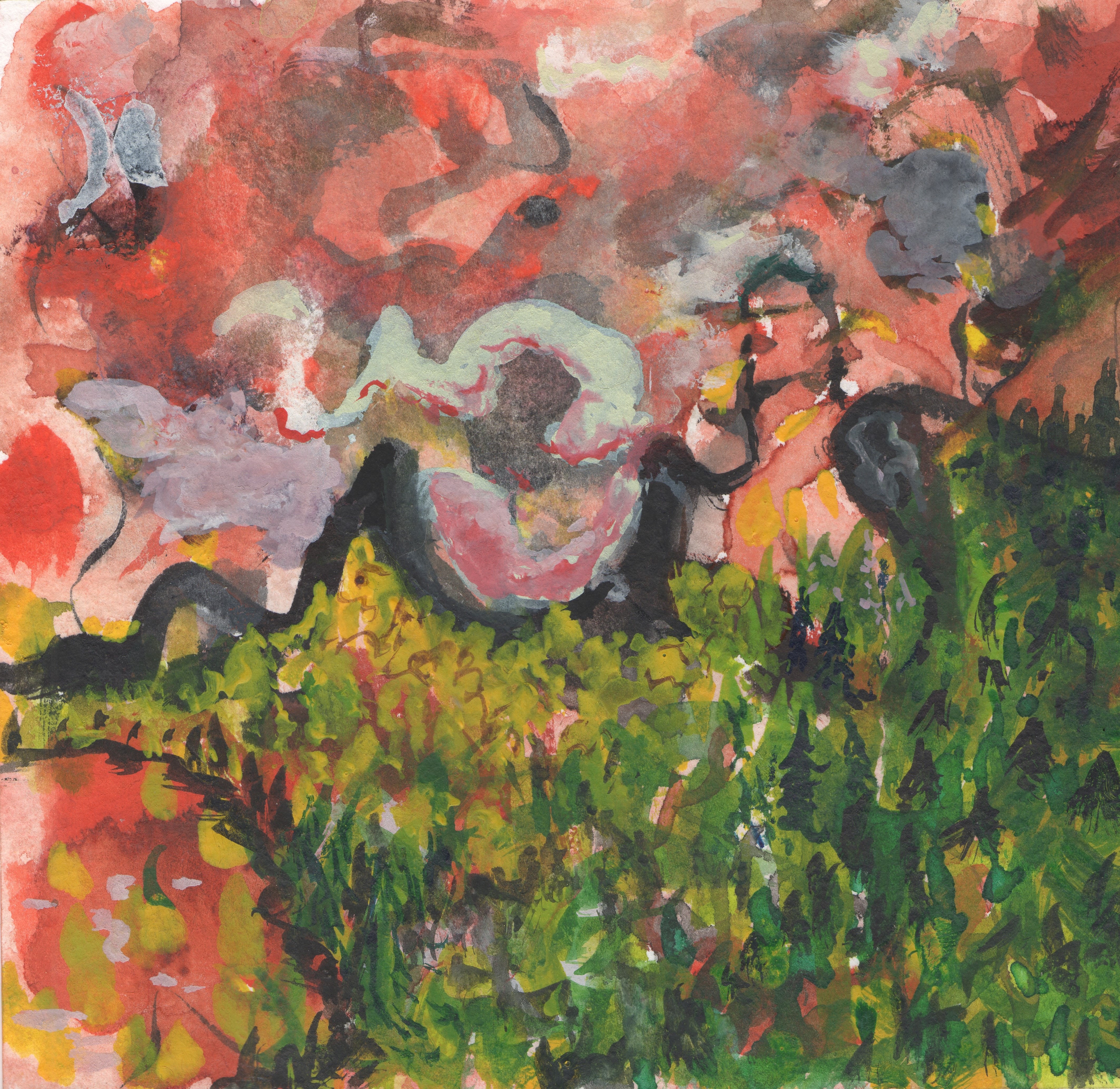
Deep art is concerned with alchemy. Metaphor is the alchemy of language. In visual art, sight is the first medium, while alchemy is the transformation of some sight into another medium. It is ironic that what is seen may already be experienced as a medium. Re-presentation is the alchemy of deep visual art. The transformation may be effected from hearing to sight, and vice-versa, or from any one sense to another.
The deepest precepts hold true for deep art as much as for modern art: Leonardo’s advice to look into some part of a wall, to see what can be imagined there, and Picasso, who would go for a walk in a green wood and come home with green indigestion. To understand what I mean by deep art further I dive into my own practice. In retrospect I realise I have always been contrarian. Is upending things, and exploring the contradiction of accepted modes, thus a pre-requisite for deep art? I doubt it. Each artist has a personal agenda. Presence is a universal requirement, transformation also. Multi-sidedness and contrariety concern my own make-up surely?
Another issue is intensity – as opposed to scale. In the Musee d’Orsay, there are several works in oil by Vuillard that are very small in scale. There is a night scene and there is a painting of a cloud above a wood -12.5 x 21 cm.
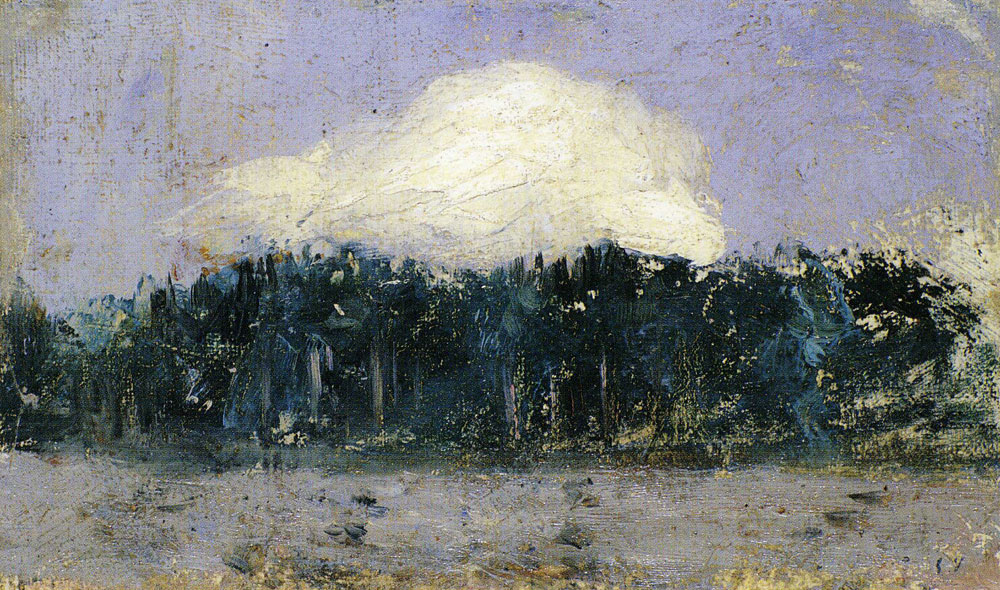
The energy in these works is compressed into these small spaces, in contrast to modern art dissipating energy by expanding the scale of the work without purpose. Yes, it made sense for abstract expressionists to work on a large scale, so that the eye might be saturated with colour – but now a vastness of scale is simply a knee-jerk imposition on contemporary work – an insistence that art must be avowedly “public” – thus confusing art with advertisement. Even worse is the notion that increase in scale can lead to an increase in price – an utterly superficial take on art.
There is also that contemporary tendency among curators to choose art according to the representational credentials of the artist – thus choosing to show work on the basis of “wokeness”. Is the artist from an underprivileged group or of a currently fashionable sexual orientation or political persuasion? Someone recently criticised my appreciation of Victor Hugo on the grounds that Hugo’s politics were initially Royalist, and that although he later embraced the republic he nevertheless justified colonialism in terms of a civilizing mission. For me, such a view has no bearing on the art of Victor Hugo. One of the most salient virtues of art and literature is that it is possible to appreciate fine work by creators whose politics are fundamentally opposed to our own. And this is another tenet of deep art.
See also Modern Art is Over. Embrace Deep Art.


Anthony – many thanks for that. I’m thinking on parallel (and maybe converging) lines about how we make something abstract, like physical performance art, genuine rather than ersatz. The starting points for my ideas are the training method of one of my clown teachers, Ira Seidenstein, and a chapter in the book “Late Style” by Edward Said. I think there are similarities. When I finish it (a short essay) I’ll post it and you will be able to see if it relates at all to what you are doing.
Best wishes,
Jim.
LikeLike
Pingback: Modern Art is over. Embrace Deep Art | anthonyhowelljournal