

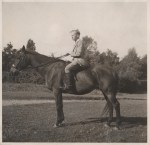
Aley Howell 1919-1945
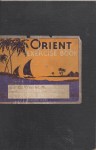
Now added to this post – the catalogue to the Library of New South Wales’ excellent “Dunera” exhibition – about the camp my father was interned in for the first years of the war – and the transcript of my father’s diary, which he kept while in the camp. These two acrobat files are now at the foot of this post. My thanks to Andrew Trigg, NSW Librarian. x
FATHER
In memoriam Aley Howell
My father who died at child-birth
far from his son. Now I run out of words
and climb the forests to lament him:
here, he is precious, is air-currents,
pressures weighed in the leaves’ hands.
An aroma tipped from bracted bowls, passed on
from stem to stem as his breath
bends them. He is the callid, handy god
mother barred the house to at daybreak,
who refuses. She found another man grew up,
their son, who loves at a distance
him & her and his close sisters winding
in his head. But how he loses!
Voices dent him where they can no entry stave.
All he leans back on lurches off.
Astounded, as I grow closer his age,
I lament my father.
He is much younger than his helpless son.
From Inside the Castle, Barrie & Rockliffe, The Cresset Press, London 1969
Born in Copenhagen, Eli Rosenbluth took his wife’s name and changed the spelling of his first name to Welsh-sounding Aley in order to serve overseas in REME (Royal Electrical and Mechanical Engineers) on returning from Australia where he had been interned at Hay – in the Australian outback – as a foreign alien, for the first three years of the war. He was sent to Australia on the infamous Dunera.
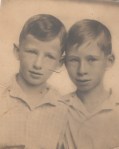
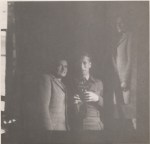
L + R – Gideon and Aley (Eli) Rosenbluth, Berlin.
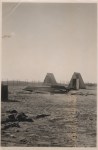
When living in Australia in the eighties, Dilys Bidewell and I attempted to visit Hay and a sandstone feature nearby called The Walls of China. We never got there.
WHY I MAY NEVER SEE THE WALLS OF CHINA
As the road unrolls the plain
light gets steadily worse:
The sun has left a stain
like that of a crushed horse.
x
Less and less can be seen
approaching an increasingly
Insect-spattered windscreen.
On we go unceasingly
x
In one direction – ahead –
pausing only to spend the night
On a hotel bed;
but dressing before the light,
x
Eager to get there.
As day enlarges,
Our little car
splashes through mirages,
x
Underwings decamp
hurriedly in a flock.
We rattle with each bump,
Tilt away from the truck
x
Rushing towards and past us;
wondering whether our fuel
And water will last us
to the next meal
x
In a mining town,
the next chamber
In which to put the head down,
dream re-runs of camber
x
Littered with tyre-shells,
sheep carcasses,
The crow’s wails
and the parrot’s raucousness
x
When we go for a leak.
Mostly we drive on
And on without a break
across the plain.
x
‘Do not overtake
on crests or curves’
Reads as a joke
where the road never swerves
x
And there’s no one to race.
All the road leads to is road.
Scarcely in one place,
we are merely a load
x
Speeding from sign to sign
– Stock, Dip, Grid –
Crossing the time-zone line
as if on a desperate bid
x
To beat the clock,
melt the road’s edges,
Where gourds bake
among the weeds’ smudges
x
Of merging greenery,
while the middleground
Shifts its scenery
before that profound
x
Place in the distance
where the trees preserve
Their motionless existence
at a far remove
x
From the dust in our wake,
the tumbleweed ahead,
The thirst we cannot slake
To be either quick or dead.
x
An axle pulls to the left;
a shoulder-blade starts aching;
The mind keeps going soft,
or shudders on awaking
x
To the fact of having slept,
if only for a second,
As the swift road swept
how many yards unreckoned
x
Under the bonnet?
Having come this far,
We rest for a minute
out of the car;
x
It being extraordinary
simply to stare
At some quite ordinary
corner of nowhere.
x
Best not to linger though,
given we’ve got
Some distance to go
in order to get
x
Within sight of the walls.
Keen to arrive
Before night falls,
we continue our drive.
x
Then the road alters:
wheels choose a rut.
Minuscule creatures
easily squashed flat,
x
Over and over,
we roll to a stop.
Have we killed each other?
Both of us stand up.
x
Hurled from our route,
more lucky than bruised,
Where branches hang mute
on a road seldom used,
x
We have ended up facing
the opposite way
In the staved casing
hired for a holiday.
x
Turned around and sent
back the way we came,
Our destination bent
by a fluke from a larger game.
x
So perhaps we tried to bite off
more than we could chew:
Leaving behind a write-off,
I sit across from you
x
As we trundle home over the plain,
whether or not we please;
Glimpsing, from the train,
animals still as trees.
x
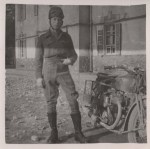
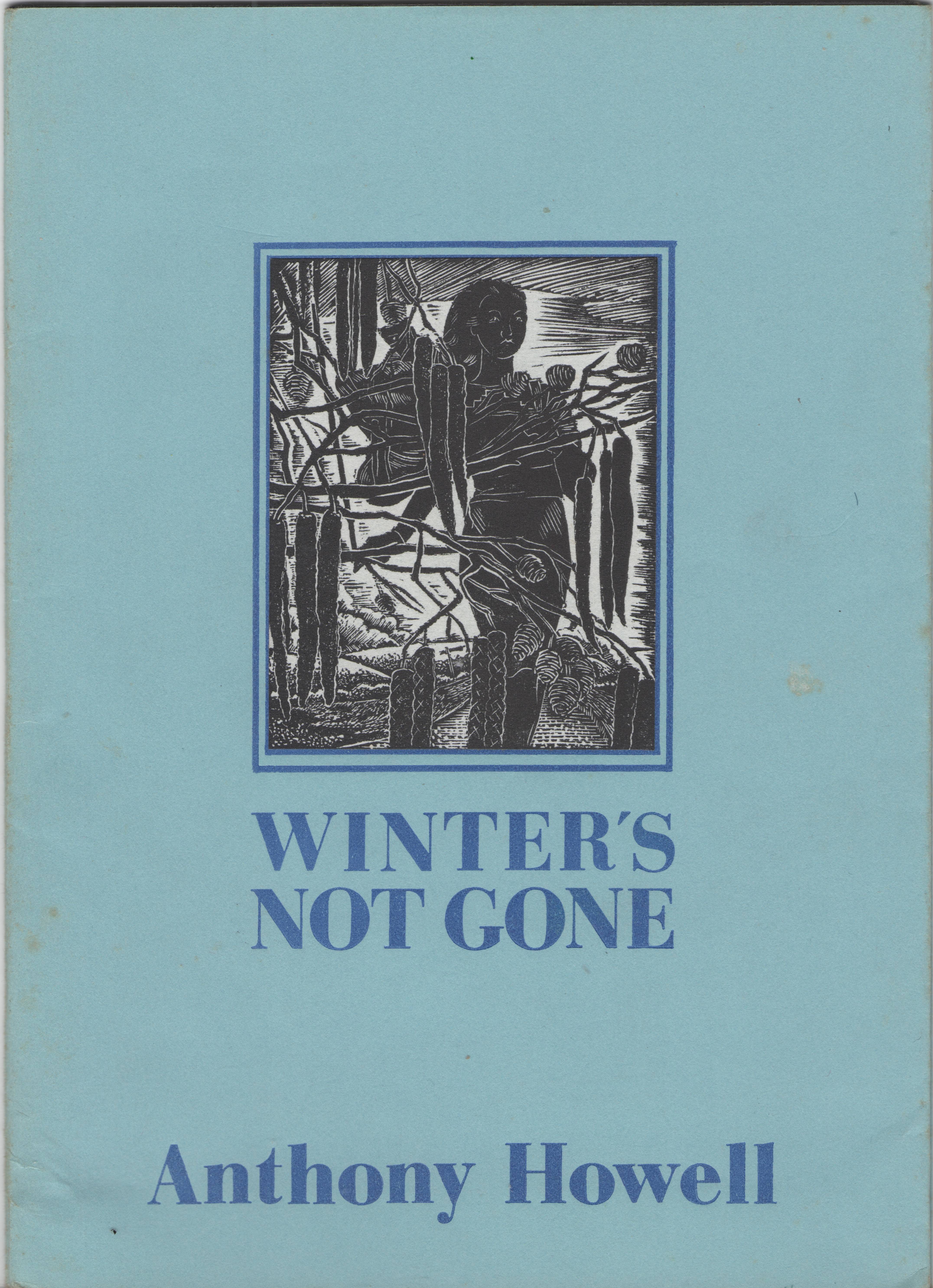
From Why I may Never See the Walls of China, Anvil, London 1986. See also My father and his motorbike with its sidecar.








 anthonyhowelljournal