Theatre Reviews

waves

Here is a review in the Fortnightly of Christopher Reid’s Love, Loss and Chianti.

20 March 2020 – subject to postponement. Worth seeing when it returns.

Christopher Reid

XXXXXXXX

Here is my review of two intriguing plays in London this April (2019): Third Person Theatre and Noises

Third Person Theatre

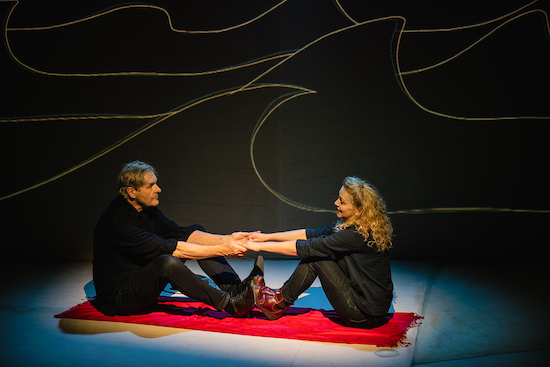
Mark Phoenix with Mark Gray – Third Person Theatre – Photo Kevin RbNt


Ali Wright, Old Red Lion, The Noises

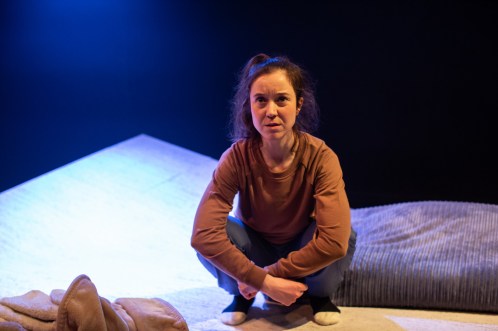
Amy McAllister in THE NOISES – photo Ali Wright

  •  *    *     *


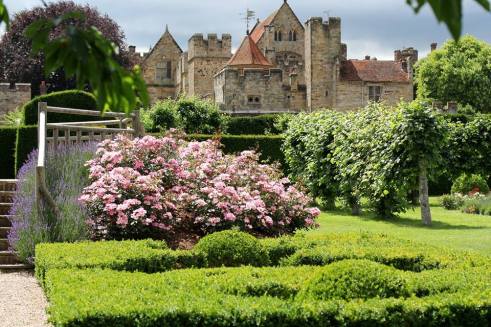
Penshurst-Place-Gardens

Here is my review of Love’s Victory.  This play by Lady Mary Wroth was written 400 years ago – possibly the production at Penshurst Place was its first performance.

Very pleased to see this in The Fortnightly Review.  24/09/18


  •  *    *     *

babawives

This page is for theatre reviews and this was the first:

The Secret Lives of Baba Segi’s Wives

Very pleased to see this in the Fortnightly Review.

Posted in Reviews | Tagged , , , , , , , , , , , , , , , , | 1 Comment

Whistleblower Lit

220px-David_Kelly_2000s

Delighted that my review of Miles Goslett’s new book on the questionable details of the Hutton Inquiry into the death of David Kelly has now been published by the Fortnightly Review. Click on the link below:

Whistleblower Lit.

The review starts with a survey of selected Whistleblower books, and concludes with a more in-depth look at Goslett’s brilliant book – An Inconvenient Death: How the Establishment Covered Up the David Kelly Affair.

Interview with Miles Goslett

And also worth reading – Secrecy World by Scott Bernstein – back story to the Panama Papers, and the inspiration for The Laundromat – now available on Netflix and starring Meryl Streep, Oldman, Banderas et al.


Posted in Essays, Politics | Tagged , , , , | Leave a comment

Tango Schumann

Tango has always been a love of mine, and Lindi Kopke and I worked together for a number of years, exploring the notion of dancing tango to classical music. Click on the link below to watch some videos on the Tango Schumann website.


http://tangoschumann.com/video.html

Posted in Dance, Key Links, Performance Art | Tagged , , , , , | Leave a comment

Shadows and Vegetation

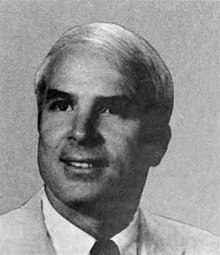
220px-John_McCain_1983

The Crown Prince gets preferential treatment

In the Hanoi Hilton. Hear the songbird sing

Of kind handling by the people he has injured

From the air. What will the rear admiral think though,

Should his son accept that offer of release?

Better hang on in there, rather than return

Ignominiously at best, at worst a Rose of Tokyo.

x

“Darned if I will,” says the cowboy who has destroyed

As many of his country’s planes as he has of the enemy’s –

Lopping power-lines from the sky, airman out of a rodeo.

“Pa’s in command of all our forces here in the Pacific.

Can’t just hold my breath till I turn blue

As I used to when a kid and get him to get

Me out of here. To the bitter…got to see this through.”

x

But when he does get back, after it’s all over,

Hasn’t this Prince a job to do, blocking all info on

Unreturned POWs? Some may know too much

About him. Show their families no justice, rail at them

And scream, insult them, drive the wives to tears,

Push a grandma out of her wheelchair. Well, how dare

She question his loyalty, doubt his patriotism even?

x

Puts his faith in his right to the might of his fathers.

And if prisoners get dishonoured by being left to die

At least their secrets die with them. He’s got a career

To fly. There’s his hate’s volcano to be stoked.

Thin, dark and starving, kept in the caves that years

Later will boost tourism, won’t they drop off soon

Like flies?” Satellite photos show the markings

x

Pilots such as our Prince have been trained to use

When signalling for rescue. He will insist

The Pentagon sees nothing there but shadows

And vegetation. He will agree with the CIA

That these are saw-grass clumps, no more,

Mere rice-paddy walls. What you get in Viet Nam,

Never the desperate name of a missing man

x

Gouged into a field. But then, as one investigator

Puts it to the Senate. “Guys, if grass can spell out

People’s names and secret digit codes,

Then I have found a new respect for grass.”

x

John McCain

Posted in Poetry | Tagged , , | 1 Comment

Heron of Hawthornden

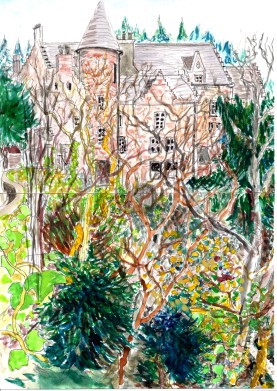
HERON OF HAWTHORNDEN – a chap-book of dizains by Anthony Howell celebrating his residency at the castle in the Autumn of 2017. Illustrations by the author. Limited edition from Grey Suit Editions, UK.

20th November

x

Our very first breakfast. Tardier than the rest,

I sit alone at the narrow elm table,

Terribly ancient; eating my porridge with Sucrose

Purchased in Tottenham. Not quite as fit

As I ought to be; recovering from a twisted knee.

Everyone else now busily writing. As I finish

What’s in my bowl, the elegant dark-wood Windsor

Chair, stately and antique as our patron, who is

A hundred and three, gives way beneath me.

I clutch at its arms, but still… it collapses, albeit gracefully,

x

Taking me with it, spilling me onto the tartan carpet.

This elicits apology. However, I’m encouraged not to fret.

This veteran’s been rickety for ages.

Hamish will fix it. Yes, but the peg at the top of a leg

Splintered, I’m sure, as we keeled over.

Clearly that chair has now been put paid to by me.

What a way to start a residency in a precipitous

Castle, a castle where silence is de rigeur until our

Convivial evening fare. I must watch my step

As well as how I sit. There is a dungeon below us here.

x

Buy from Tangoshiva at Ebay

Posted in Poetry, Uncategorized | Tagged , , , | 2 Comments

Poetry at The Room – Saturday 5 May

Saturday 5 May at 7.30 pm at The Room, 33 Holcombe Road, Tottenham Hale, London N17 9AS  – £5 entry plus donation for refreshments.

David Cooke

David Cooke was born in Wokingham and grew up in Reading, although his family roots are in the West of Ireland. In 1977, while an undergraduate at Nottingham University, he won a Gregory Award. His poems and reviews have appeared widely in the UK, Ireland and beyond in journals such as Agenda, Ambit, The Cortland Review, The Interpreter’s House, The Irish Press, The Irish Times, The London Magazine, Magma, The Manhattan Review, The Morning Star, Poetry Ireland Review, Poetry Salzburg Review and Stand. He has published five collections of his poetry, the latest of which is After Hours published by Cultured Llama Publishing in 2017. He is founder and co-editor of The High Window.

John Welch

John Welch used to run The Many Press. He has published several collections of poetry and a new one, In Folly’s Shade, will appear from Shearsman Books later this year. His prose writings include ‘Dreaming Arrival’, a personal account of his experience of psychoanalysis.

Jane Solomon

Jane Solomon was born in London. She had a novel, Hotel 167, published by Picador when she was 20. They subsequently bought her second novel, Camembert, which was never published due to a conflict of interests. She received an Arts’ Council Award for her third novel, The Nightberry. Jane continued to write novels while developing her other interest, Argentine Tango, which she has been teaching and performing for over 15 years, including 7 years spent in Buenos Aires. Most recently, she has been writing poetry, and some of her work has been published in The Spectator magazine.

Emma Hammond

Emma Ham

Emma Hammond has published two books- ‘tunth-sk’ with Flipped Eye and ‘The Story of No’ with Penned in the Margins. She also has a collection with zimZalla called ‘Waves on a Boring Beach’ and has self-published two pamphlets, ‘softly softly catchy monkey’ and ‘Sleeveless Errand’. She is working on her third full collection ‘Valour‘. It includes poems about journeying, infertility and puppies but is really about trying hard and doing your best to be a real person. Emma also teaches and mentors poets.

Poetry at The Room Enquiries – 8801 8577


Posted in Uncategorized | Leave a comment

Semper Occultus

Sergei Skripal turns out to have been

Christopher Steele’s associate.

During the presidential elections,

They had worked together on a dossier

Laced with detrimental footage


Russian operatives allegedly

Had to dish on Donald Trump.

Steele was MI6. An adept officer,

Under diplomatic cover, he was operant

In Russia and in Paris, and at the FO.


After he quit the service, though

A pillar of that secretive establishment,

He supplied the FBI with evidence

Of bribery at FIFA: sterling work

On international soccer that lent credence


To his material on Trump’s entanglements.

Colourful these. Trump hiring prostitutes

To piss on a bed that Barack

And Michelle were said to have slept in

In the Moscow Ritz Carlton.


😉

This poem is now included in my non-fiction novel Consciousness (with Mutilation)

Now published by Odd Volumes, at the Fortnightly Review, Les Brouzils, France

Posted in Poetry | Tagged , , | Leave a comment

The Distance Measured in Days

Click the link for an e-book version of my novel – The Distance Measured in Days.

This novel is now published in book form by Grey Suit Editions (2021).

The Distance Measured in Days

A young poet and his wife experiment with love and life in the early seventies.  They explore the middle-east, and they entertain their bohemian intellectual friends in a house decorated with kelims.  Tragedy knocks this life-style out of kilter.  Their daughter dies of cot-death just as their relationship is at its most fragile.  For the poet/ the world fragments into a frightening kaleidoscope of images from the past and from the present.

While attempts are made to reconcile the harshness of their loss with some strategy of togetherness for the future, this bitter, poignant text offers no mystical or sentimental resolution of the wounding dissonance of severe emotional pain., With considerable frankness, the author shows how grief can produce a distancing effect/ a sensation of being an outsider at one’s own ceremonies of mourning.  A pervasive numbing of the senses insulates the poet from breakdown, however it also conducts him into the brutish action of the climax.

One of a trio of novels concerning intellectual and artistic life in the last two decades, The Distance Measured in Days contrasts the torrid sleaziness of literary north London with the barren desert and with tropical corruption. These scenes are all part of that vertiginous imagery overwhelming the man’s mind as he regards the misery of his partner.  Here the loss of a child is seen, perhaps uncharacteristically, from a male point-of-view, and with accuracy in lieu of fake apology.

The author’s first novel, In the Company of Others, set in a ballet company, was greeted with praise for the flair with which the author captured the world of dance.  In it, as Jonathan Keates wrote in The Observer, “the strident, coarse actualities of its sanctified self-absorption are brought monstrously to life.”  This new work employs techniques as innovative as those used previously to duplicate with stunning force the emotional state of its bereaved protagonists.  The result sets forth the terrifying condition which grief may entail with no redemption posited beyond the integrity of its portrayal.

In 2019, his “non-fiction novel” – Consciousness (with Mutilation) –  was published by Odd Volumes.

Posted in Ebooks and flipbooks, FICTION | Tagged , , , , , | 1 Comment

POETRY READINGS TO CELEBRATE GREY SUIT EDITIONS – Poetry at the Room – Oct 11.

Wonderful evening. Thanks to all who came.

POETRY At The Room

Thursday 11 October 2018 – at 7.30 at The Room, 33 Holcombe Road, Tottenham Hale, London N17 9AS

7.30 pm. Special GREY SUIT launch addition – for Dialysis Days by Hugo Williams, a new chap-book by Grey Suit Editions.

free with refreshments

Featuring Hugo Williams, supported by Kerry-Lee Powell, Alan Jenkins and Glyn Maxwell – hosted by Anthony Howell.

Hugo Williams with Anthony Howell – photo by David Larcher

Hugo Williams’s poems engage themes of personal memory, childhood, and sexuality with a plainspoken yet wry voice. In an interview with The Guardian, Williams discussed the autobiographical element of his work, stating, “You really can’t start if you’re not going to be completely honest. You have to use everything you know.… [Y]ou do sometimes enter into a sort of doublethink: ‘They won’t like it, but they might like it more if it’s well done.’”

Williams is the author of more than a dozen collections of poetry, including West End Final (2009), Collected Poems (2002), Billy’s Rain (1999), which won the T.S. Eliot Prize, Selected Poems (1989), and his Eric Gregory Award–winning debut, Symptoms of Loss (1965). A selection of his freelance writing appears in the essay collection Freelancing: Adventures of a Poet (1995). His additional honors include the Queen’s Gold Medal for Poetry, the Geoffrey Faber Memorial Prize, and the Cholmondeley Award.

A columnist for the Times Literary Supplement, Williams lives in London.

Kerry-Lee Powell

Born in Montreal, Kerry-Lee Powell has lived in Antigua, Australia and the United Kingdom, where she studied Medieval and Renaissance Literature at Cardiff University. Her work has appeared in The Spectator, Magma and The Boston Review. A collection of her poetry, Inheritance, was published by Biblioasis in 2014. She has also published a book of short stories, William de Kooning’s Paintbrush, with Harper Avenue in 2016.

Alan Jenkins

Alan Jenkins was brought up on the outskirts of London in Richmond, and educated at the University of Sussex, and has worked for The Times Literary Supplement since 1981. He was also a poetry critic for The Observer, and the Sunday Independent from 1985 to 1990. He edited the “Collected Poems of Ian Hamilton” (Faber & Faber, 2009). He has published six volumes of poetry including A Shorter Life (2005) and Revenants (2013). He is now Deputy Editor and Poetry Editor of The Times Literary Supplement. He has taught creative writing for the Bread Loaf Writers’ Conference, Arvon Foundation, the Poetry Society, London, and at the American University in Paris. He was a judge for the Christopher Tower Poetry Prizes.

Glyn Maxwell’s volumes of poetry include The Breakage, Hide Now,and Pluto, all of which were shortlisted for either the Forward or T. S. Eliot Prizes, and The Nerve, which won the Geoffrey Faber Memorial Prize. On Poetry, a guidebook for the general reader, was published by Oberon in 2012. The Spectator called it ‘a modern classic’ and The Guardian’s Adam Newey described it as ‘the best book about poetry I’ve ever read.’ Many of Maxwell’s plays have been staged in London and New York, including Liberty at Shakespeare’s Globe, and at the Almeida, Arcola, RADA and Southwark Playhouse. His opera libretti include The Firework Maker’s Daughter(composer David Bruce) which was shortlisted for ‘Best New Opera’ at the Oliviers in 2014, Seven Angels (Luke Bedford) and The Lion’s Face (Elena Langer). These were staged at the Royal Opera House and toured the UK. In 2016 Nothing  (composer David Bruce) was staged at Glyndebourne. He is currently adapting The Magic Flute for Opera UpClose.

All enquiries – 0208 801 8577

****************************

Previous Events:

Saturday 7 April 6.30 pm – at The Upper Vestry Hall, Saint George’s Bloomsbury, Bloomsbury Way, London WC1A 2SA

Reading:

Kerry-Lee Powell, Rosanne Wasserman, Eugene Richie, Donald Gardner, Alan Jenkins, Anthony Howell and Fawzi Karim.

Readings at 7 pm. The hall is just round the back of this magnificent Hawksmoor church.

We have taken over this larger venue to celebrate Grey Suit Editions – and our series of Chap-books. Many of our poets from the United States and from Canada have come over to join us. We have seven readers and there will be plenty of refreshment, and it is a FREE EVENT since it is the launch of chap-books by Rosanne Wasserman and Donald Gardner. Rosanne’s husband Eugene Richie will also read with us.

Rosanne Wasserman


Rosanne Wasserman’s poetry embodies the New York School’s fascination with language, form, humor, and irreverence. Born in Louisville, Kentucky, in 1952, her books—The Lacemakers, No Archive on Earth, and Other Selves—include variants on Moore’s stanzas; Pound’s imitation ancient Greek, Chinese, and Provencal forms; centos, sestinas, pantoums, and Oulipo games. Her new chapbook from Grey Suit Editions, Sonnets from Elizabeth’s, is a 42-poem sequence riffing on Elizabeth Barrett Browning’s Sonnets from the Portuguese. Her poems, essays, and other work appear in many journals and anthologies, including Best American Poetry, both in print and online. She and Eugene Richie founded the Groundwater Press in 1974, giving many third- and fourth-generation New York School poets their first publications. She has received a poetry fellowship from the New York Foundation for the Arts; attended workshops in Manhattan and Brooklyn led by John Yau, Bianca Stone, Emily Skillings, and Simone Kearney; and interviewed Pierre Martory and James Schuyler for the American Poetry Review. With Eugene Richie, she has written two collaborations—Place du Caruousel and Psyche and Amor—as well as edited the two-volume Collected French Translations of John Ashbery. For twenty-five years, she has taught English and cinema to merchant sailors at the United States Merchant Marine Academy, Kings Point, Long Island.

Eugene Richie

Eugene Richie photo

Eugene Richie was born in Winona, Minnesota, in 1951, and has lived in New York since 1974. He is Director of Creative Writing in the Pace University English Department, where he teaches creative writing and literature courses. His collections of poetry include Moiré; Island Light; and, with Rosanne Wasserman, Place du Carousel and Psyche and Amor. A new book of poems, Views of Little Neck Bay, is forthcoming in 2019 from Gnosis Press. Of his poetry, John Ashbery has said he reveals “the landscape of love we all carry around with us, that we use to accost, identify, and finally understand the ‘real’ one yapping at our ankles.” He has translated, with Edith Grossman, two poetry collections of the Colombian writer Jaime Manrique (Scarecrow and My Night with Federico García Lorca, a Lambda Literary Award finalist); two collections, with Raimundo Mora, of stories by the Venezuelan writer Matilde Daviu; and with Medievalist Martha Diver, tales by John Gower, Geoffrey Chaucer, and Thomas Chester. He has edited Ashbery’s Selected Prose, and, with Wasserman and Olivier Brossard, three bilingual collections of Ashbery’s translations of poems by French poet and novelist Pierre Martory: The Landscape Is behind the Door; Oh, Lake / Oh, lac; and The Landscapist (a London Poetry Book Society Recommendation and a U.S. National Book Critics Circle Award poetry finalist). With Wasserman, he edited Ashbery’s Collected French Translations, a London Poetry Book Society Recommendation and a finalist for the U.S. Poetry Foundation Pegasus Award for Poetry Criticism.

Kerry-Lee Powell

Born in Montreal, Kerry-Lee Powell has lived in Antigua, Australia and the United Kingdom, where she studied Medieval and Renaissance Literature at Cardiff University. Her work has appeared in The Spectator, Magma and The Boston Review. A collection of her poetry, Inheritance, was published by Biblioasis in 2014. She has also published a book of short stories, William de Kooning’s Paintbrush, with Harper Avenue in 2016.

Alan Jenkins

Alan Jenkins was brought up on the outskirts of London in Richmond, and educated at the University of Sussex, and has worked for The Times Literary Supplement since 1981. He was also a poetry critic for The Observer, and the Sunday Independent from 1985 to 1990. He edited the “Collected Poems of Ian Hamilton” (Faber & Faber, 2009). He has published six volumes of poetry including A Shorter Life (2005) and Revenants (2013). He is now Deputy Editor and Poetry Editor of The Times Literary Supplement.

He has taught creative writing for the Bread Loaf Writers’ Conference, Arvon Foundation, the Poetry Society, London, and at the American University in Paris. He was a judge for the Christopher Tower Poetry Prizes

Fawzi Karim

Fawzi Karim was born in Baghdad in 1945, and is now living in London. He is rapidly establishing a reputation as a major figure in contemporary poetry. Plague Lands (Carcanet) was a Poetry Book Society recommendation for 2011. He has been reviewing Classical Music and English Poetry in ASHARQ ALAWSAT, the Arabic newspaper, London, since 1980s.  A second book of his poems is due to be published by Carcanet.     

Donald Gardner

London-born Donald Gardner is a poet and literary translator who has lived in Italy, New York and the Netherlands. Currently he divides his time between Amsterdam and Kildare, Ireland. His most recent collection is ‘The Wolf Inside’, (Hearing Eye, 2014). His selection of Remco Campert’s poetry, ‘In those Days’ (Shoestring Press), also appeared in 2014 and was awarded the Vondel Prize for literary translation. He is known for his readings of his poetry. ‘Donald Gardner’s work is light but not trivial; clear but technically subtle and eloquent. His poetry captures his images in few words: sharply, precisely.’ Leah Fritz on ‘The Wolf Inside’ (London Grip online).

Anthony Howell

Anthony Howell is a poet and novelist whose first collection of poems, Inside the Castle was brought out in 1969.  In 1986 his novel In the Company of Others was published by Marion Boyars.  Another novel Oblivion has recently been published by Grey Suit editions.  He was invited to the International Writers Program, University of Iowa in 1971.  His Selected Poems came out from Anvil, and his Analysis of Performance Art is published by Routledge.  His poems have appeared in The New Statesman, The Spectator and The Times Literary Supplement.  His articles on visual art, dance, performance and poetry have appeared in many journals and magazines including Artscribe, Art Monthly, The London Magazine, and Harpers & Queen.  In 1997 he was short-listed for a Paul Hamlyn Award for his poetry. His versions of the Silvae of Statius have been well received and Plague Lands, his versions of the poems of Iraqi poet Fawzi Karim, were a Poetry Book Society Recommendation for 2011. A former dancer with the Royal Ballet, and now a respected teacher of the tango, Howell was founder and director of The Theatre of Mistakes, which created notable performances worldwide in the seventies and eighties – at venues such as the Paris Biennale, the Sydney Biennale, the Paula Cooper Gallery, the Theater for the New City (NY) and at the Tate and the Haywood. Play-scripts of his performances are now published by Grey Suit Editions. He is a Hawthornden Fellow.  Howell is currently curating The Room, a space for dance, performance, poetry and visual art in Tottenham, London.

All enquiries – 0208 801 8577

Details of Grey Suit editions can be found here

Posted in Poetry | Tagged , , , , , , , , , , , , , , , , , | 1 Comment

The Melancholy of Making Poetry

Poetry is perhaps the most difficult of arts because the easiest to set about – you don’t need a chisel or a canvas or an instrument or a studio. Writing is eminently convenient. But melancholy derives from the need of the author to dwell on the work. There is shame here, the shame of appearing a narcissist. To return repeatedly to a poem one has written may be compared to returning repeatedly to the mirror to examine one’s own features. It may be compared to masturbation. All too often shame overshadows the compulsion to niggle away at the lines.

But to bring the poem fully into its own presence, the poet may be required to dwell on what has been written, and to return to it, months, even years later. This will not always be the case – sometimes the labour may be easy – but ease can hardly be elevated into a credo, as the next poem may prove difficult to bring into being. The difference between jobbery and genius becomes apparent when the work is an iota away from completion. Do you have the stamina to sustain your own dissatisfaction? To alter the poem is to kill off the previous version, thus admitting one’s own failure as its author. One may feel ashamed that one has got it wrong yet again.

Another version gets screwed up and thrown in the bin. This has been described as mimetic suicide. Leonardo understood this, for artists and composers are also subject to the same requirement to attempt the unattainable goal.

The initial impulse may be released onto the page in a species of trance, perhaps instigated by Dionysus. The subsequent crafting of the poem relates to the ear, to the measure that generates the rhythm, and to concision of expression, and these aspects of the piece are presided over by the rational Apollo. Apollo tempers the molten element of Dionysus, and this also induces a tension that provokes melancholia, as the struggle between these two contradictory forces suggests the suppression of the one by the other. But the hope that out of their feuding will emerge a dynamic equilibrium drives the authentic poet ever closer to completion.

(Frederick Sandys)


See also On The Niceties  and The Needle

Posted in Essays, Poetry | Tagged , , | Leave a comment