A new poem now on Blue of Noon And I am very pleased that the new poems I have written exploring the mixed meter form of the madrigal can now be found at this link: Journal of Poetics Research More…
Very pleased that my review of The Indian Jungle: Psychoanalysis and Non-Western Civilizations (published by Karnac) has just come out in The Fortnightly.
Extract from the Runiad book 7 published here in the Fortnightly Review
Essay Ethics is Aesthetics published in Wittgenstein and Performance edited by Mischa Twitchin ISBN 9781538175095 – 2023
Extracts from the Runiad books 5 and 6 are published here in the Fortnightly Review.
Extracts from the Runiad books 3 and 4 are published here in the Fortnightly Review.
Extracts from the Runiad books 1 and 2 are published here in the Fortnightly Review.
Very pleased with this perceptive review by Michelene Wandor – the first for Invention of Reality, my own latest book of poetry.
Here is a link to a very nice introduction to Invention of Reality posted by the High Window. Here is a link to Envelopes– my poem about the ‘suicided’ artist Mark Lombardi.
This poem has just been published (15/08/22) in The High Window.
One of my versions of the Comtesse de Noailles appeared in the Spectator, late Summer 2021, as well as a new poem of mine. An essay on the Belle Epoch and 13 poems by the Comtesse de Noailles were also published by the Fortnightly Review.
See also Consciousness (with Mutilation),from Odd Volumes. This has poems embedded in its text. The book (a non-fiction novel) was published mid-February 2019.
A Clearing, Sunday Castle and Auto-Analysis have all been published in Sept/Oct 2018 Spectators. These appear in my collection Songs of Realisation, from The High Window Press. The Spectator has also published, on 1 Sept 2018, The Early Mists of September from Alain-Fournier’s Poems – which I translated with Anthony Costello and Anita Marsh – published by Carcanet (2017).
My short essay on Alain-Fournier is among several contributions to the Journal of Poetics Research – unfortunately the link to this and other contributions to this excellent online journal seems to be down.
And also two poems and some translations can be found at the link to this excellent magazine: The High Window
My thanks to all these supportive sites: Blue of Noon, Journal of Poetics Research, The Fortnightly Review and The High Window, and also to offline publications, The Spectator and Poetry Salzburg Review who have also recently taken poems.
Several of my books which cannot be found on Amazon can be found on Tangoshiva on Ebay.
Tony Lopez posted this on Facebook, just as my own copy came through the post.
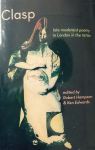
Just received a copy of *Clasp: late modernist poetry in London in the 1970s*, edited by Ken Edwards and Robert Hampson and published by Tony Frazer at Shearsman Books. It is a collection of brief memoirs by Gilbert Adair, Peter Barry, Clive Bush, Paula Claire, Ken Edwards, P.C. Fencott, Paul Green, Robert Hampson, Anthony Howell, Tony Lopez, David Miller, John Muckle, Frances Presley, Elaine Rose, Randell, William Rowe, Gavin Selerie, Robert Sheppard, Iain Sinclair, Valerie Soar, Lawrence Upton, Robert Vas Dias, Stephen Watts, John Welch..
Thanks to Robert and Ken for putting this project together — and to Tony Frazer, as ever, for making it real.
Ok, so here is a wonderful forward by e. e. cummings, followed by a poem from IS5
FOREWORD TO IS5
On the assumption that my technique is either complicated or original or both, the publishers have politely requested me to write an introduction to this book.
At least my theory of technique, if I have one, is very far from original; nor is it complicated. I can express it in fifteen words, by quoting The Eternal Question And Immortal Answer of burlesk, viz. “Would you hit a woman with a child?—No, I’d hit her with a brick.” Like the burlesk comedian, I am abnormally fond of that precision which creates movement.
If a poet is anybody, he is somebody to whom things made matter very little—somebody who is obsessed by Making. Like all obsessions, the Making obsession has disadvantages; for instance, my only interest in making money would be to make it. Fortunately, however, I should prefer to make almost anything else, including locomotives and roses. It is with roses and locomotives (not to mention acrobats Spring electricity Coney Island the 4th of July the eyes of mice and Niagara Falls) that my “poems” are competing.
They are also competing with each other, with elephants, and with El Greco.
Ineluctable preoccupation with The Verb gives a poet one priceless advantage: whereas nonmakers must content themselves with the merely undeniable fact that two times two is four, he rejoices in a purely irresistible truth (to be found, in abbreviated costume, upon the title page of the present volume).
e.e. cummmings
Is 5
Section xiii
It really must
be Nice, never to
have no imagination) or never
never to wonder about guys you used to (and them
slim but queens with dam next to nothing
on) tangoing
(while a feller tries
to hold down the fifty bucks per
job with one foot and rock a
cradle with the other) it Must be
nice never to have no doubts about why you
put the ring
on (and watching her
face grow old and tired to which
you’re married and hands get red washing
things and dishes)and to never, never really wonder i
mean about the smell
of babies and how you
know the dam rent’s going to and everything and never, never
I will credit this photo as soon as I find the name of the photographer
A wonderful blog Tottenham Clouds – which celebrates the weather and Luke Howard – “Namer of Clouds” who lived in Tottenham and we all think his lovely derelict house here should be turned into a Cloud Museum. They have also posted my two versions of the poems sent to Luke Howard by Goethe – which it is said he threw in the bin since he couldn’t believe that Goethe would write to him! The poems are here.
Several of these readings are an exploration of the “Poem Film”.
I find most poem films detract from the words by illustrating the verse. I therefore evolved the notion of the “constant moving image” – as being most appropriate for poetry.
This is an image (such as the waves breaking on a shore) that keeps repeating itself – so it does move, but at the same time it remains the same. I think the constancy enables the listener to pay full attention to the words of the poem – since, as far as the image is concerned, nothing changes.
All the poem films on this page evolved from this notion except for the reading from “Silent Highway” – which is simply a record of my introduction to the poem and a brief reading at the launch on Blackfriars Bridge in 2014.