
Pop portraits on these lovely little works by Jenny Hart. They include a lovely one of Marianne Faithfull. Click on Marianne to read my piece about her.


Pop portraits on these lovely little works by Jenny Hart. They include a lovely one of Marianne Faithfull. Click on Marianne to read my piece about her.

First published 2015, my satire. Click the image to see the post in the Fortnightly Review!
The full story can be found in Go forth and Serve, Martin Rosenbluth, 1961. Library of Congress cat. no. 60-53237
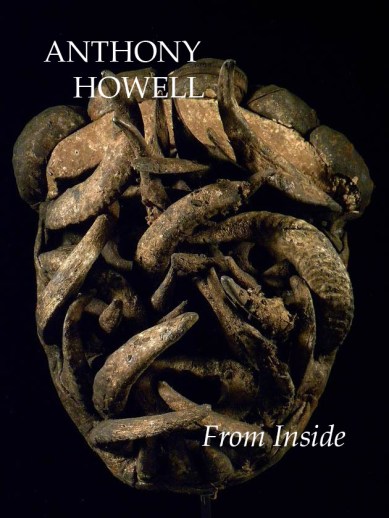
The poem is now published in my book of poems FROM INSIDE, High Window Press, 2017. Also can be found on Amazon
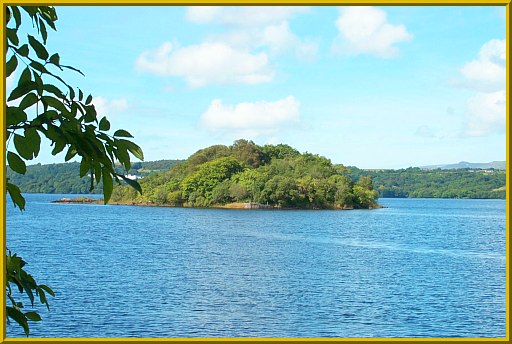
The recordings I made of some of my poems, including “Innisfree”, are now online at the National Poetry Archive. The Archive has more material recorded, including the whole of “Silent Highway”. These recordings are now available for a very modest price on the site. I want to thank everyone at the archive who made this possible, including Richard Carrington, Andrew Motion, Emily Berry, Connie Robertson and Anne Rosenfeld!
And just for interest sake. It is wonderful what skillful editing can do:
An Error rectified:
To my consternation, I discovered I had slipped up in the final lines of the “Uncle Rufus” section of “Silent Highway” – so I emailed the Archive:
Dear Richard and Kate
I am so sorry to bring this up, but I have realised that I have made a mistake in this poem at a rather crucial point. At the end of UNCLE RUFUS in Silent Highway, I say:
His poem sanctioned by the Poet Laureate
Who did not know much about gods, but
Thought that the river was a strong brown god –
Sullen, untamed and intractable….
The last two lines are clearly from Eliot (opening of The Dry Salvages).
Now, it is on record that John Masefield liked Rufus’s poem and so did Eliot (who published a book by Rufus). But somehow I have managed to conflate the two poets into one – carried away, I think, by the flow of the poem. Masefield was Laureate, Eliot of course never was. So I have changed this to:
His poem sanctioned by the Poet Laureate
And one who did not know much about gods,
But thought that the river was a strong brown god –
Sullen, untamed and intractable….
If there was ever a chance to get into a studio and change this to the amended version, I should be most grateful. I would not like this boo-boo to persist into posterity!
With best wishes etc.
Well, they got back to me and said it would be very difficult (and expensive) to find time in the recording studio, but they could ask their excellent audio editor to try to find those extra two words / phrases – “And one” or “And one who” elsewhere in my Archive recording and add them in to that poem. As Richard put it, “It’s probably unlikely that it will work but miracles can sometimes happen – not least because the audio engineer, Chris Panton, is the best audio editor in the entire history of recorded sound!”
With a somewhat heavy heart, I discovered a “who” in the first line of “Dancers in Daylight” – which I had also recorded, and an “and one” in the Windrush section of “Silent Highway.” I told Richard – and less than twenty-four hours later I was sent a sound sample of my amended last verse. Brilliant! Well done, Chris.
So – as it is now – the Archive version of the poem is the only fully corrected version of this poem in existence – superseding the version in the Anvil book. Of course I am embarrassed that I didn’t get it quite right in the book. But at least it’s how it should be as I (seem to) read it for the Archive. There is a conclusion to this story: Carcanet are just republishing Silent Highway (it appears to have sold out) – so I was able to make amendments to the text. SO, anyone who buys the book as from mid April 2019 should have the poems with the text corrected, if you buy the second edition from Carcanet.
A note on Rufus:
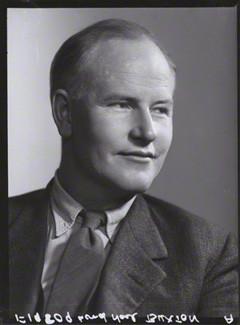
by Elliott & Fry, vintage print
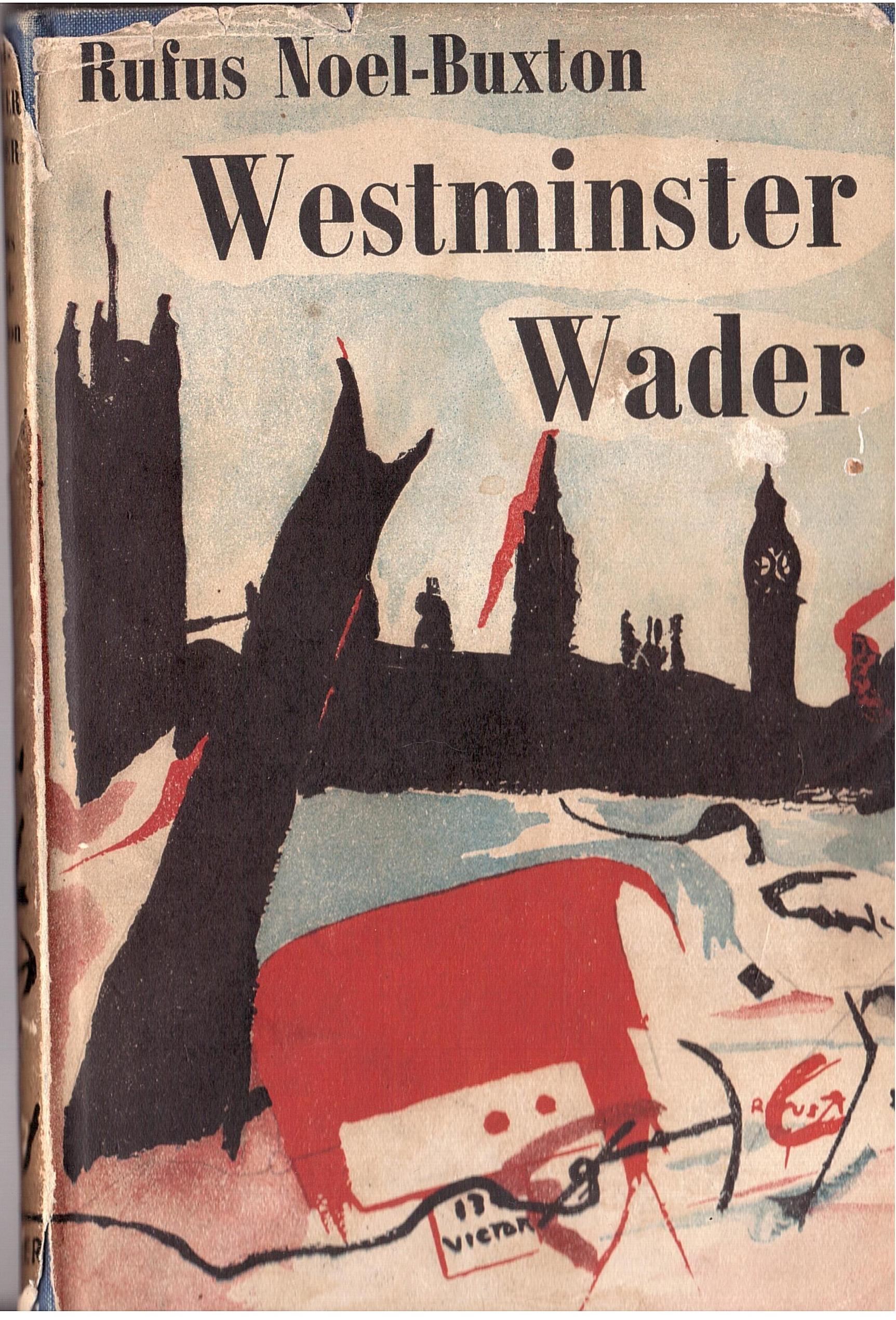
Rufus incidentally is Rufus Noel-Buxton. “The Ford” (written while wading!) was published by the Caravel Press in 1955 with a foreword by Masefield. “Westminster Wader” – an account of his wadings – was published by Faber in 1957 – with a lovely painting by the author on the jacket.

Some further recordings set to constant moving images can be found on my website

This is the Third Movement of Negative Time.
Like ‘negative space’, negative time suggests that form is created by what is missed out. Each dance in this series misses out some usually included ingredient in the art of tango – that is the art of leading and following in time. The ingredients jettisoned are connection, contact, and thirdly development. Finally all the ingredients come together in a fourth dance to the jazz impressionism of Duke Ellington.
Tango Schumann (Lindi De Angelis and Anthony Howell) presented a performance of Negative Time at The Room, 33 Holcombe Road, London N17 9AS (Bruce Grove and Tottenham Hale Stations) On Saturday 22 February 2014
Negative Time: Three Movements to Classical Music
1 Eric Satie – Tres Gymnopedias No. 1, Cécile Ousset
3 Alexander Scriabin – Prelude Op. 16, no 1, Vladimir Horowitz
Then a tango to a Jazz Impression
Duke Ellington orchestra – Isfahan
More videos and information can be found at www.tangoschumann.com
Very interesting post about sibling rivalry in the arts of poetry and photography.
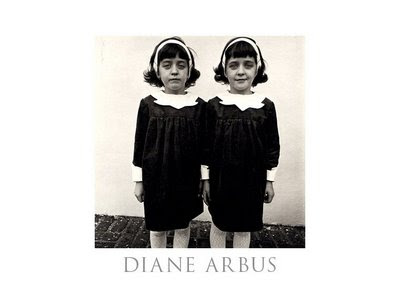
Has to be said, Nemerov was no slouch when it came to poetry. Here is one of his best.
BRAINSTORM
The house was shaken by a rising wind
That rattled window and door. He sat alone
In an upstairs room and heard these things: a blind
Ran up with a bang, a door slammed, a groan
Came from some hidden joist, and a leaky tap,
At any silence of the wind, walked like
A blind man through the house. Timber and sap
Revolt, he thought, from washer, baulk and spike.
Bent to his book, continued unafraid
Until the crows came down from their loud flight
To walk along the rooftree overhead.
Their horny feet, so near but out of sight,
Scratched on the slate; when they were blown away
He heard their wings beat till they came again,
While the wind rose, and the house seemed to sway,
And window panes began to blind with rain.
The house was talking, not to him, he thought,
But to the crows; the crows were talking back
In their black voices. The secret might be out:
Houses are only trees stretched on the rack.
And once the crows knew, all nature would know.
Fur, leaf and feather would invade the form,
Nail rust with rain and shingle warp with snow,
Vine tear the wall, till any straw-borne storm
Could rip both roof and rooftree off and show
Naked to nature what they had kept warm.
x
He came to feel the crows walk on his head
As if he were the house, their crooked feet
Scratched, through the hair, his scalp. He might be dead
It seemed, and all the noises underneath
Be but the cooling of the sinews, veins,
Juices, and sodden sacks suddenly let go;
While in his ruins of wiring, his burst mains,
The rainy wind had been set free to blow
Until the green uprising and mob rule
That ran the world had taken over him,
Split him like seed, and set him in the school
Where any crutch can learn to be a limb.
x
Inside his head he heard the stormy crows.
x
Howard Nemerov (1920 – 1991) from “The Collected Poems”, University of Chicago Press, 1977.
A wonderful post by the writer Kerry-Lee Powell

A New online poetry ‘zine. Glad to have a poem here at Blue of Noon
Check the magazine’s archive for provocative poems by other poets.
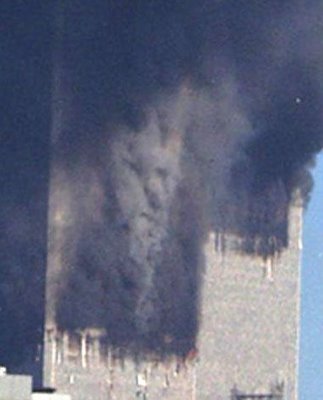
The poem is one that I consider abstract, and now there is another here – Back to the Salient
In this novel, available here, published in 2002, I could be describing the antics of Kappa Beta Phi -recently exposed in the Daily Mail. A secret society if ever there was one.
“…And so, I urge you all to strive for but one thing. To be above the world and its petty causes. Treat its beliefs with contempt. Nothing is as advertised. When acts are unspeakably “appalling” they are perpetrated with a nice impunity. And this is simply, simply because no ordinary, decent, common being can believe that such enormities could ever have been plotted.
In truth, it is easier to get away with big crimes than with little ones. Therefore I will finish this, my brief sermon, by saying unto you, Be outrageous. This should be the motto of the fine Cisnegro. Fleece them all! I give you the ship.”
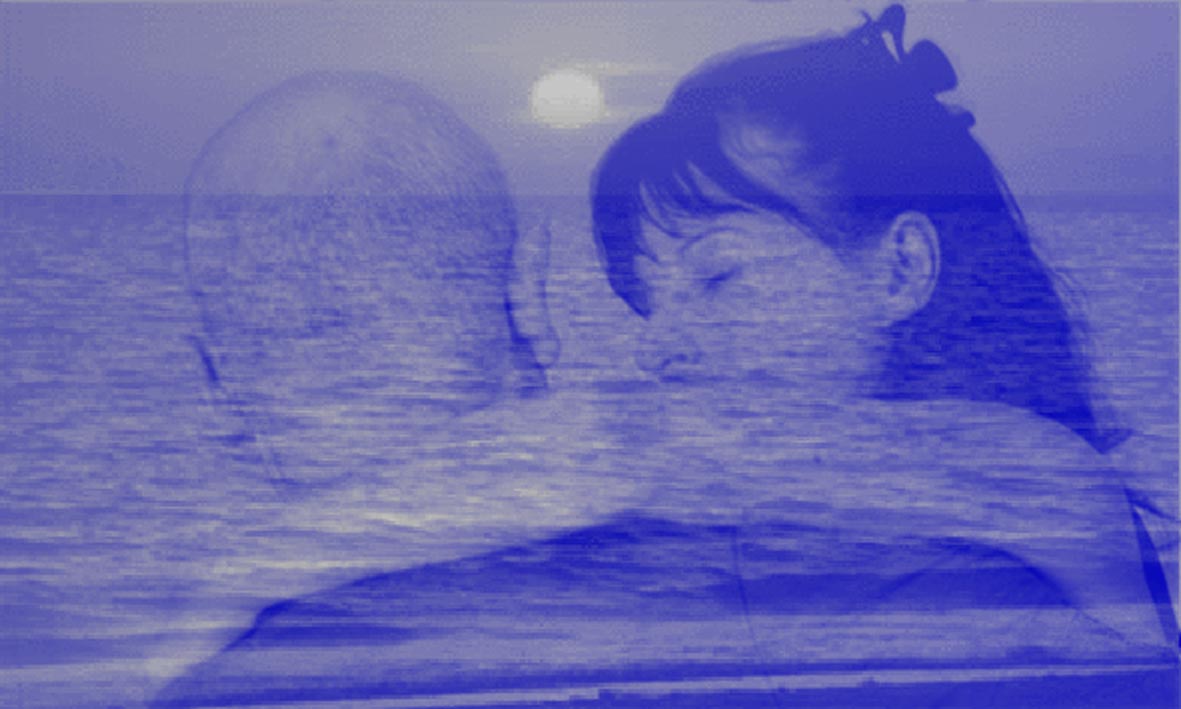
This is a quote from Oblivion, a novel about the Tango, published by Grey Suit Editions.
The quote is taken from an inaugural speech given by the leader of an international cabal of influential crooks dedicated to their domination of the planet. The speech is given on board a massive liner, the Cisnegro – which provides them with an HQ in international waters. Here is the full text of the speech:
“Gentlemen, ladies, pirates, nymphs and satyrs, on the eve of our first Bacchanalia, allow me to propose a toast, a toast to the Cisnegro, and to all who sail on her on this, her virgin voyage. What a marvel she is! What a treasure trove of facilities! Most of you will have taken advantage of the reclining seats in our planetarium. Some of you may have already discovered that our bordello has been replenished. Other treats are in store, and, from what I gather, everyone’s onshore ventures seem to be prospering, unaffected by paltry devaluations, since we attend to our own banking in zones safe from such vulgarities as pessification. We keep in touch with our business interests in the e-chamber, and, truth to tell, we are better suited to influence world markets here than we would be even in Switzerland.
Here, there are scant regulations, few proprieties, and no taxes! So let us delight in disorder. The Cisnegro, after all, might be called the flagship of anarchy. Look about you. Look at the busts of our heroes sculpted in porphyry, look at the sumptuous riot of our vines, look at the widening fans of our pliant palmettos, the sparkling of our precious stones. All tokens of unbridled zest. Here we have the acme of extravagance, the apex of indulgence and cupidity. Yes, and I truly believe, after meditation on the subject, that ours is the one truly liberated enterprise. In the public world, the term ‘free trade’ entails a host of disclaimers. We make no apologies, offer no excuses for our celebration of self-interest. Those weaker than we may band together in order to indict us, may call what we engage in illegality, but we, we do not shy away from their nomenclature. No, we embrace it. We acknowledge it here, secure on our floating estate, and indeed we may as well congratulate ourselves on the success of our venture, and therefore glory in our victory.
Victory, yes, for the fact of the matter is that criminality always has the upper hand. This is what has enabled us to fit out the Cisnegro. Our good ship is the spider at the centre of our world wide web. A web of deceit, of treachery, yes, and of unlimited power. The strands of its inter-knit mesh reach to the hearts of governments, multinationals, military establishments.
And what is the secret of all this? Listen. I will tell you all of just one little incident.
When our Serbian colleague arrived on board, he proceeded to take an intense dislike to our beloved Cardinal’s attire. We were between Rio and Panama. He drew his gun and took a shot at him, right here where we are gathered. Luckily the shot was deflected and only hit the chandelier. I remonstrated with our fiery confederate. Listen, I said, the Cardinal’s robe, your patriarch’s beard, the Ustasha dressed in jack-boots, Imr’s turban or Felix’s skull-cap, what are these to us? Only the dross has faith in such fancy dress. These belief systems, they are like… like the foliage in some painting by Manet, no more than a cheap backdrop.
You think the pharaohs believed in immortal life? No, they believed in being on top. Getting shoals of fools to build the pyramids, the pyramids that put them at the top, just required a little mumbo-jumbo. Funny hats and turbans work for us!
Then Señor Longhi spoke. As I recall, he put it like this. You lik-a the uniforms an you all gotta grudges. Gimme yor beret, you I vill give my beretta. Randolph, you see, now ‘e can ‘ave Benjamin’s cap. General Quincy, ‘ere, take Imr’s turban. Imr, ‘ave his military visor! Then we all laughed.
We like to laugh.
Yes, my friends, the Chinooks and the jump-jets touch down here and take off. Brilliant deals are done at these amicable tables. Never was there a more intrepid band of devious Argonauts. Over there the leader of one fanatic cult is accepting a billion dollar contract put to him by an investigative bureau. Call it gunboat conspiracy. The burning of the Reichstag, the bomb in Bologna Station. These are our emblems, their anniversaries being ours to celebrate.
And so, I urge you all to strive for but one thing. To be above the world and its petty causes. Treat its beliefs with contempt. Nothing is as advertised. When acts are unspeakably “appalling” they are perpetrated with a nice impunity. And this is simply, simply because no ordinary, decent, common being can believe that such enormities could ever have been plotted.
In truth, it is easier to get away with big crimes than with little ones. Therefore I will finish this, my brief sermon, by saying unto you, Be outrageous. This should be the motto of the fine Cisnegro. Fleece them all! I give you the ship.”
Oblivion is available from Grey Suit Editions in the UK, 33 Holcombe Road, N17 9AS – £10 + £2 postage -or through the website.
I am very pleased with this review for Silent Highway in STRIDE!
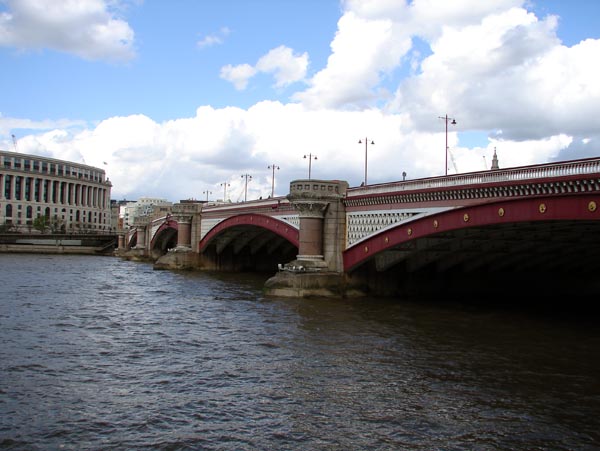
Link here to details – https://anthonyhowell.org/SILENTHIGHWAY_000.htm



 anthonyhowelljournal