BATRACHIANS

anthonyhowelljournal's avataranthonyhowelljournal

Toads mating

A wary nod suffices on the cycle track.
It follows an extensive reach where breezes
Dint the idling river. Clustered round
A sewer’s lid, cow parsley thrives, as muddied
Clouds abet the treacherous stillness of
This prelude to the weir where nothing shows
How such a lazy seeming stretch accelerates
Before the chute. Slowly the clouds go over
The edge of it onto that wide white slide,
While spinning eddies make a sudden rush
Between protective bars, and concrete ducts
Convey these churning waters into culverts
Open to the gaze below some grills. This
Is where toddlers and teenagers too have been
Seized by the vortex, dragged, as by the hair,
Down to a mesh the surface masks. At trestle
Tables, here, the weir’s enthusiasts
May brood, one to a bench, while boys with caps
Turned back glide by, darting glances at
Girls with distant hair, sat on the bank,

View original post 69 more words

Posted in Uncategorized | Leave a comment

MPASTURAVACCHE – Jatun Risba at The Room

In December 2019 I was honoured to host MPASTURAVACCHE: The milk-suckling snake (2019) – a one-to-one performance created and performed by Jatun Risba– at my space The Room, in Tottenham Hale, London. Risba states her own motives and intentions in texts related to this performance, but I prefer to attempt to convey my reactions as they came to me at the time.

The audience booked a time slot individually with the artist, and it was decided that a knock on my front door would mark the conclusion of the previous visit. I applied for a time-slot myself, and at the time appointed I duly knocked on the door to the studio.

I entered a space blacked out except for the light from projections or from equipment utilised by the artist. I was handed a headset for virtual reality with thermal vision, however, I entered the space without wearing this, and I could see the artist, naked, standing in a bowl, wearing a large horned helmet, but the first thing that struck my eyes was a projected text trembling on the floor in front of me:

For I am the snake that is the beginning and the end of the human.

I am the most venerated and most despised cow,

I am the whore, the Negro and the Madonna,

I am the virgin and the widow,

I am the mother, the father and the rejected daughter.

I am my grandmother’s bare arms, the meaning out of my grandfather’s breasts.

I am sterile and bloodless, yet fertile,

I am an unnameable creature, married and single,

I am the one who gives birth and the one who never procreated,

I am the one who consoles from the pains of delivery and dying.

I am a bride and a groom who have no possessions.

And my sex nourishes my augmented sense, my dilated sensations,

I am the Cow of God,

I am the foot of my husband’s plant,

And he is the son who I’ve rejected.

Always respect me,

For I am the shameful and the magnificent one.

The text intrigued me. It was both sublime and abject. As I was taking it in, I looked up, walked through the projection, approached the artist. I looked closely, as if I were examining a sculpture in that dark space. Her tongue never ceased flickering in and out of her mouth, her wide open eyes followed my eyes and constantly regarded me. There was also a constant smile. The effect was as paradoxical as the text. The artist was an oxymoron: a contradiction in terms. The terracotta bowl, filled with earth, in which she stood, made her powerfully “grounded” while the big horned helmet gave her head a mightiness, but this in turn drew attention to the vulnerability of her breasts, the provocation of swaying hips and her vulva. I put on the thermal vision headset. At first I was disorientated, since I had no idea what these were: yellow, red and orange colour oozed together. Then I began to get my bearings, and aimed these googles in the direction of the performer, aware now that I was performing with her. In thermal vision her body appeared to me as a primitive archetype, a blurry vision of orange and yellow. The vision swayed. I sensed the sinuous articulations of the spine. There was a voluptuousness to the image. Now this primordial vision, generated by modern technology, raised her hands. She touched the horns of her helmet. Twin circles framed her head. I sensed her through her heat.

The performance made an impression. I found myself examining my own reaction as if it were part of the performance, I felt ancient mythic truth covering me like a fluorescent shawl generated by the most modern means, I felt an erotic urge to take advantage of the subject’s vulnerable nakedness, coupled with an internal warning not to transgress. I wondered how different this performance would be for me if I were a woman – or a child. It reminded me of how, when I was seven years old, I had gone into a tent at a fair where a naked woman stood motionless behind a gauze, the first woman I had seen naked apart from my mother. How fantastic it would have been, had I entered that tent, and experienced this current vision of sensuality fused with power.

Jatun Risba’s weaving together of art and science is highly original. That she uses modern technology to pitch her audience back into a primordial world, where woman is snake, where communication is heat, where audience and icon become seemingly umbilically joined in the performance of their own privacy is remarkable. Through her performance she reinstalls in our mind that there are other powers as formidable as mere brute strength; powers which feminism sometimes disparages as irrelevant to some notional conflict between the sexes. I think this is where the oxymoron makes itself felt: the power of Aphrodite is equal though dissimilar to the power of Aries. There was indeed something powerfully beautiful about this performance.

Anthony Howell, December 2019

Posted in Performance Art | Tagged , , , , | Leave a comment

Whatever happened to Hapi?

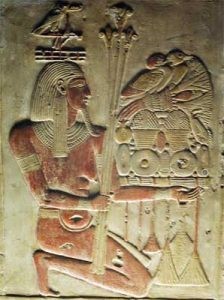
“Lord of the Fish and Birds of the Marshes” and “Lord of the River Bringing Vegetation”, Hapi is the Egyptian God of the Nile. He has one pendulous breast full of nourishment, as well as a pot-belly. He is God of the annual flood. His big belly shits out volcanic silt from the upriver plateau; silt that acts as a fertiliser for all the fields and trees bordering the Nile. But Hapi has been exiled from his own river.

As this documentary “Struggle over the Nile” shows, Nasser’s erection of the High Aswan Dam, sponsored by the Soviets in the sixties, fundamentally changed the ecology of the area.

Aswan High Dam, is an embankment dam which was built across the Nile in AswanEgypt, between 1960 and 1970. Its significance largely eclipsed the previous Aswan Low Dam initially completed in 1902 downstream. Based on the success of the Low Dam, then at its maximum utilization, construction of the High Dam became a key objective of the government following the Egyptian Revolution of 1952; with its ability to better control flooding, provide increased water storage for irrigation and generate hydroelectricity the dam was seen as pivotal to Egypt’s planned industrialization. Like the earlier implementation, the High Dam has had a significant effect on the economy and culture of Egypt. (Wikipedia).

Now the nourishing silt no longer reaches downriver.

Meanwhile, upstream countries in which the Nile has its sources – Sudan, South Sudan, Ethiopia, Uganda, Congo, Kenya, Tanzania, Rwanda, Burundi – are building their own dams, drastically reducing the flow of the river downstream. The dams also flood huge territories, such as the home of the Nubians.

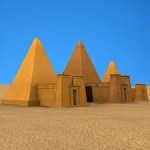
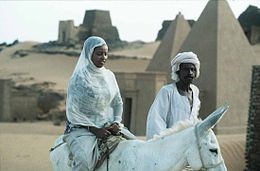
Nubian civilisation is one of the most ancient in the world. There was a Nubian dynasty of black pharaohs, and their pyramids are wonders of the world. See this interesting documentary The Kingdom of Kush. 

Nubia is being destroyed and the Nubians are being displaced and their entire existence is under threat:

“There is (a) holy mountain further north on the Nile, in a town where Ali Osman Mohamed Salih, a 72-year old professor of archaeology and Nubian studies at the University of Khartoum, was born. His parents taught him that God lives in the mountain, and that because people come from God, they too are made of the mountain. This logic links the present with the past, and a people with a place. Salih says it means, “You are as old as the mountain, and nobody can get you out of this land.”

Salih is concerned that three new hydroelectric dams that Sudan’s government has planned along the Nile might do just that — along with drowning Nubian artifacts. According to an assessment by Sudan’s National Corporation for Antiquities and Museums, the reservoir created by one planned dam near the town of Kajbar would flood more than 500 archeological sites, including more than 1,600 rock etchings and drawings dating from the Neolithic period through medieval times. Estimates from activists in Sudan suggest that hundreds of thousands of people could be displaced by the dams.

Salih has protested Nile River dams before. While passing through Egypt on his way back home in 1967, he was detained in Cairo for his open opposition to the Aswan High Dam near the border of Sudan in Egypt. The dam created a 300-mile long reservoir that submerged hundreds of archeological sites, although the most grandiose were relocated to museums. It also forced more than 100,000 people — many of them Nubians — from their homes. Governments of countries along the Nile justify hydroelectric dams by pointing to a need for electricity. Today, two-thirds of Sudan’s population lacks it. However, history shows that those whose lives are uprooted are not always those who benefit from electricity and the profit it generates.”  Click this link for full article

All this exacerbates the plight of Sudanese Refugees.

Hapi weeps in exile. Myanmar, Palestine, Sudan. Will Hapi now become “Lord of all displaced peoples”?

See also my previous post about the warrior queens of Kush and Nubia

This blog post will be updated – as it isn’t only Hapi of the Nile who is in trouble. The God of the Euphrates for example.

.

But hold on! Is it all doom and gloom. Do these guys at Genesis Systems have salvation in their Watercubes?

Posted in art, history and Geography, Politics, Uncategorized | Tagged , , , , | 2 Comments

The Second Coming?

I totally disagree with Polly Toynbee’s miserable attack on Corbyn (13/12/19) in the Gruniad. The problem, as I see it, is that the toffs can always count on the working class to attack the middle class, since the workers perceive the middle as their enemy more than the toffs, and that is to a certain extent correct.

Corbyn’s mistake was to offer a second referendum, since though he decided to build his platform around basic principles, Johnson accurately perceived he could win if he made it about pitching the country against itself – ie that Brexit was the issue and the sole issue. Of course it isn’t, but Johnson read the mood. That is why he avoided all interviews on any other subject. He just wanted his slogan to get across. The Brexit party may seem like gumboot toffs, but the real push for Leave was among the working classes who have been furious that Labour might renege on the original referendum. They are who punished Corbyn.

I found Corbyn rock solid. Full of agility, charm and credibility. I always said to my pals that I agreed with him sitting on the fence over Brexit – and he was right to do so. His mistake was to get down from sitting on that fence.

Corbyn had a choice, either alienate the middle classes and London by saying the referendum had already been decided and he would never renege on that decision, which would have helped him retain the working class, or do as he did and offer a referendum at the end of the process, which would have placated the middle and London, but could AND DID alienate the working class. Personally, I see that as a difficult call, but I think his was the correctly principled and democratic decision – however it lost him the majority.

On top of that, the implacable hatred of him from the Zionist-bought press harmed him with the stupid middle as well. And there are plenty of stupids among the middle, including this woman, who was never part of the answer.

What Corbyn has achieved is that we may now have killed off the vestiges of new Labour (another contributing factor to his defeat since they were all such wasps towards what the party wanted by voting Corbyn in as leader and towards him as a rival for their power) and he has won over a huge percentage of youth to Socialism. Corbyn attracted popstar crowds (unlike Johnson who only managed to get who he paid for). My fear is that if he resigns we will get a fucking Blairite back. In which case, I will become a communist and give up on democracy in a world where  The Leaders’ Group puts 50 billion at the disposal of the Right, all derived from private backers. That is the problem and the situation. Anthony 13/12/19

THE SECOND COMING

Turning and turning in the widening gyre
The falcon cannot hear the falconer;
Things fall apart; the centre cannot hold;
Mere anarchy is loosed upon the world,
The blood-dimmed tide is loosed, and everywhere
The ceremony of innocence is drowned;
The best lack all conviction, while the worst
Are full of passionate intensity.

Surely some revelation is at hand;
Surely the Second Coming is at hand.
The Second Coming! Hardly are those words out
When a vast image out of Spiritus Mundi
Troubles my sight: somewhere in sands of the desert
A shape with lion body and the head of a man,
A gaze blank and pitiless as the sun,
Is moving its slow thighs, while all about it
Reel shadows of the indignant desert birds.
The darkness drops again; but now I know
That twenty centuries of stony sleep
Were vexed to nightmare by a rocking cradle,
And what rough beast, its hour come round at last,
Slouches towards Bethlehem to be born?

W.B.Yeats (1865-1939)

Posted in Essays, Politics | Tagged , , | 4 Comments

Latest News from Grey Suit Editions

There is a new review of The Step is the Foot . It’s by Alan Price in the Fortnightly. Follow all our posts on the blog of Grey Suit Editions, click link below.

Grey Suit Editions

This year we published two books – The Step is the Foot and Gertrude Mabel May, and a new chap-book is now published by Lorraine Mariner, whose brilliant collection Furniture  is available on Picador.

Grey Suit Editions publishes poetry chap-books and now longer publications as well, and it has an archive of videos of performance art, poets reading, film and music from its seminal video magazine published in the Nineties. All details can be found on the website at the link above.

Posted in Dance, Essays, Grey Suit Editions, Poetry | Tagged , , , , , , | Leave a comment

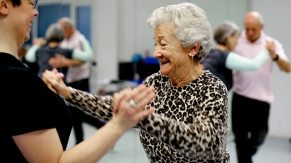
The Walking Dance

Fay Laflin’s excellent Tango for Balance class is featured on the BBC here

It was broadcast on Radio 4 10.30 am Tuesday 10th December 2019
Here is a LINK to the recording.

Posted in Dance, Parkinsons, Uncategorized, Video | Tagged , , , | 1 Comment

How I see this journal

A comment on the nature of this journal, made when I first set it up in 2011.

anthonyhowelljournal's avataranthonyhowelljournal

Shiva

I am advised that the best blogs are focused.   But I want this site to reflect the diversity of my interests – poetry, dance, performance art, essays and music.  Over the years, I have become reconciled to being a Jack of all trades – as I try to express in this poem:

PHYSIS

Jack, the strong octopus,

With more arms than a company,

Embraces with his trades

The ideal of metamorphosis.

Nataraja, dancing the Tandara

On the demon of ignorance,

Is the transformer, the storm,

His tentacles muscular,

Their tips accurate,

And delicate – expressive,

With a finger to a pie.

Now I know nought whatsoever,

But to walk through her

As she walks through me

Arouses the drum, the cobra,

The flame and the gesture.

My love is my weight:

Where it goes I go.

More comprehensive information can be found on my website – http://www.anthonyhowell.com — which…

View original post 50 more words

Posted in Uncategorized | Leave a comment

Yeah! High Fives all round!

Update August 2023: over 65,000 views! Over 40,000 visitors!

Thanks to all of you who have clicked on any post of mine. As an outlying writer, a maverick and ancient fellow, I hugely appreciate the response and attention I get here.

Latest publishing projects can be viewed at Grey Suit Editions UK

This was originally an Anglo-Canadian initiative I edited and published along with the brilliant poet and short story writer Kerry-Lee Powell. The original website has 13 hours of video created in the 90s

The videos contain readings by F.T. Prince, John Ashbery, Peter Didsbury, Anne-Marie Albiach and others and also include performance art, new music and new film.

Thanks to Kerry-Lee, and to Dennis Boyles, editor of The Fortnightly Review, of which I am a contributing editor. As with posts here, it’s always worth clicking the links in their articles and their images. Such links are the treasures of online publishing. And I am grateful also to The Fortnightly ‘Odd Volumes’ series for publishing my latest “novel” Consciousness (with Mutilation) this year.

Thanks also to David Cooke at The High Window Press for bringing out my two latest books of poems From Inside and Songs of Realisation.

Latest publication Invention of Reality – also from the High Window.

Thanks also to John Tranter for publishing me so often in the Journal of Poetics Research, Australia.

And thanks to Michael Schmidt at Carcanet for continuing to stock previous Anvil Press titles and for publishing my versions Iraq’s finest poet of our time – Fawzi Karim.

May he rest in peace.

Other sites I manage include The Theatre of Mistakes – which I was honoured to be a member of back in the day.

Also Tango for Balance – my trademarked site for teaching tango exercises for those suffering from gait problems such as Parkinson’s Disease – which is now brilliantly carrying on with Fay Laflin’s teaching.

And finally, Tango Schumann – which I performed with Lindi de Angelis, and will continue to perform when the opportunity arises.

My website Anthonyhowell.org has more links to artists and writers I admire. And a warm thanks to all the poets and performers who I have had the honour to host at The Room over the last twenty years.

Posted in Parkinsons, Poetry, Reviews, Uncategorized | Tagged , , , , , , , , , , , | Leave a comment

Iliassa Sequin 1940-2019

The death has occurred of Iliassa Sequin, a poet much admired by the New York School. She was a friend of Nobel prize winner Odysseas Elytis, Paul Celan, Max de Carvalho and John Ashbery. Grey Suit Editions will be publishing her Collected Completed Poems this Autumn.

Click the link here for some poems of hers chosen by Miles Champion.  Three Quintets were also published in Conjunctions 12. Her work is also included in Oblek-5 edited by Peter Gizzi.

Grey Suit Editions has now published (April 1 2021) a comprehensive collection of her work –  Iliassa Sequin Collected Complete Poems.

I will post more details here as to launches, and I welcome contributions in comments from her friends and admirers.

Iliassa Sequin, Poet (1940 – 2019) – from the biographical eulogy by her husband, read at the funeral 14 Nov 19.

Iliassa was born on April 13 to her mother Eunice in 1940 on a small island in the Cyclades, where her father Alexis Economos was a high school teacher. She had a brother Nicos and a sister Vera. Soon after her birth, the family moved to Athens living under the Acropolis in Plaka. Writing poetry from an early age, Iliassa initially enrolled in the Panteion University to study social and political studies. Against her fathers wishes she changed course and enrolled in Carolos Koon’s theatre (with her stunning looks an acting career loomed).

With musicality in language uppermost in her concerns, she developed an original poetic style expressing a severe disquiet for the status quo. This led to her to being befriended by Odysseas Elytis  (later a Nobel prize winner). He saved her from an attempted teenage suicide after her father had forbidden her to attend her studies at the theatre – even going as far as threatening to sue the theatre for allowing Iliassa to attend without paying fees. In 1958, she felt obliged to abandon her studies (she literally ran away to Germany). From then on she flitted between Germany, Italy, France and Sweden (the playwright’ Peter Weiss and the critic Susan Sontag offering accommodation and moral support), only returning to Greece for the briefest of visits.

Fluent in all these languages, existing frugally on temporary jobs throughout the 1960s, she met and corresponded with many poets including Giuseppe Ungaretti, Paul Celan (who became a close friend), Louise Kaschnitz & Andre du Bouchet. Very recently, Iliassa translated his poetic commentary on the painter Bram van Velde –  Le Couleur – which remains unpublished. In later years, English being her second language – she would insist it was her first – she saw her poems published in L’Ephemere, L’Ire de Vents and Les Belles Lettres  – in English with French translations. On the cusp of moving to London in 1969 John Ashbery published her in the Partisan Review – leading her to becoming associated with the New York school of poetry. In London, through the sculptor Brian Wall, she met her husband-to be Ken Sequin (at that time a reportage illustrator) and commenced writing plays for a puppet theatre (she tried to have her highly political plays performed without much success).

Moving to Yorkshire in the mid 1970s (Ken taking a lecturing post there) Iliassa commenced writing poems parodying pastoral and romantic notions of country life. Then the painter & writer Trevor Winkfield accompanied the pair on a visit further north to Scotland, where he introduced Iliassa to Ian Hamilton Finlay who, intrigued by her non-confessional formally innovative style, suggested that they should not dawdle too long in Yorkshire. This, together with Ken’s deteriorating health (Iliassa insisting that this was due to the stultifying lifestyle of academia imposed on art lecturers) prompting their return to London in 1992 .

With Ken painting again, Iliassa embarked on new work; as always exploring the musicality of language. Themes such as the sinking of the Kursk submarine in the Baltic (G.M. Hopkins’ poem The Wreck of the Deutschland being an inspiration), the plight of the refugees arriving in Greece being another, poems flew from her antiquated i Book. She translated the aforementioned poem for Andre du Bouchet and saw some of her poems again published in France – notably in La Treizième published by the poet Max de Carvalho. (a selection of her correspondence with Andre also being prepared for publication).

Otherwise little has been published – apart from in the New York Journals New Conjunctions and the Siennese Shredder – which published some of her many quintets. Cinema Sextet –  inspired by the work of Ken Loach & Richard Dadd (an exploration of the Victorian painters’ psyche) also came out in a dual translation in La Treizième. Iliassa had only one chapbook published in her lifetime Quintets -published by Peter Gizzi in O-blek Editions.

In recent years, Ken & Iliassa began a productive collaboration together, writing short stories and poems. In fact, most of Iliassa Sequin’s remarkable oeuvre has remained unpublished. An unpardonable omission in UK publishing. All in all, we have so far only had a glimpse into a remarkable achievement.

Posted in Grey Suit Editions, Poetry | Tagged , , | 3 Comments

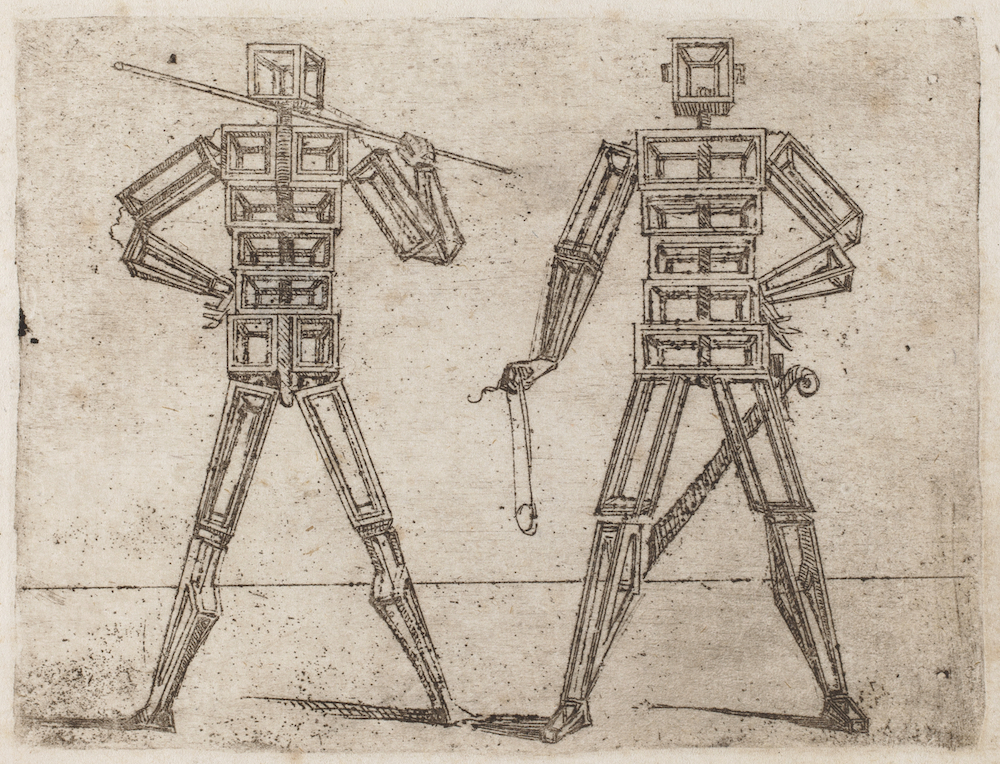
Bracelli’s modern art – 1624

Bracelli2

https://publicdomainreview.org/collections/bracellis-bizzarie-di-varie-figure-1624/

I have long maintained that art has its rivers that have been flowing through culture at all times, and my friend Roger Malbert just sent me the interesting link (above), posted by The Public Domain Review.

This bears out my view, I feel, and I suggest those interested in the various modes  that art and literature have always employed visit my post ART AND ITS DARK SIDE – an introduction to the eight rivers of Art.

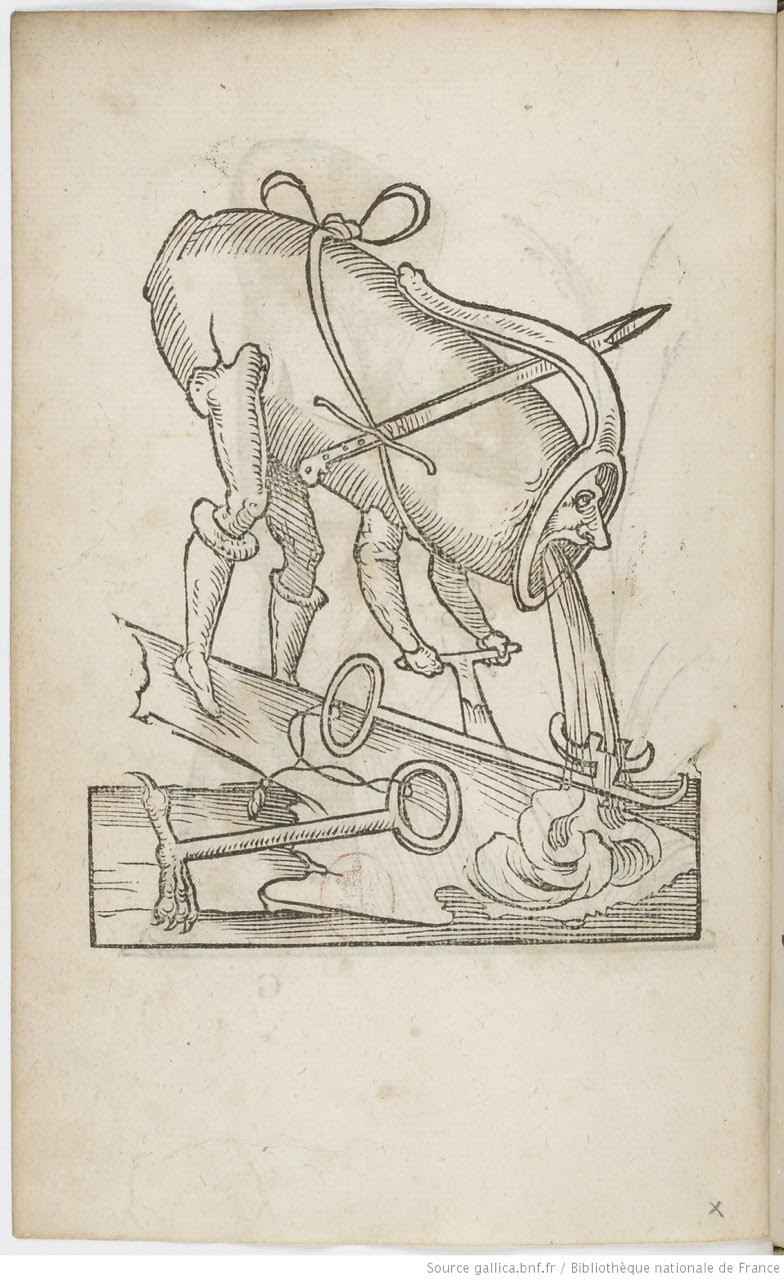
Another friend, Tim Hyman, suggested these illustrations of Rabelais: from the

SONGES DROLATIQUES DE PANTAGRUEL- 1565- by Francois Desprez (?)

songes drolatiques 2

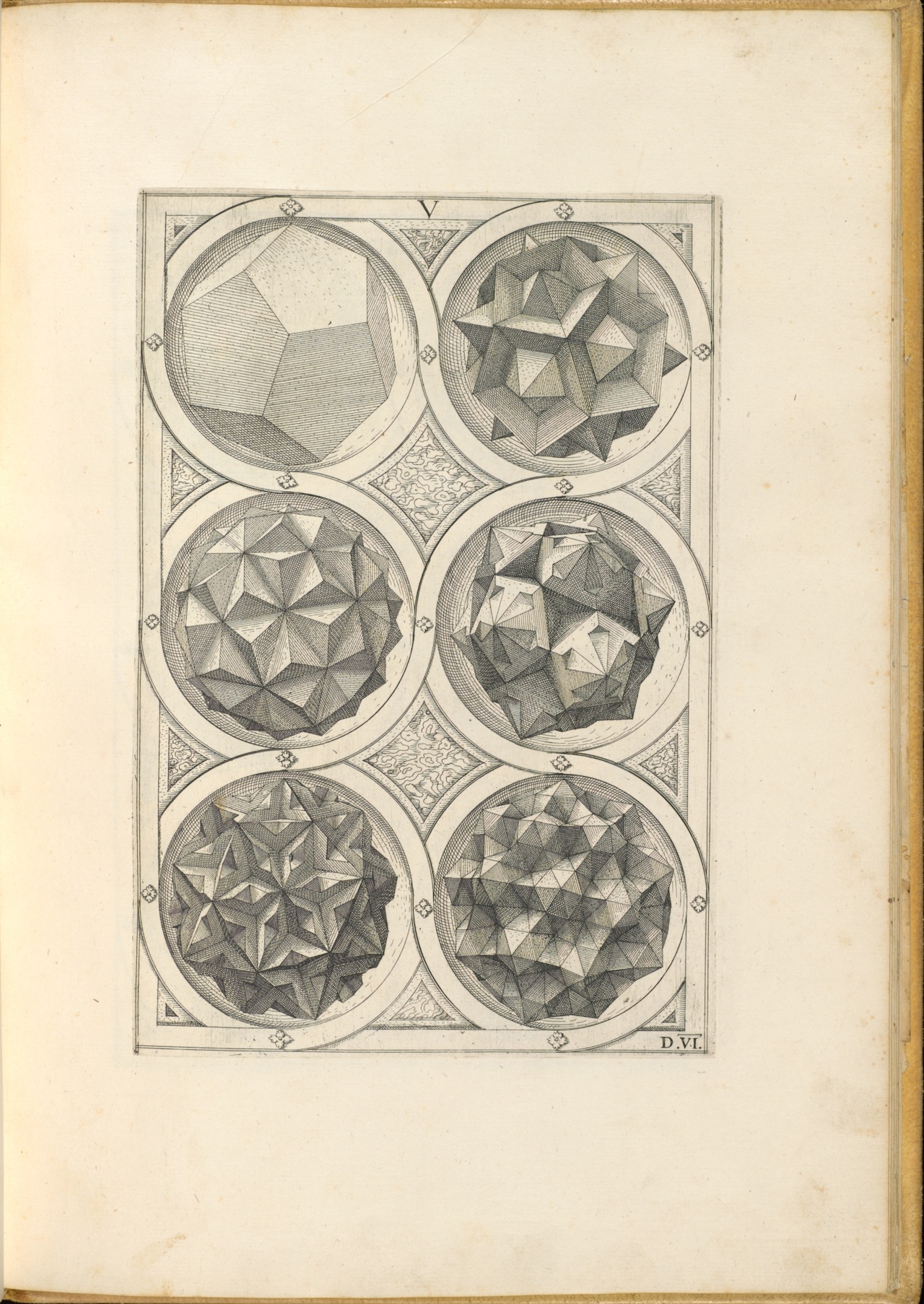
So from the formal preoccupations of cubism to the capricious inventions of surrealism, all forms of inventiveness have precedents, and the new is, rather, that which is taken up again. This holds true for “Minimalist geometry”.

This is published in the brilliant online arts magazine Hyperallergic.

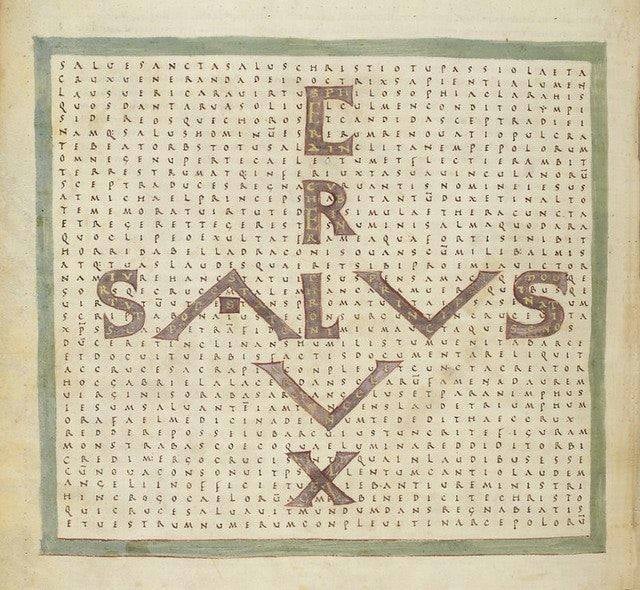
It is not just abstract art. Concrete poetry dates back at least to the 9th Century AD:

See this article on Rabanus Maurus in the Public Domain Review

Posted in art | Tagged , , , , | Leave a comment