Mark Ford, Raymond Roussel and the Republic of Dreams, Faber, £25.
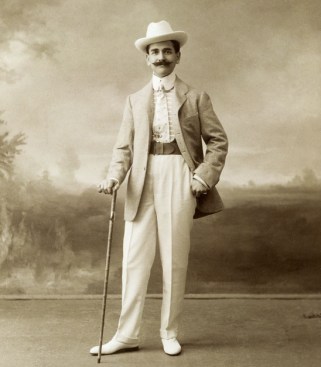
The russet-stemmed variables in my dictionary of French art and literature provoke ironic reflections. Rousseau, Henri – le douanier – emblem of naivety; Rousseau, Jean Jacques – pioneer of confession; Roussel, Raymond – advocate of the imagination. In contradistinction to the naive painter, Roussel was the sophisticated littérateur. Yet in many ways, Roussel is as much of an outsider as le douanier. Unlike the educationalist of the eighteenth century, Roussel avoided saying anything about himself. Yet from the writings we sense that we get at the man.
Let us first compare him to the naive ‘customs official’. The small number of near perfect canvases by Jan Vermeer testify to the fact that the artist was something of an amateur (he made his money from running a gallery), and while Roussel is just as meticulous, he never made a penny from his literary productions. On the other hand Henri Rousseau, a painter of baboons attractively located in jardins des plantes, seems ultimately a very professional sort of Sunday painter. Was Roussel’s famous method – in which the first line of a narrative is a perfectly rhymed pun on its last line – actually a form of literary autism? And as for the euphoric experience of grandeur that came over him as he wrote, was he as Janet, his psychiatrist, suggests, just suffering from a form of religious mania? I once knew a man who was compelled to create spoonerisms. He would invert consonants at the hop of a drat – irrespective of whether there was anything to be gained by so doing.
And was Roussel’s writing any less confessional in its own perverse way than that of Jean Jacques Rousseau? When a two dimensional image is presented to us we try to extrapolate the viewer for whom we are a surrogate. So precise are the calculations in the church interiors painted by Pieter Saenredam, that from the governing perspective one may deduce where to stand, ending up before the very flagstone on which the artist set up his easel. In this sense, for all his eschewal of auto-biographical material, Roussel could not help but construct a self-portrait through meticulous description – such as we find in La Vue, his early sixty-page poem. As our eye-lash brushes against the peep-hole of the pen-holder he describes, we allow our eye to become his, and we see the beach-scene contained in its lens as imprinted on his retina, which is why the view is panoramic rather than minuscule, for we are inside his head, peeping at his primal scene.
Creativity has is ceremonies, and ceremony celebrates birthdays, anniversaries. In our mental and emotional makeup, we may discover the trace of a single event which influences all subsequent events. Our traumas have their birth, and the coincidence of further disturbance on the anniversary of one of these may bring about neurosis as the initial incident becomes over-determined. Fears condense around it, and now the return to the event becomes compulsive, a frozen moment kept constantly in mind – an artificially maintained condition of stasis. In Roussel’s “view”, the event is frozen. Just as one might be guided around an exhibition, we are taken on a tour of the beach glimpsed though the pen-holder. But nothing moves or changes:
‘One of the first characters we meet on the beach is a child who has just hurled a stick for his dog – a recently barbered poodle – to chase. Towards its conclusion, the poem circles back to the same spot of beach, where the boy is still in the act of throwing the bit of driftwood and his eager dog still on the point of setting off in pursuit.’
Republic of Dreams, p. 84.
But perhaps I should be wary of deriving an analysis of this writer’s nature from his work. Allon White, in his excellent Uses of Obscurity, has shown how the nineteenth century tendency to use the text as the excuse for psychological sleuthing drove authors such as James, Conrad and Meredith into elaborate obfuscation. Modernism had its birth in that desire to evade the hook of the shrink. Dickens had proved fair game. Freud came somewhat adrift when he attempted a portrait of Leonardo’s psyche derived from a reading of his pictures. He settled later for analysing the text of that remarkable novel Gradiva, without making any observations about its author Wilhelm Jensen.
It is not my intention either to offer a deconstruction of Roussel’s oeuvre. I am more interested in debating an aesthetic issue – namely that of homeostasis and what it means – using Roussel’s fiction and his poetry as my spring-board, while referring to certain aspects of the way he lived, as described in Mark Ford’s excellent biography of the author.
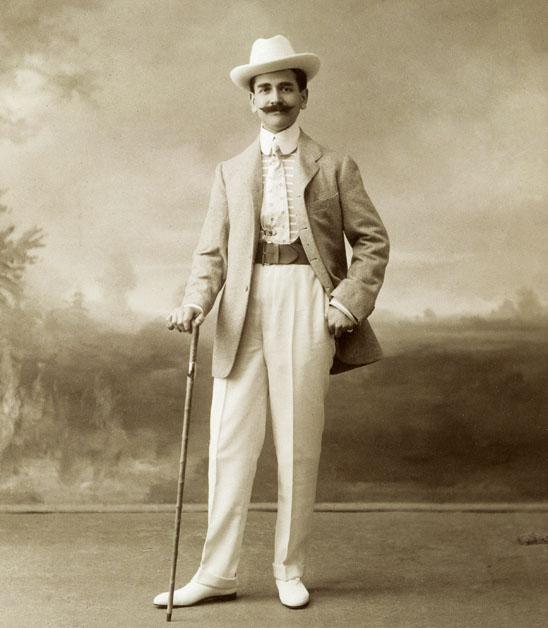
In homeostatic systems, input equals output. Roussel was excessive in his desire to maintain homeostatic control of the available energy in his system in order to maintain a perfectly neutral entropy. An exquisite dandy, he would have recoiled from the wantonness kindled by Herrick’s notion of “a sweet disorder in the dress.” As with his grooming, his conception was immaculate – it admitted of no input. After his mother’s death, Roussel retained her staffing arrangements at the villa he inherited in Neuilly, however his various meals were compressed into a single marathon which started with breakfast at 12.30 and ended, after lunch, tea and dinner, with a dessert some five hours later. As Ford puts it:
“There seems no doubt that this elaborate ritual was Roussel’s way of preserving the luxurious culinary traditions established by his mother; given his ‘phobias in relation to food,’ it also seems likely – as Guillot (one of the under-cooks) suggests – that most of these elaborate dishes ended up being consumed by his enormous establishment below stairs.”
(…Republic of Dreams, p. 179)
Lacan has pointed out that when a child will eat nothing this is a positive act of consumption. One is eating le rien – the nothing, the nothing one considers one’s relation with one’s mother to be perhaps. Roussel had a vast appetite for the nothing. He says nothing about himself. His writings have nothing to do with the external world.
Homeostasis, may be defined as the maintenance of metabolic equilibrium within an organism by a tendency to compensate for disrupting changes. The equilibrium is established through the ejection of surplus material. It’s a notion developed in Freud and Breuer’s meta psychology as the ‘theory of constancy’, for homeostasis can also be defined as a universal tendency in all living matter to maintain constancy in the face of internal and external pressures.
The term has implications for ‘the pleasure principle’ – the aim of which is to rid the person of tension, or, if this is impossible, to reduce the amount of tension to a low level and to keep it as constant as possible – this is ‘the sum of excitation’ that might be described as the nervous system endeavouring to keep something in its functional relations in equilibrium. This notion can be visualised if we contemplate John Harrison’s First Marine Chronometer.
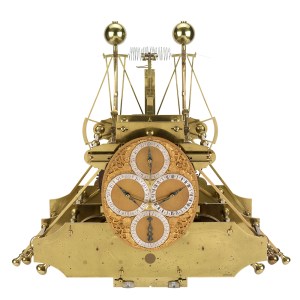
Front view ZAA0034
Tension is experienced as pain or discomfort, while relief from tension is experienced as pleasure or satisfaction. Homeostasis is a neutrally entropic process, that is, it does not cause any new development in the organism. The organism simply seeks to maintain a certain plateau undisturbed by upward or downward noise. As such, it is a stable oscillatory system: it wobbles only to right itself, rights itself only to wobble again.
Anthony Wilden maintains that homeostasis is a principle which may be applied to social processes:
“Rappaport has shown how the Tsembaga of New Guinea employ a digital device to regulate the analog relationships of the biosocial ecosystem in which they live (1968,1970). The boundary between ‘not enough pigs’ (to propitiate the ancestors) and ‘too many pigs’ (for the local ecosystem to support) is indicated by the planting or the uprooting of a symbolic tree. The either/or status of the tree indicates ‘to whom it may concern’ that the relationship between system (the Tsembaga) and environment (nature, pigs, other local groups) is about to change. The system is complex, having to do with war and peace, ritual, and the amount of available protein (energy=pigs) in the system. At the termination of intergroup hostilities, there are never enough pigs to slaughter to properly propitiate the ancestors for future success in war. A symbolic debt is created. After a certain period of truce during which the pigs are allowed to multiply, however, the pig population becomes too great for the local ecosystem to support. When the complaints about the pigs’ destruction of vegetable gardens reach a certain intensity (when there are ‘more’ rather than ‘less’ pigs), the tree is uprooted, the ritual preparations for war begin, and the mature pigs are slaughtered.
Thus, just as the on/off characteristics of the thermostat halt the positive feedback (escalating difference) of a continuously increasing or decreasing temperature by introducing negative feedback, so does the status of the symbolic tree indicate by digital means that a particular level of difference – ‘too much’ or ‘too little’ – has been reached. The result is the homeostatic control of the available energy in the system to maintain neutral entropy, and thus to preserve the RELATIONSHIP between the Tsembaga and every facet of their environment.”
Anthony Wilden, System and Structure, Tavistock Publications (date unknown) p. 159-60.

In my view, homeostasis also allows for an organic apprehension of the work of art, a sort of biological view of aesthetics. As Picasso remarks to Christian Zervos (editor of Cahiers d’Art) in 1935: ‘The painter goes through states of fullness and evacuation. That is the whole secret of art. I go for a walk in the forest of Fontainbleau. I get “green” indigestion. I must get rid of this sensation into a picture. A painter paints to unload himself of feelings and visions.’
As it nears completion, a painting, a performance or a poem can be discomforted by that which throws it out of kilter: the clutter which disturbs the serene balance of a canvas, the redundant action which adds nothing to the performance, the unnecessary adjective or surfeit of imagery in the poem. Homeostasis is achieved by getting rid of these superfluities, by creating a situation where each element is under no more stress than any other, and where no element is subservient to another or merely there as a buttress, and where each part is essential to the whole. A poem ‘holds itself together’. There is a diminution of “noise”, an ejection of surplus material, an economic telescoping of the elements.
The sadness associated with coitus also speaks of the homeostatic process. We are relieved by ejaculation and orgasm, but saddened that by so doing we have expended our sexual electricity. Thus we are now at a loss for desires, and must wait until the reservoir gets replenished and the tension builds up in us again. A dilemma ensues compounded of contradictory pressures – to delay the sadness we must put off the relief. So now the homeostatic output gets arrested. The lover pulls out without spillage, as in Tantric intercourse – conserving his resources, since increase in tension causes a concomitant increase in the power of the sensation of relief when eventually the floodgates are opened. A catapult operates on the same principle. But can homeostasis be carried to an extreme – so concentrated on constancy that it resists both input and output, like some nut which proves impossible to crack? Imagine a perpetually suspended catapult. Eventually its chord will perish. An unknown artist occupies a hotel room and embroiders her name on the sheets. Will anyone ever recognise this art-work? Can art be too secretive, too self-contained?
Roussel died of malnutrition and long-term narcotics poisoning. Not only did he partake of few of the comestibles offered by his culinary staff at Neuilly. “It was stipulated also (according to Guillot) that none of the vegetables should bear the slightest trace of the knife with which they had been cut: the least serration and they too were returned.” A butchered vegetable does not exhibit the qualities of a vegetable depicted in a still-life (nature-morte in French) – as Roussel’s is a dead life perhaps after his mother’s demise. A ragged edge to a sliced tomato offends against the homeostasis of aesthetic composition. It has no internal equilibrium. Prisoners deprived of food in concentration camps have spoken of long intervals experienced between excretions. For an ascetic temperament, it is thus that a pure form of homeostasis might be attained. There is no desecration of equilibrium through ingestion or expulsion.
Homeostasis may maintain a steady state, but in natural systems it does so by oscillation. The alleviation of tension is only temporary. As soon as we have relieved ourselves of the surplus we have accumulated, the matter there can be too much of starts to accumulate again. No sooner is the slaughter of the pigs at an end than the pigs start to thrive on the vegetable gardens and to breed and multiply. As Emerson puts it, “One of the stable products of self-regulation is variability itself.” But to live in a state of perpetual equilibrium requires that one batten down one’s hatches. Roussel had a horror of being buried alive, yet the sensation of reading his novel Locus Solus is that of being locked into a pyramid, breathing a rarified air, a limited supply.
When lecturing about art or poetry, I have a tendency to maintain that homeostasis is a good thing to strive for. In Roussel’s case however, might we not establish an affliction termed “hyper‑homeostasis”. The self‑containedness of many of his literary efforts could suggest such an ailment: an anorexia of the creative process. Conversely, is anorexia a way of placing oneself into a state wherein one may conceive immaculately, giving birth only to the nothing one has consumed – beauteous without external help? Roussel and the anorexic might exclaim together, “It’s all my own work!”
“Extremely fastidious in all matters of hygiene”, Roussel evinced a certain loathing of filth – which he nevertheless referred to exhaustively in his final work Nouvelles Impressions d’Afrique. Perhaps the desire not to eat is just as much the desire to avoid excretion.
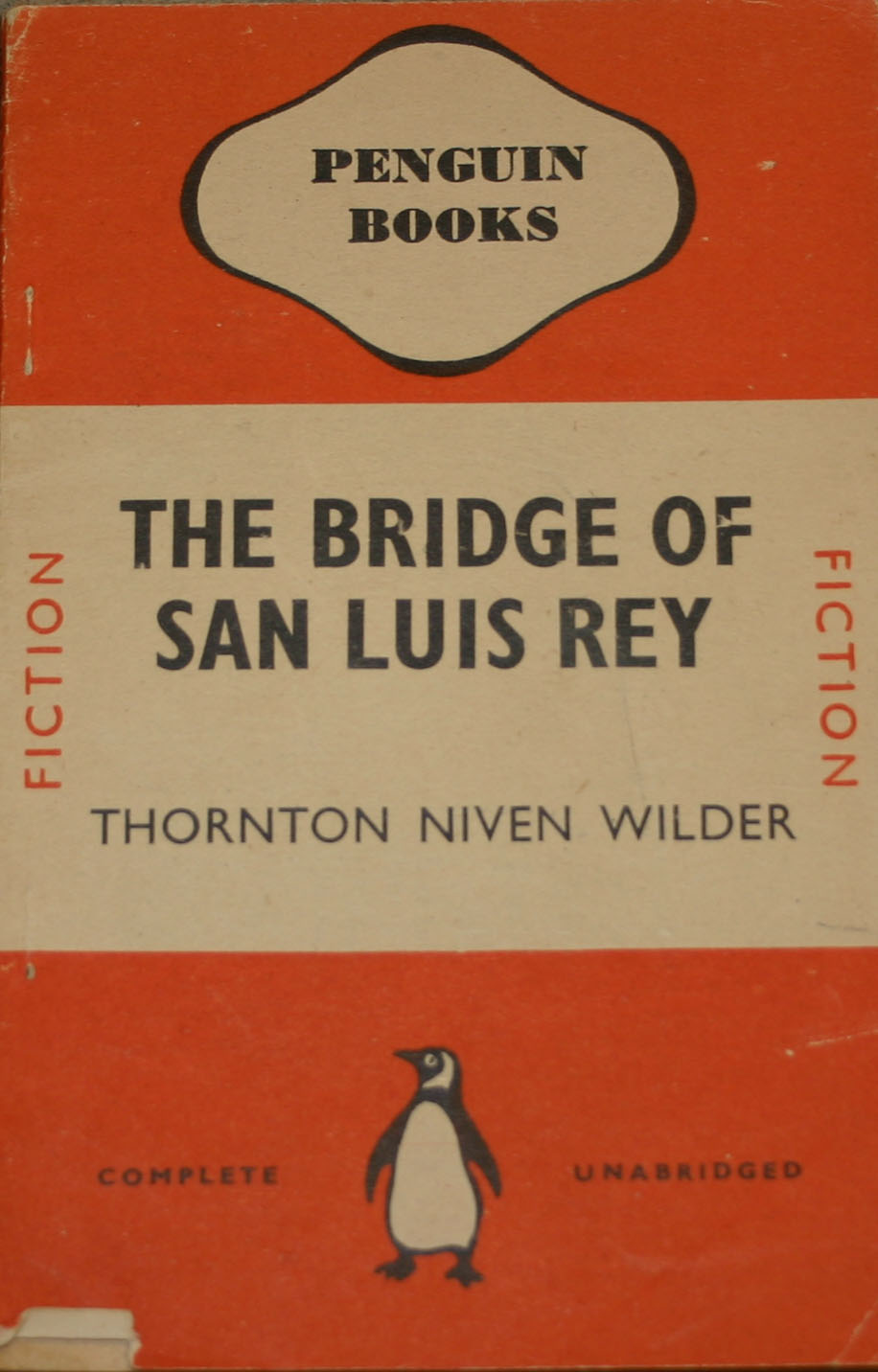
Instead the digestive system becomes a palindrome. Matter does not pass through it: if there is any matter at all it simply rattles around in it, as Roussel’s immortal soul may rattle around within his immense mausoleum. His literary process – the punning of beginnings with ends – transforms the disorder of double meanings into order, confers narrative consequence on the coincidental – awarding chance a predestined reason for existence, a reason as cogent as the meaning to which it is the lining. It’s as if chaos were designed by a retrospective contextualisation of its outcomes – as occurs when the bridge collapses over the San Louis Rey (see Thornton Wilder’s second novel). In psychoanalytic terms, the accident originating the trauma is enfolded into its result, the past is doubled-back upon, as if it were intended by the future. “One is what one is because one meant it to be so.” Existence is closed in on itself, its origins generated by its own outcomes. One glitters – like an isolated star.

Eternal constancy, frozen homeostasis, is an intriguing notion; but while the lack of equilibrium in a work of art is a defect, could one not also posit a condition where a work of art is flawed by an excess of poise ‑ where it becomes too enclosed: a self-propagation, a literary Salvia, reflecting only on its own autogamy?
Anthony Howell, November, 2001









 anthonyhowelljournal