

This was the photo Alexandra Lawrence took for the back cover of my first book – Inside the Castle – published by Barrie & Rockliffe in 1969. I would love to find the original print of this photograph, but cannot trace the brilliant photographer.
This was the photo Alexandra Lawrence took for the back cover of my first book – Inside the Castle – published by Barrie & Rockliffe in 1969. I would love to find the original print of this photograph, but cannot trace the brilliant photographer.
I am interested in hairiness in the light of Enkidu and Moses,that is hirsute, maybe even horned, men coming out of the wilderness, coming “in from the cold” – and the difference between hair as wild power (Samson) and cultivated facial hair – all in the light of the notion that lowering levels of testosterone led to increased culture and art as our species became more “feminized”. Of course, our weapons became more sophisticated as well and killed other people more efficiently.
But see also re Beards and Pubes

It’s ‘Decembeard’ and time to get the beard growing to raise money for research into bowel cancer. It’s a fantastic cause and, in its honour, here are some beardy sidenotes from history to get us inspired…and donating!
1) Peter the Great’s tax on beards in the eighteenth century is well known. Few people probably know that New York apparently nearly had its own version in the early twentieth century.
In 1907 a member of the New Jersey State Legislature introduced a bill for the graded taxation of men with beards. The mystery legislator argued that men who grew beards not only had something to hide but, worse still, grew their beards for ‘ulterior and often base motives’. The preamble to the bill pointed out that such evil ‘celebrities’ as ‘Holmes the Trunk Murderer’ and ‘Palmer the Poisoner’ were amongst prominent whisker-wearers. As far as the legislator was concerned this…
View original post 1,105 more words
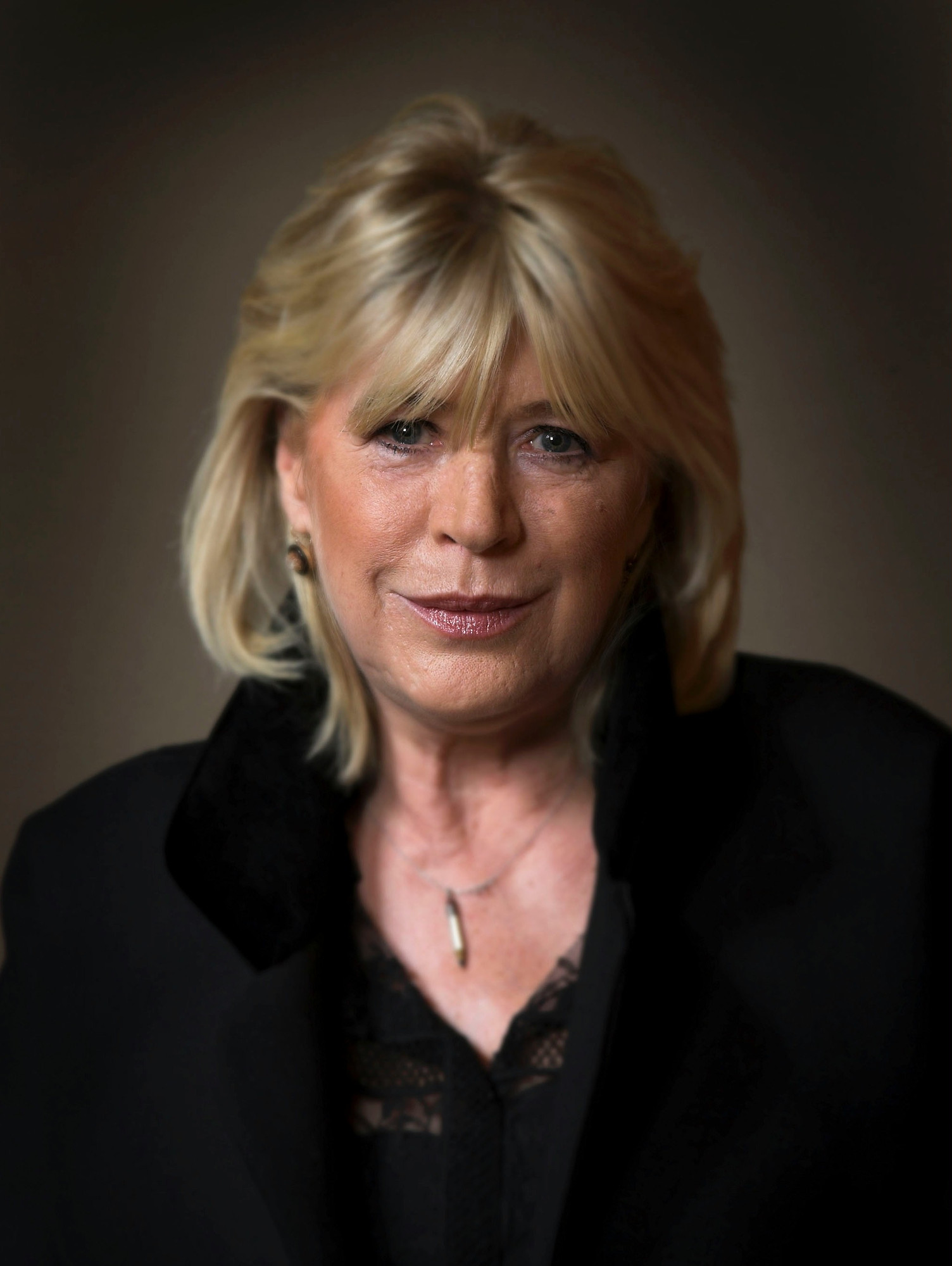
This was posted in November 2014. Hearing the sad news yesterday, I am now reposting it with links to my Fortnightly Review essay and the song I wrote for her.
******
As I am going to hear Marianne give a talk tonight for the Friends of the V & A, I thought I would repost my essay on her here
And here is a link to the song!

A very interesting article published on her blog by Nathalia J Calderon.
It’s about testosterone levels and art – not sure I quite agree about the conclusion!
http://nathaliajcalderon.wordpress.com//?s=testosterone&search=Go

Tim Dooley, John Haynes, Lee Harwood, Todd Swift, Anthony Howell, John Hall, Tom Raworth and Peter Robinson all read a poem of F.T. Prince’s and one of their own at The F.T.Prince Memorial Symposium September 2012.
Prince reads his poems on Grey Suit: Video for Art & Literature Issue 1

Moses has horns and so does Enkidu, in the epic of Gilgamesh. Enkidu was a wild man, he lived in the wilderness, and Moses spent 40 years in the wilderness. Like Moses, Enkidu came in from the cold, he came with a message (in Enkidu’s case loyalty and friendship were what he brought to King Gilgamesh – human companionship). The myth is of course written on tablets.
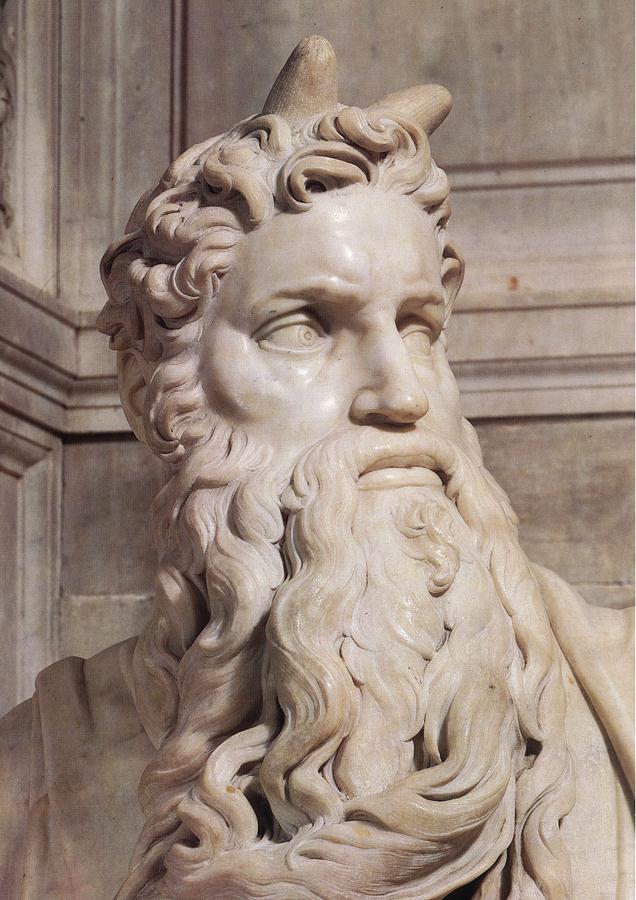
Click on the interesting link below to read more about the horns controversy.
Click on the image to find the essay!
Grey Suit Editions re-published THE CROSS OF CARL by Walter Owen in Spring 2021.
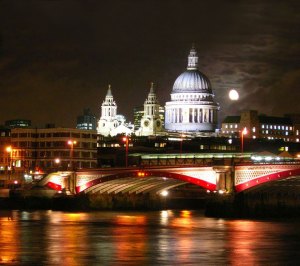
SILENT HIGHWAY was launched at Doggett’s Coat & Badge on Blackfriars Bridge on 28 October 2014. Click on the image for the reading I did in the Terrace Bar, overlooking the dark waters underneath the bridge, where Calvi was found hanging, with a brick in his pocket. So this was a site-specific poetry reading, demonstrating my interest in loco-descriptive verse.
Click the image to see the post on the Fortnightly Review.
2nd edition with a few crucial changes to the text available at Carcanet
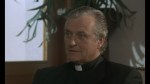
Featuring Rutger Hauer as a sinister golf-loving cardinal, there’s an interesting film The Bankers of God which goes deep into the Calvi affair and his being found below Blackfriars Bridge – an incident which inspired a section of this long poem which I recorded for The Poetry Archive.
From Part 4/1 – remembering the murder of Roberto Calvi and the tragedy of The Marchioness – which sank 20 August 1989
x
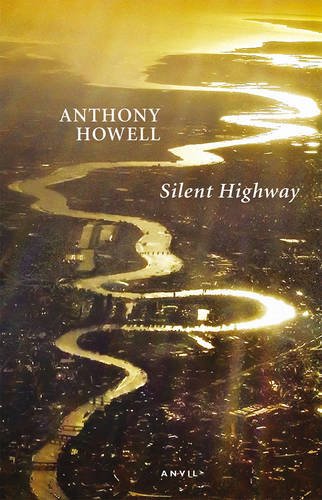
The centrepiece of ‘Silent Highway’ is the title-poem which celebrates the role of the river Thames in the life of London. It is written as a sequence that looks at history and the present: from Pocahontas’s voyage to the arrival of the ‘Windrush’ bringing immigrants from Jamaica, the mysterious death of Roberto Calvi and the ‘Marchioness’ disaster, via the Fire of London and many incidents in which the river has been spectator or participant.
Howell’s mix of verse styles and skill with cameos ensures that interest never flags. In other poems he demonstrates his pleasure in avoiding the predictable and in writing on a wide variety of subjects. Among the many poems of place, in which he excels, are some disturbing descriptions of modern Britain; in the final section, poems inspired by a winter spent in Brazil, he has surprises in store, such as the witty (and true) poem ‘In Praise of Shopping’.
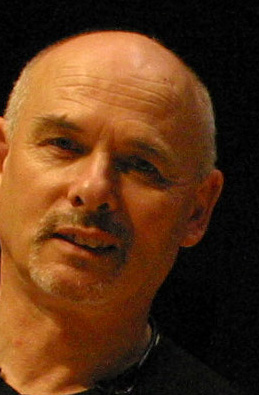
Anthony Howell is a poet and novelist whose first collection of poems, Inside the Castle was published in 1969. In 1973 he was invited to join the Programme for International Writers at the University of Iowa. In 1986 his novel In the Company of Others was published by Marion Boyars. His Selected Poems have been published by Anvil, and his Analysis of Performance Art is published by Routledge. His novel Oblivion has been brought out by Grey Suit Editions. His articles on visual art, dance, performance and poetry have appeared in many journals and magazines including Artscribe, Art Monthly, The London Magazine, Harpers & Queen and The Times Literary Supplement. In 1997 he was short-listed for a Paul Hamlyn Award for his poetry.
A former dancer with the Royal Ballet, Anthony Howell was founder and director of The Theatre of Mistakes, which created notable performances worldwide in the seventies and eighties – Cambridge Poetry Festival, Serpentine Gallery, Stedelijk Museum Amsterdam, Hayward Gallery, Biennale de Paris. Between 1978 and 1981 there were further performances in Canada and Europe, at the Paula Cooper Gallery and the Theatre for the New City in New York, as well as at Pittsburgh State Penitentiary, followed by the Cochrane Theatre in London and the Sydney Biennale. He is currently curating The Room, a space for the arts in Tottenham, and performing Tango Schumann, a fusion of tango and classical music.
His performance Table Moves at The Tate was described by Stewart Lee in the Observer as “The best performance I have ever seen.” (Observer 17 Oct 2010)


 anthonyhowelljournal