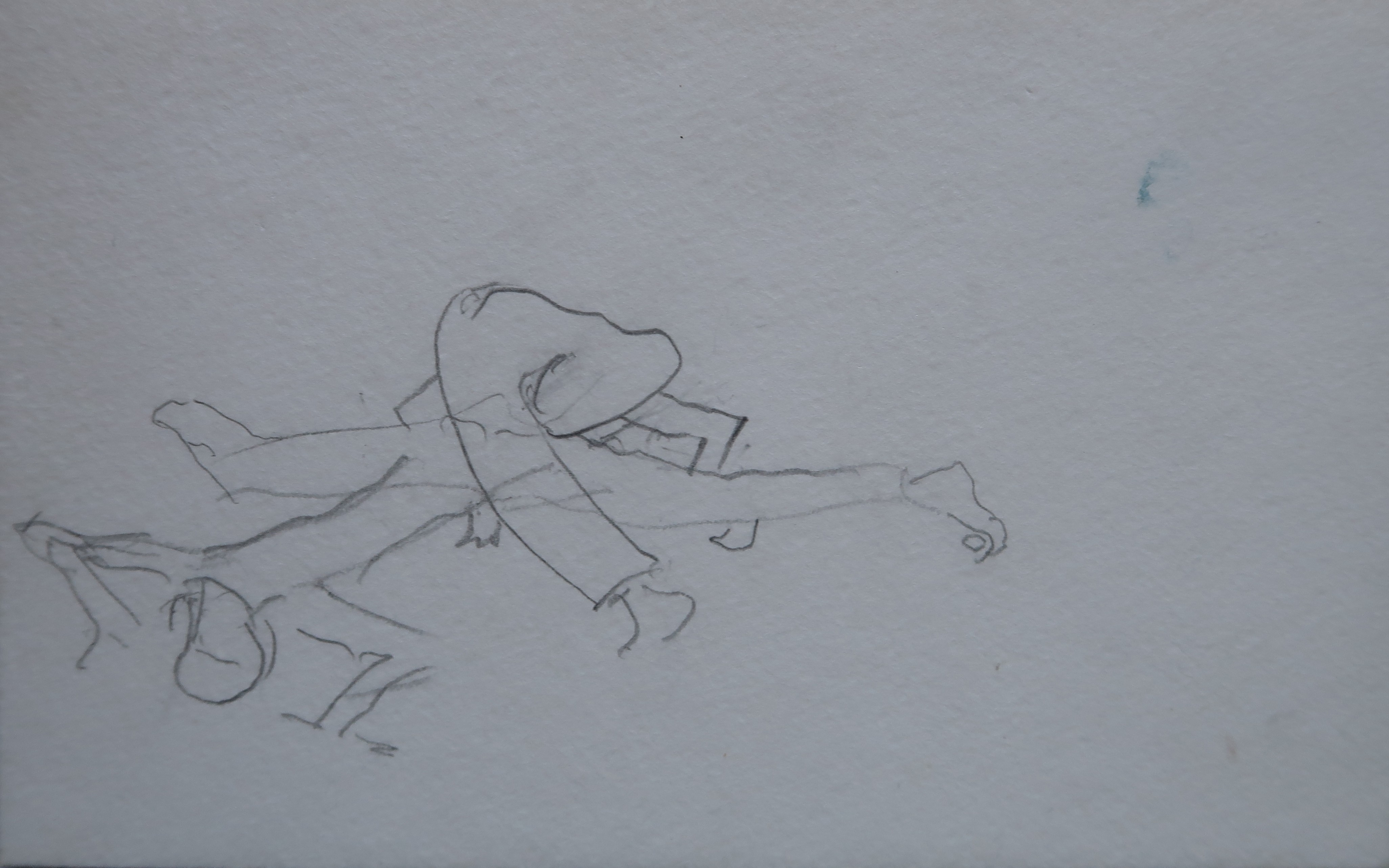
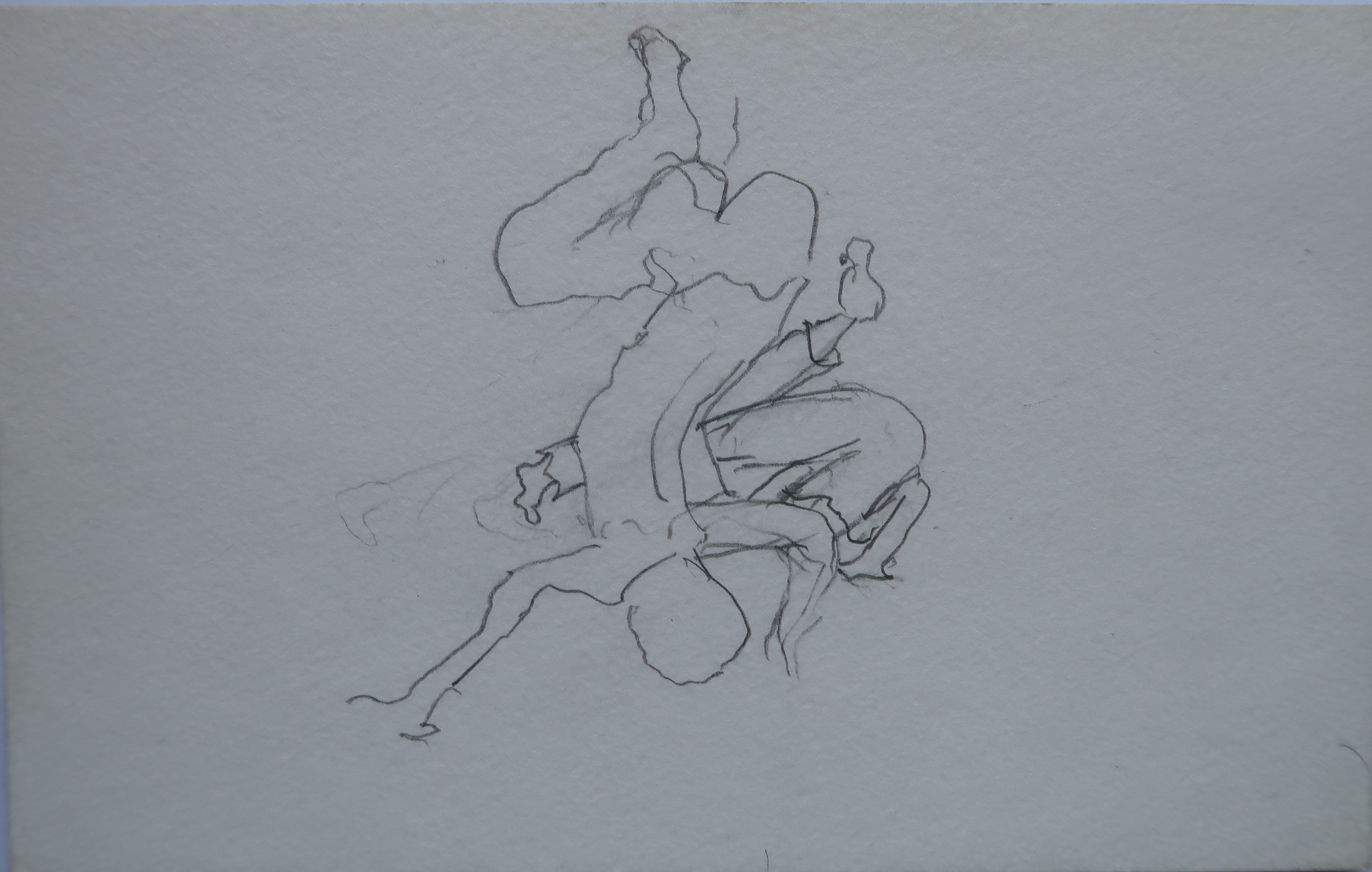
The Runiad – books 1 – 24 – Updated Update

The final draft of my epic poem the Runiad is now completed. Click on the link to read Books 1 to 24:

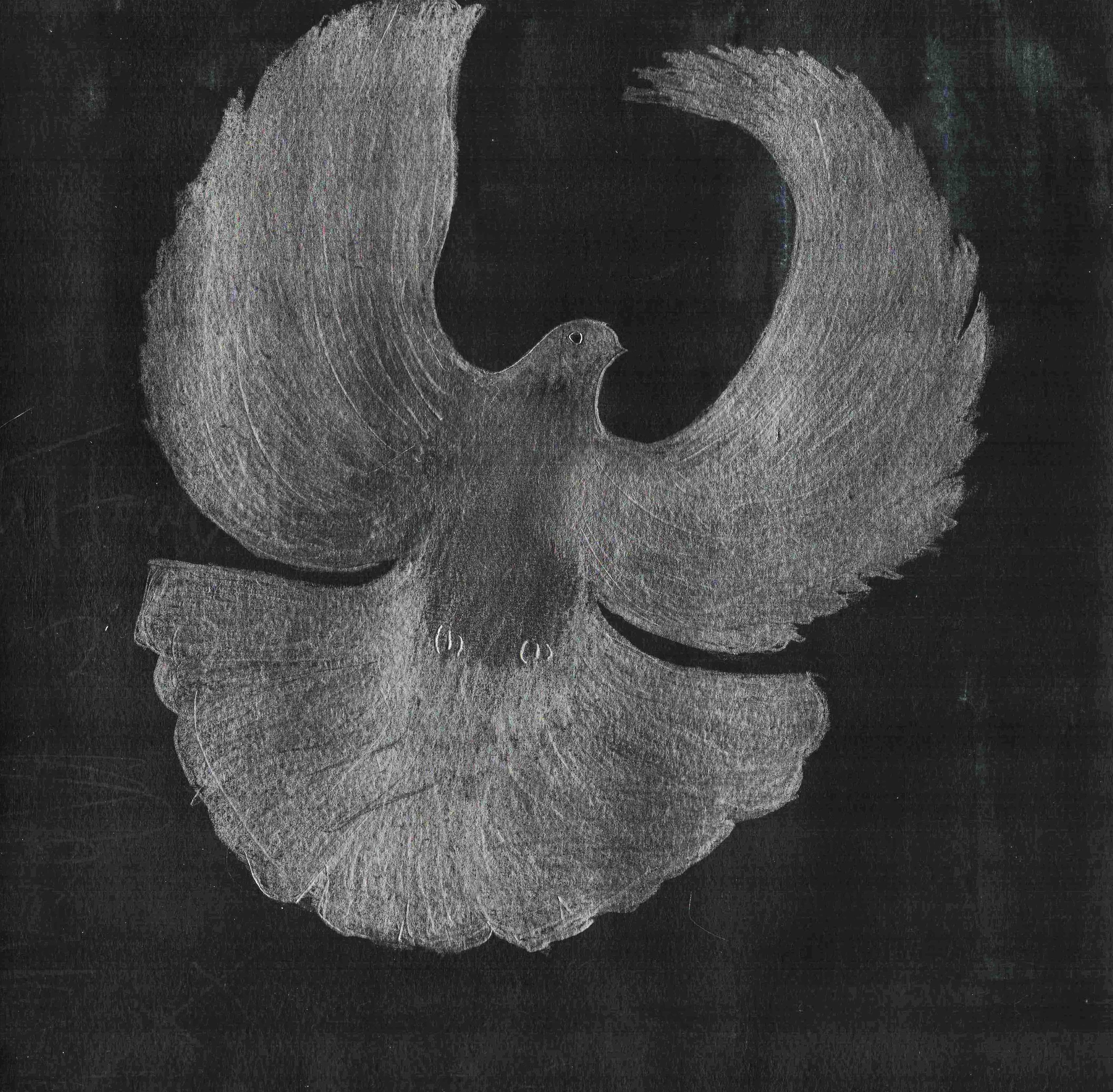
This link above opens the final version with my own illustrations. Since they are done with graphite on a black ground, these illustrations will be difficult to reproduce in book form.

Thank you to the 2000 readers who have accompanied me as I have been writing it.

I suggest expanding the image and turning off the sound. Click the bottom corner of the page to turn the pages, and the bar below the book allows you to scroll to whichever book you want to read. Contents pages at the beginning tell you the page number of each book.

It’s great to read aloud, and I welcome invitations to come and read from it. Peter Jay is designing a printed version which will be available in 2026.

Posted in Key Links, Poetry, The Runiad | Tagged , , | 1 Comment

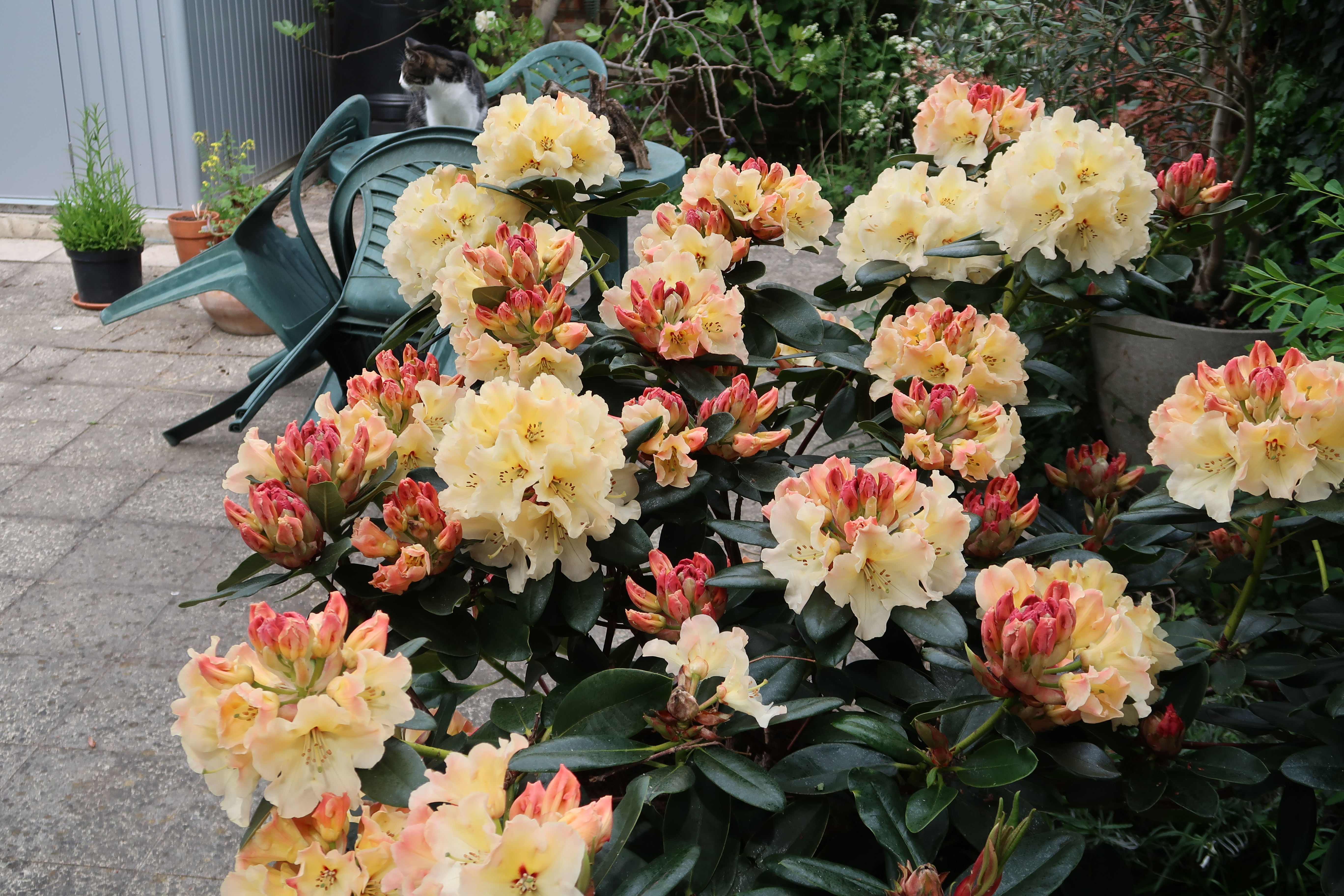
Rhododendron

It is always the same window, one out of which they have climbed

Into the garden; leaving the house to its dreams at the fringes of sleep:

Out of it by the back stairs or in by my half of the bedroom;

Always the same low window in a corner of that parlour into which

And out of which they have climbed in bare feet in the moonlight.

Water their dreams in the back of the parlour with its low window

Opening onto that wing of the garden which has the forest branches hanging over it.

That aria in the parlour which is climbing up and up to the bedroom

By the window then opening so freshly onto that sleep into which they glide

Is climbing in through a low window and then up the back stairs

To the door of the guest bedroom or to that of the Moorish bedroom

Next to it. The window-sill is merely a “has been” following the secluded smells

With the same edge of that water which Boy and then Igor, Burhardt, Rudi and Eric

All pronounce bare to the moonlight. The back door of the garden

The guest so obscured is through the next window up the stairs.

Jenny and Arja – all pronounce it “Aria” – wash their feet in the house, or wash my feet

Where the smells of the wing in the moonlight are hung

In the parlour opening onto that secluded corner half obscured

By a rhododendron. Always the same back window climbed. Always,

Always the same low pair of branches out of which they wing,

To glide up the stairs and into the forest. Burhardt is bare and, boy,

They are in through that window, getting their legs over Arja and Jeanne;

Rudi is hanging over the stairs next to the Moorish ghost which hides in the wall.

The lawn slopes up to the edge of the low brickwork where the window

Is always the same; the opening, out of which they have climbed onto the fringes

Of kilims where the lawn slopes up to it, a window into and

Out of which they have climbed, Giacomo and Jeanne, getting

Their legs over the sill, or following a ghost which is merely a pair

Of split pantaloons up the back stairs to the guest bedroom which has been

Freshly decorated or to the Moorish one next door where the walls are hung

With kilims, one of which hides the door to the bedroom. Which? The one

Next door. Then it is Igor and Eric, at wing in the moonlight, is bare brickwork

Which has feet in it, low in the wall where the walls of the house are hung

With decorated Moorish pantaloons, and into the garden next door

To the window Jenny and Giacomo climbed through – or they split a guest in.

This is a poem I call a “Statheron”. In it all the words must be used an equal number of times – that is, a word cannot be used once, or an odd number of times. Here, “rhododendron” is used once, but also appears as the title. The poem can be found in my collection “ABSTRACTIONS” – which is published on this Heyzine link and can be read for free

Posted in Poetry | Tagged , , , , | 2 Comments

From Book 7 of The Runiad

Sasseta

At a time when St. Francis was staying in the town of Gubbio,

There appeared in that region a wolf so maddened by lack of a meal

It took to devouring humans as well as beasts in the wild.

The townsfolk deemed it a scourge of the greatest magnitude

— because it came hungrily near the town— so that they had to forgo

Tilling the fields and ventured into the country only if armed

As if they were going to war. However their weapons alarmed

The wolf not at all, and few who went forth were able to escape

Its teeth and its appetite, were they so unfortunate

As to meet it. Everyone was terrified of coming across this snouted bandit.

No one dared to walk outside the city gate. But God decided to show

The strength of love to the people there, employing as his instrument,

Saint Francis. For the people’s sake, the Saint resolved to go

And meet the wolf in the wooded crags that were its natural element.

On hearing this the citizens said: “Look out, Brother Francis.

Don’t go outside the gate because the wolf which has already

Devoured so many will certainly attack and make a meal of you.”

St. Francis placed his hope in Jesus Christ, Master of all creatures.

Protected not by shield or helmet, but by the Sign of the Cross,

He went out of the town with his friend, putting all his faith

In the Lord who makes those who believe in Him feel safe,

Whether they walk among asps or tread upon a basilisk,

Overcoming not just wolves but even lions and chimeras

Terrifying to behold. His faith in love made Francis bold,

So that he went calmly forth to make the acquaintance of the wolf.

Some locals chose to go with him, but after a league they said:

“We won’t go further, Brother Francis, since that wolf is ferocious

And anyone who nears his lair will probably wind-up dead.”

St. Francis answered: “Just stay here. But I am going on

To where the wolf has made his home.” Then, in the sight of those

Who had climbed up into the trees to see how things would go,

The wolf came loping with its mouth open toward St. Francis

And his friend. The Sign of the Cross was made, and the sacred strength

Surging forth from himself and from his friend checked the wolf

And slowed its pace. Perplexed, it came to a halt in front of the Saint.

“Come to me, Brother Wolf. In the name of Christ,

I ask you not to hurt me or anyone.” As soon as he had made

The Sign of the Cross, the wolf had closed its jaws,

And, as he made that request, it lowered its head

And lay down at his holy feet, as though it had become tame.

And St. Francis said to it as it remained there before him:

“Brother Wolf, you have mercilessly perpetrated crimes

By hunting humans in this region. Lacking sane reserve,

You have been devouring more than some poor beast.

You have had the brazenness to slaughter and to feast

On beings made in the image of God. Clearly you deserve

To be put to death like any common murderer,

And everyone is right in swearing that is what you are.

You have filled this little town of Gubbio with hostility.

But now there shall be peace between you and the community.

You may seize on no one nor devour them anymore.

Then, when they’ve forgiven you all your past offences,

Neither men nor dogs will hunt you down.” Acquiescing

With its tail, moving its ears and at last by bowing its head

The wolf revealed that it accepted what the Saint had said.

St. Francis spoke again: “Brother Wolf, since you agree

To keep this peace pact, I will undertake to have the people

Of this town give you food each day for as long as you remain,

So that you will never again experience hunger, for I know

That whatever mischief you did was done because you needed to be fed.

But, my Brother Wolf, since I am obtaining for you such a favour

Promise me in the Saviour’s name that you will never again

Endanger beast or man.” The wolf gave an emphatic nod,

And then St. Francis said: “Brother Wolf, I want you to give me a pledge

So that I can confidently trust in what you promise me.”

And as the Saint held out his hand, the creature raised its paw

And put it in St. Francis’ hand as a sign that the pledge was secure.

“Brother Wolf, come with me now, without fear, into the town

Of Gubbio to make this peace pact in the Almighty’s name.”

And the wolf began to walk along beside him, gentle as a lamb.

When the people heard of this, they were amazed, and the news

Spread quickly through the town, so that men and women,

Young and old, poor and wealthy, gathered in the marketplace,

Because the Saint was coming with the wolf. Then he gave

A sermon, showing how such grave calamities as predators

Were brought about because of sin, and how the fire of hell

By which the damned must be devoured for all eternity

Is far worse than the raging of a wolf which can bring agony

Only to the flesh, and how much more they should fear

To be emptied into hell, given one mere animal

Could keep the lot of them in such a state of terror and anxiety.

He continued, “Listen, people. Brother Wolf has come to pay

His respects to you. He’s given me a pledge that he is willing to

Make peace with you if you agree to feed him every day.

And I, Francis, pledge myself as bondsman for our Brother Wolf

That he will staunchly keep this pact.” Then all who were assembled

There promised with one voice to feed the creature as required.

Again the Saint sought surety of how the wolf would act.

“Brother Wolf, do you agree to venerate this pact?”

The wolf knelt and bowed its head; next it wagged its tail

To indicate it would not fail to keep the peace agreed.

“Brother Wolf, just as you gave a sign outside the gate

That you would keep your word, here before the people now

Please demonstrate again that this command you understand,

Since I am pledged your bondsman.” And so, in the presence of all,

The wolf again held out its paw and put it in St. Francis’ hand,

And then surprise and joy so occupied the watching crowd

That they all shouted to the sky, and praised the Lord aloud.

And from that day, the wolf and the people kept the pact

And the wolf would go from door to door for food.

Hurting no one, no one hurt it. People fed it courteously.

And it is a striking fact that not a single dog ever barked at it.

When the wolf grew old and died, the people there were sad,

Because its peaceful manner reminded them of how the Saint enticed

A wolf with loving kindness. Praised be Our Lord Jesus Christ.

The Runiad is an epic poem completed June 2025. Books 1-24 can be read on this Heyzine Link

Posted in art, Poetry, The Runiad | Tagged , , , , | Leave a comment

Memories of an Island

Memories of an Island

Memories of a idyllic island on the Green Coast of Brazil.

….Things that prefer to be hidden from us, without the effrontery

Of the small seven-coloured birds that flit through the quiet,

Perch for a sec on a branch of the Bougainvillea, then dart

Into the house. Things better left unsaid. Better not disturb

Their inertia. The boy inhabits the hammock immersed

In his App. Why is that fan of stripes called a dentist fish?

Picasso said something like “I find. I do not seek.”

Those who grow up among palms inherit an aesthetic

Radically different to that of persons accustomed to the blurry

Vagaries that epitomise European foliage. Rather it’s

An aesthetic in silhouette; crisper, more graphic, suited

To the precise woodcut. Each climate asserts its own particular ethic.

Our autumn mists of melancholy, clumping of oaks, ivy-ridden

Walls inspire the generalisations of our romantic tendency.

Here though, against the honed precision of an outline’s

Bladed fans, only the sea comes shambling in, yawning, stretching,

Breathing out, re-inhaling. But someone has drawn back the curtains

Of bougainvillea so that the garden below the veranda becomes

A theatre. Two gentleman, a fallen tree, and the single prop

A chain-saw. One man positions the bough, and intermittently

Now the saw does its biting, interrupting the surrounding sea.

All that is over though. The logs stashed away to the bank

Underneath the suggestion of a crag, among some variegated leaves,

While the tree removed reveals a view of one magnificent stand

Of bamboo, its stout poles ending in spray after spray

Of calligraphy written by delicate leaves. And now the cicadas

Compete with the sea from within the bamboo, sounding

As dry as the sea is wet, abuzz with the gossip that informs

The overgrown bank with its several giant leaves, pots with exotics,

Favoured perches for these tiny, seven-coloured birds

That nip through the house, perch on plates for seeds,

While fireflies kindle instants of light later, in the dark.

Gone before seen, and there’s no way of knowing what

You’ll bequeath, what will persist, what will vanish

Down time’s throat, lives being less than a firefly’s flash.

Seven colours to each of them. From the Bougainvillea with

Impunity they flit, everywhere; emerald, another green as well.

Black and yellow, white, all on one little bird, and more tints

Than that, the male by a trifle more decorated than his spouse. 

Tiny feasts of colour, reminding me that birds have other ways

Of appealing to us, from the long elegance on high of those Magnificent

Frigate Birds to the beady intelligence of the crow family.

Mozart enjoyed employing a starling as a prompter

And as a “creative aid” to composition. One day

The starling repeated the 17 opening notes of the Piano

Concerto No. 17 in G major, adding its own variations;

In particular by inserting a coda on the last bar

Of the first complete measure and singing G♯

In the following measure, instead of a natural G.

It was the starling’s version that became the definitive

Version of Mozart’s concerto. In June 1787,

The starling passed away. For him, Mozart organized

A sumptuous funeral, and in the garden of his home,

A worthy burial; even dedicated a passionate elegy

To his feathered co-composer. Don’t allow a cat onto this isle.

Or that’ll be the end of all the birds, the blue ones as well.

There’s a plague of Brazil’s most dangerous snake here

Due to a South African Ridgeback’s hunting down of the Coypu.

You just better look where you’re going for once

And check where you sit before settling to do a sketch.

Be mindful of the sun, as one day on a Rio beach did you in

Badly on the back, because when it comes to lotion, you are slack

To use it at first, and thus you almost always end up toast.

Below the tossed palms that slide precise blades against

Blades from another palm, washing through the alleys

And lapping at the hollows of the ear, flexing then relaxing

Its attacks, the surge laps at the rocks by the shore, swollen

Only to subside. It wells up and sinks back again, and I could

Watch it forever, lashing itself into a froth, then

Flushing all the coast within earshot of the open house.

It sinks then wells up again, foaming, awash, pouring

Its current into each hollow before retreating, leaving a

Fleur-de-Lys residue that sinks back from all crevices.

Heard through open rooms in the night as the breeze tosses

The bamboo sprays above our heads, throughout the day,

Then each and every night, not to be turned off;

Foam dissolving into froth. Reassuring that it never ceases,

Dark now where a stain shows its retreat,

The mobile sound of this eternal liquid!

Maybe it pauses sometimes, but it never stops;

A power which may not be argued with for long.

Now the sea reminds me of an elephant and how one elephant

I met casually wielded the inexorable power of its trunk

To move what it willed which was me where it wished.

From The Runiad – Book 23.

Posted in art, Brazil, Poetry, The Runiad | Tagged , , , , , , | Leave a comment

A Serpentine

As well as the scansion of a regular metre such as pentameter, in verse, the madrigal was a form that used the scansion of prime numbers – 3 and 5. F.T. Prince has pointed this out in his book about the Italian influence on English Poetry. All prime numbers scan, and actually so do all regular metres.

Posted in Poetry | Tagged , , , , | Leave a comment

THE RUNIAD – Books 1 to 23 – (Now completed – 24)

Ouro Preto

Books 1 to 24 (now) of my (now completed) epic poem can now be read on this Heyzine link

I suggest expanding the image and turning off the sound. Click the bottom corner of the page to turn the pages, and the bar below the book allows you to scroll to whichever book you want to read. Contents pages at the beginning tell you the page number of each book.

Posted in Brazil, Ebooks and flipbooks, Poetry, The Runiad | Tagged , , , | Leave a comment

Rio, back in 2012

Here is a Youtube slideshow

It’s a slideshow of paintings I made in Rio in 2012, when I escaped the London winter to spend summer in Brazil. Below are some poems I wrote at the time:

TRISTEZA

That pensive spell, the sadness that you see

In Gauguin’s women, for instance, sitting quietly,

A faraway look in their eyes, as if deep

In melancholy thought – it’s not:  it’s the heat,

And the way the heat comes back, that brooding gaze,

Abstracted, prompting such words as ‘lointain’,

Yet there is something sad about heat – it wells up at noon,

Prompting you to choose the shaded side of the avenue

And placing a value on sombra rather than sol.

The Romans knew that ghosts appear at midday

In the haze as it wobbles up from the ground,

And as for Brazil it is under that spell

Brewed by the tropics, inducing a trance

Moved by the minor key of the Bossa Nova.  

EVENING

I look down onto the trees that hide the light,

Eight floors below, on Siqueira Campos Street.

A roof slides by beneath the spreading leaves.

We keep our doors ajar to tempt a breeze,

Using a sandal perhaps as a door-stop.

Most of my view is the fifteen floors of a car-park;

But above the adjacent building there’s a crag

Craning up out of the bush that laps at the back

Of the flats, and between that block and the next

There’s a single palm, dishevelled, thin

And very tall, but not of sufficient height

To match the blocks on Siqueira Campos Street

Where one may find the very thing one seeks

Under my room, in the market of antiques.

Needing a break, I lean out, taking in verticals:

Variant sets of balconies, shutters and windows.

The day has passed in a whirl, and a fan

Keeps turning over there, and further along a girl

Is stroking her hair, looking out in a dream, like me,

With everything else in darkness, except for her tv.

HOW TO LOSE YOUR JOB

The girl from Ipanema

Swings down the Avenida

Humming to herself

The Girl from Ipanema.

The boy handing out slips,

One foot up the wall,

Deep in some reading material,

Doesn’t see her at all.

THE FORBIDDEN ROSE

Her outline may undulate according to the hills,

But her navel is the target when I glance:

It’s in a hollow framed by the wings of her hips,

As she lies on her side, reading a romance.

The fingers of her free hand make contact

With her body here and there, brushing off

Grains, adjusting her top, ravelling her hair.

She’s a bit like a pony, whisking its tail

While grazing as intently as she reads. 

Once only, she pauses, to reach for the nape

Of her lover, who rests on an elbow

Behind her, baring her throat to him

As the sea sends in its horses, annexes the beach

And withdraws, then it’s back to her book.

WAITING

A large policeman mounted on a motorbike

Gets his diminutive partner to give him a push.

To no avail – they make ignominious progress

Across the intersection.  The bike refuses to roar

Into life, just as the rain refuses to come down.

Everyone is beginning to complain, and the sky

Goes dark, but the clouds are just not

Ready to burst, and pretty soon the heavens

Are empty again.  It’s close to carnival time,

When everyone is supposed to let their hair down.

The blast of chill air from the bank is more

Than cancelled out by simmering traffic. 

Things with exoskeletons do well.

The cockroaches are positively bustling.

Humans lie prone on flattened sheets of cardboard.

The stones are slicked with dirt, and the air

Is full of dust.  It must rain.  It must.

But it doesn’t.  Every dove has turned into a pigeon.

As for the women, rather than share their beds

They prefer to sleep on the floor.  There’s no breeze at all,

And the trees are so still they could be a painting,

The dogs look dead except for their panting,

The canaries are all fainting, and only some rain

Will ease the situation, wash the streets clean,

And with its downpour drench the night in sperm.

AIRBORNE

The butterfly that fluttered through the carnival

Didn’t wear a costume.  Why should it have?

Its wings were the colour of rust

And featured a fair spattering of polka-dots.

Its flight, about which there was something frantic,

Was only to be seen intermittently, between

The haunches of a gorilla and the legs

Of a female marine.  How unlike the vultures

Over the favela, that evening we sat

On its brow.  Vultures above and below,

Wings outspread to the very last feather,

Gliding with motionless ease…

THE MODEL

A halberd leans against the wall.

It says, in effect, a peasant with a skill

Can bring down a prince

(Charles the Bold, for instance).

This thorny axe may signify

The carnage that was Paraguay,

But then it also stands for ceremonial.

Debret’s young chap arrives at court in Brazil

With a fine cocked hat and a parasol

Followed by his black,

Her arms full of his gear,

Including the weapon shown here.

Our painter hails from the boon dogs though.

You can tell it by his beard.

He has just rolled himself a cigarette,

And is sharing a joke with the girl who is on her break

And at his upright, fingering a tune.

From the waist down, she’s wrapped in a shawl,

So he gets the front of the lass

While we get to peek at her naked back.

As back-views go, it’s far from academic.

His studio in Montparnasse

Is chock-a-block with props,

But what the room is full of is her smile.

“The Model on her Break” by Almeida Júnior, Brazilian artist, 1850-99.

IN PRAISE OF SHOPPING

Indigenous people from isolated communities, perhaps on the banks

                  of some tributary of the Amazon, always consume what they catch.

So they can be nonplussed by the constant availability of 

                  everything all of the time – what is one meant to do?

Eat until one bursts, dress until one suffocates?

Of course it feels morally right not to possess something

           you very clearly need, since then you can hunt for it without guilt.

However, this demotes the act to the ranks of the merely functional.

To give your shopping flavour, guilt is an obligatory seasoning.

The purest spirit is best expressed when one is out unnecessarily,

            looking for some item you may never use.

Even then it has benefits: to say it’s therapeutic is a cliché,

            but it’s not just loneliness that it heals.

Shopping can be used as an antidote to Alzheimer’s: 

            you have to remember where the shop is,

            and whether you have already bought the item.

So long as one’s card accepts one, a purchase is always an affirmation.

Buying via the internet is neither as rewarding nor as complex

           as handing your card to one of the opposite sex.

Shoppers express the fundamental characteristics of their make-up:

           my son likes designer labels, and snuggled his mum’s when he

      sucked his thumb.

I am more partial to a bargain: exhibiting a taste for the low-life, I grub

           through unsavoury piles in charity stores created for the homeless. 

I’m always looking for two for the price of one, perhaps because I’m a

        single mother’s son.

I am also an inveterate collector, so if I reach Nirvana I will find it

           filled with cut-price CDs, second-hand t-shirts and remaindered books.

But I also like to wander in the presence of up-market shops. 

It’s flattering how each offers me its well-appointed wares –

           of course the very finest are discreet.

Steeped in the poetry of boutiques, I can lie awake like a girl at night,

           reciting their names instead of sheep.

What problems I’d have if I were a girl!  Searching for cut-price

           manicures, second hand hair-dos and remaindered magazines.

I have been known to buy negligees ‘just in case’.

Not in case I turn into one, but in case I ever again get one

           to buy things for: bras, panties, shoes, earrings,

           anything wearable but not too practical –

           I’ve seldom got it right with a tampon.

Shopping in the heat favours the shaded side, stone arcades,

           air-conditioning, comprehensive stores. 

Chunks of chilled air tempt one to abandon the pavement

           as if the doors were extending invitations.

Others open wide on their own, simply upon sensing an approach.

When I was young and well-formed, women used to do that for me.

THE MOTHER

I am sitting on a rock beside the sea.

My newborn tugs at my nipple.

He feels new to me, and yet

I have carried him everywhere

Since he began.  He is still

Something of a stranger, but he is a man.

The gift of his father to me.

We have come here to be naked

By this awe-inspiring sea.

I am addicted to men.

Men who are strong and quick

In thought and deed.  Men who are gods

To their sons and daughters; 

Who teach them bike and ball control.

I am in love with my man.

I don’t want the others to lie with me.

But I do like to watch as they move around.

Men who are basically sound.

Men who maintain and move big cranes,

Men with large hands,

Wearing hard hats at work,

But here today, beautiful and free.

Not to be dismissed, their qualities of strength,

Speed and skill:  that overhead goal,

And the way a guy moved to snatch a small boy

Out of the blur of the traffic.

SWEAT

Switch from the metro maintained by ice-girls

To the platform which is not and your pores

Start to react, as they do up the flights

To the third floor dance under fans

Old enough to be offered a seat

If they were using the metro.

Work up a sweat on the beach with a ball,

Wake up drenched in it in the small hours

Or get through several t-shirts on a good

Stiff scramble through semi-vertical

And sub-tropical forest up to some lookout.

Yes, but you also work up a lather

Choosing a t-shirt on the Avenue

Of Our Lady of Copacabana.

Be aware that this is recreational.

When it accompanies loading

Pieces from some concrete jigsaw

Into a chute placed above a skip…

Now you get it!  Stepping around

Some works into oncoming cars.

Measure each bollard, polished tile

Or piece of pavement mosaic

Kicked out of place in pints of it.

ACAI

I think vanity has had a bad press. 

I’d say it’s good for you, more or less.

Vanity keeps you at a decent weight. 

When you see a 60 year old with a 6-pack,

You can put it down to Vanity. 

Vanity sustains the fitness industry.  

A special joggers’ and cyclists’ path

Runs alongside the promenades. 

There are open-air gyms with shiny bars

And you can improve beneath the stars. 

Arpoador beach has an outdoor gym

Overlooking the sand beyond the headland. 

The weights are concrete and the bars rusted. 

But people train in the rain.

They train because they are vain –

But you can look at them again and again. 

Vanity is responsible for all this. 

For girls wearing t-shirts which say YOGA,

Thrusting the word out at you. 

Beautiful!  Vanity improves. 

I don’t understand why it ‘s considered a vice. 

People who are fit feel nice. 

Vanity is justified. 

It should be beatified. 

What a packed place of worship that would be! 

A temple, dedicated to vanity. 

Vanity demands you stay healthy. 

That is why there’s a juice bar on every corner,

With every sort of juice, including

About seven no European has ever heard of. 

Best of all is a giant cup of frozen black sludge. 

Too many spoonfuls too fast,

And you get a head-ache  –  

Gives you a great complexion though,

And if you are going to wear a bikini

That’s just a few pieces of string,

Bear in mind it’s not the thing

We’re looking at, it’s you,

And that part you can’t even see in a mirror.

Pamper it with aloe vera. 

Vanity demands you do.

Beware of preachers spouting tripe,

And while you can, stay smooth and ripe. 

THE ARMOURER’S WIFE 

Not long after her wedding day,

While she’s on her honeymoon perhaps,

I watch her on the beach, at play,

And fall into her traps…

I could be the foam, or I could be

That grain of sand

On her inner thigh, and then,

When the wave knocks her down

And bowls her over and along,

The sand gets up inside her thong,

And I could be there, or be the air

Breathing on her, freshening her hair.

I could be an earring in her ear

And pass right through the lobe.

I could be her Coke or her Sprite.

An Arab song gets belted out

And she does a dance with her towel.

I could be that.

She lifts and lowers a hip.

People start to clap,

And now a lanky young geek

Wants her for his mobile phone.

I’d rate her for her bum alone

With its butterfly inked on a cheek.

EXISTENCE

The red flag tugs at its pole in front of the Mar;

The Windsor’s welcoming mat demands to be swept;

Guests favour the pool at the Othon over the beach,

While who booked a manicure stews in the Palace bar.

Blown into wrinkles, the sea is a mass of glissades.

When a wave breaks its spume gets flung to the South.

My paperback flicks frenziedly through its own pages.

I have no means of escape from the sand’s fusillades.

Open-air showers go flaring along the horizon;

Pigeons get pummelled, seabirds grapple the clouds;

The palms are engaged in a Dionysian revel,

While kites that are bats get into a sinister flap.

Whatever is free or has ends or loose covers vibrates.

Floppy hats, inflatables and parasols get bowled away.

Only the ponderous bulk of a JCB

Seems unaffected, while the shore trembles beneath me

As it impresses the sand with its ongoing treads

To which the surf is indifferent, rubbing these out

With a practised swipe, as the wind persists in its mission

Of wiping the rootless off this ephemeral map.

ODE TO THE SUNSET

It’s a February evening.  The liners leaving port

Are still in the sun.  They gleam on the horizon

Between this beach’s bow and the northern peaks.

Here, the sun’s just set behind the Marriot,

But no one seems to want to leave just yet.

Long, lazy waves keep rolling in, neither too rough

Nor too gentle, at the end of a baking day.

It’s lilac out at sea, while a crag behind the front

Is gilded by our burning star, its crown of trees

Picked out against a final beige and cerise.

People are still at play, racing in or wading out

Or rolling about or going head-first into surges,

To surface, adjusting their cossies.  Others stroll

Along the slick, wet edge, or simply sit and watch.

Nobody sneers at the sea.  None of us seem

To have a problem with it as we may with art.

It seems better than tv – more honestly

Always the same and ever changing.  Now

The eastern sky has a rose pink hue,

But nobody seems prepared to go. 

It’s Sunday.  They want to spin it out. 

They want to mark the waves as they build,

And as they fall, or look at other people:

What they do, how they’re built, who they have

The hots for.  The crag darkens.  A kite in silhouette

Nibbles at its sheer edge, and on the palmy roofs

Of the penthouses, millionaires and minas

Can be imagined sinking caipirinhas.

The sea darkens, green by now only where the waves

Achieve their critical mass and over-bend. 

There are still some of us out bathing though

Since nobody wants this day to end,

But the moon has appeared, half-submerged,

If crisp as can be in its own part of the sky

Where the great birds float, incredibly high.

The vendors have already gone away,

And the promenade’s been lit, its condos black

Against a deepening red.  People

Start to leave at last, reluctantly, as the moon

Begins to shine, brightening with every passing minute.

What ships go forth are nests of light,

And only the breaking surf defies the night.

GRUMARÍ

The leaves

           hardly breathe

                      and snakes

           loop round

the branches,

           soaking up heat

                      from cars parked

           nose to tail

outside

           the seafood

                      kiosk by

           this savage

southern

           beach where

the leaves

           hardly breathe

                      and snakes

           loop round

the branches,

           soaking up heat

                      from cars parked

           nose to tail

outside

           the seafood

                      kiosk by

           this savage

southern

           beach.

These poems were first published in Silent Highway (Anvil, 2014)

Posted in art, Brazil, Poetry | Tagged , , , | Leave a comment

Capoeira

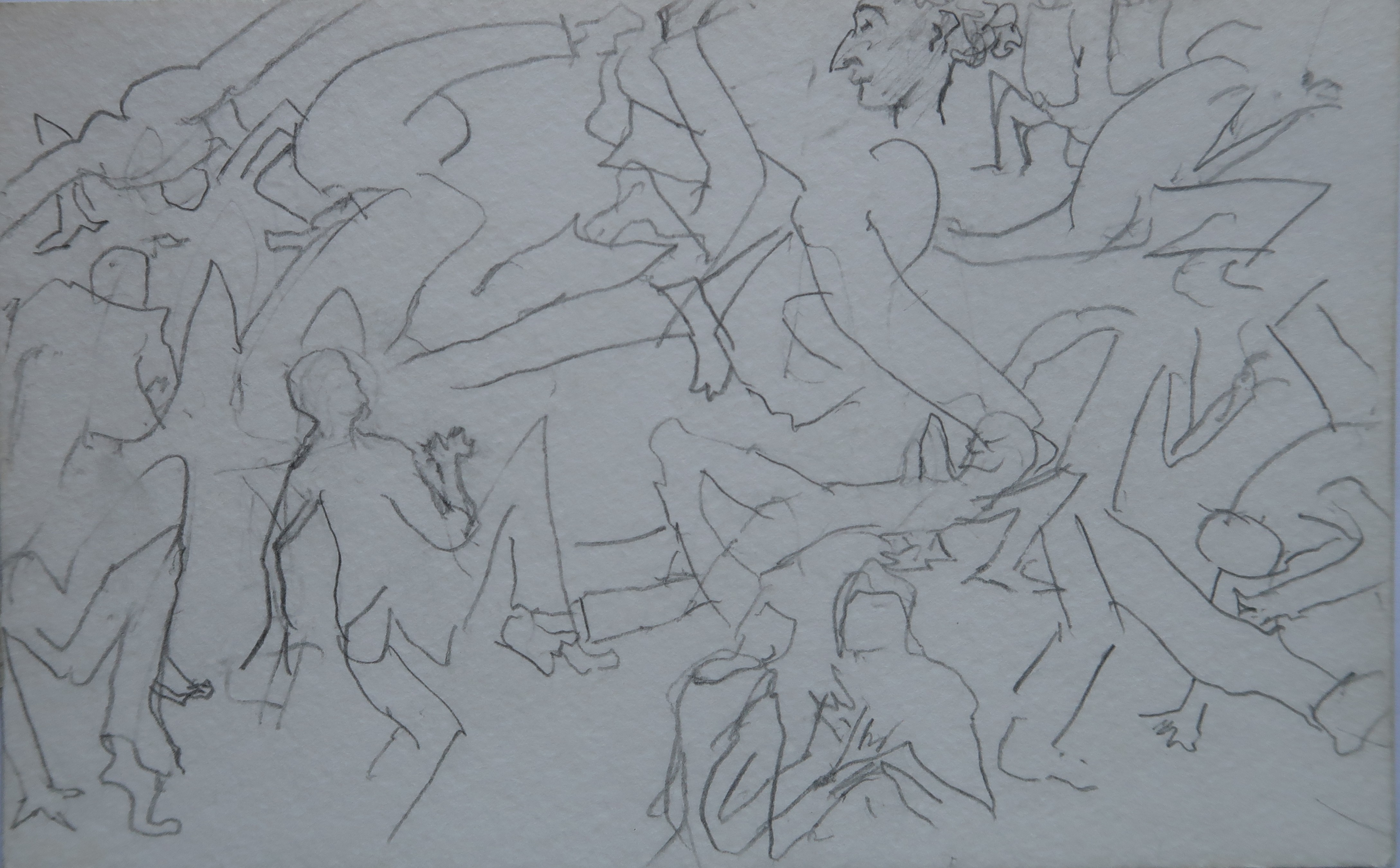
Capoeira drawings from 2012.

Posted in art, Brazil, Dance | Tagged , , , | Leave a comment

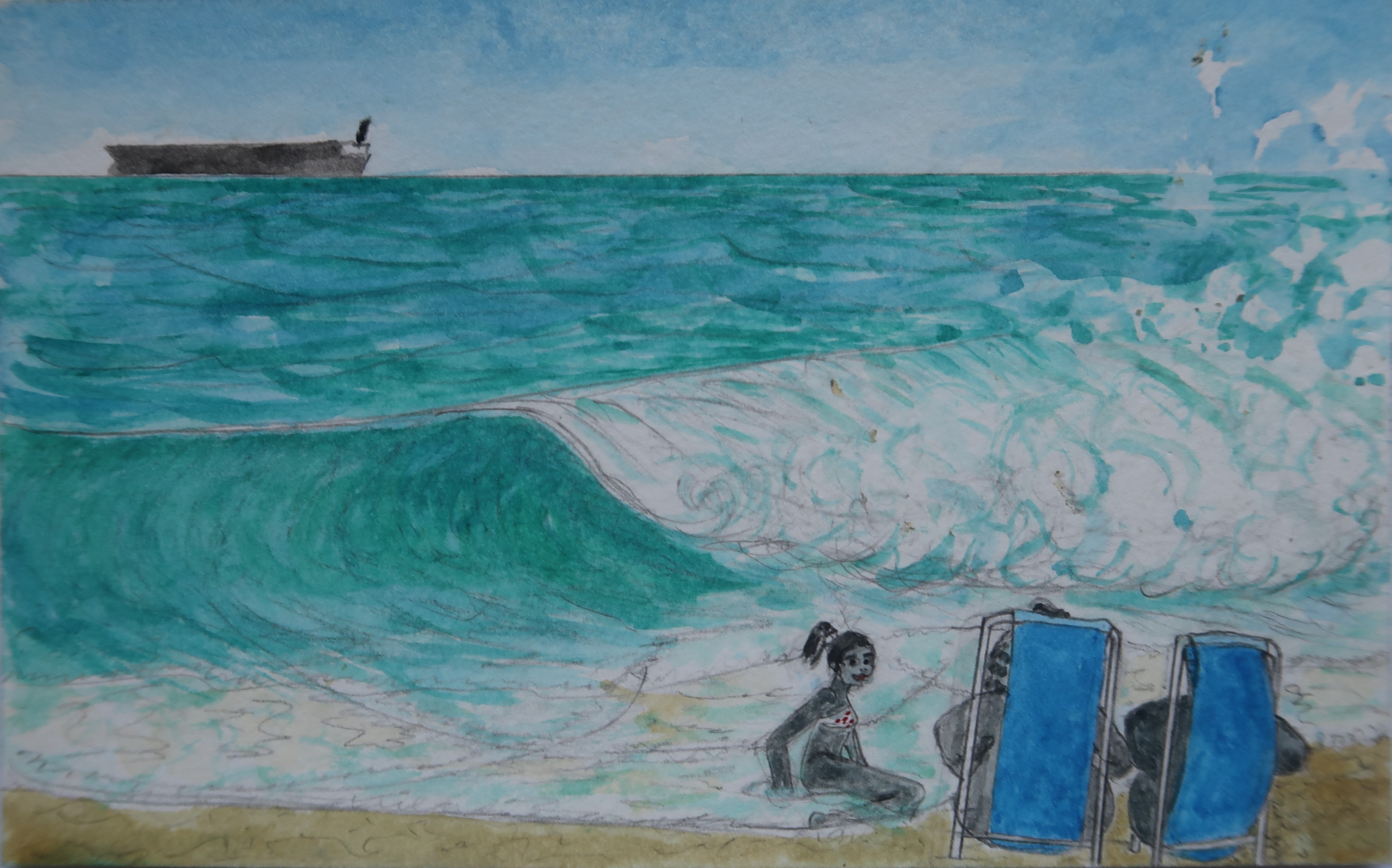
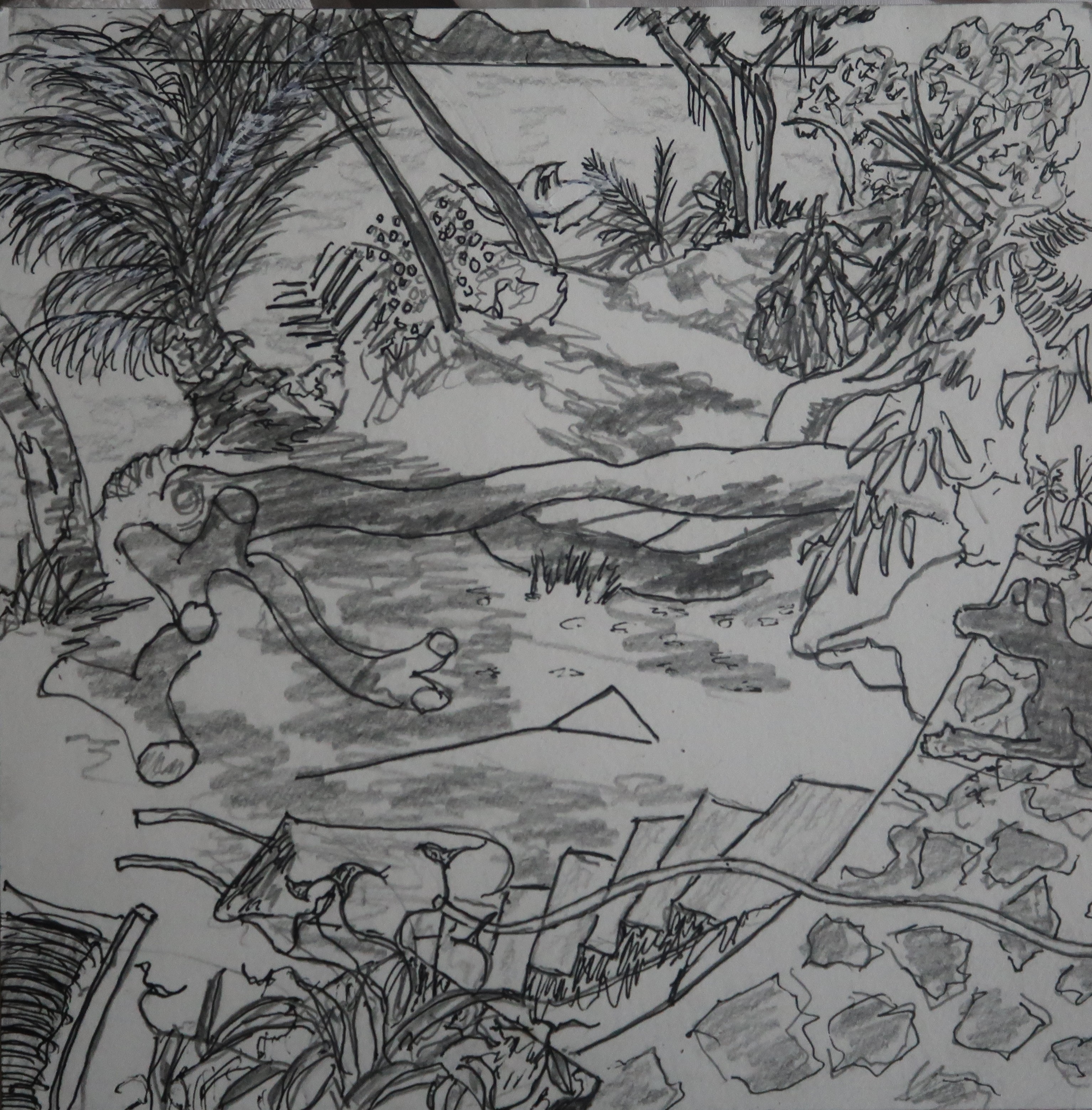
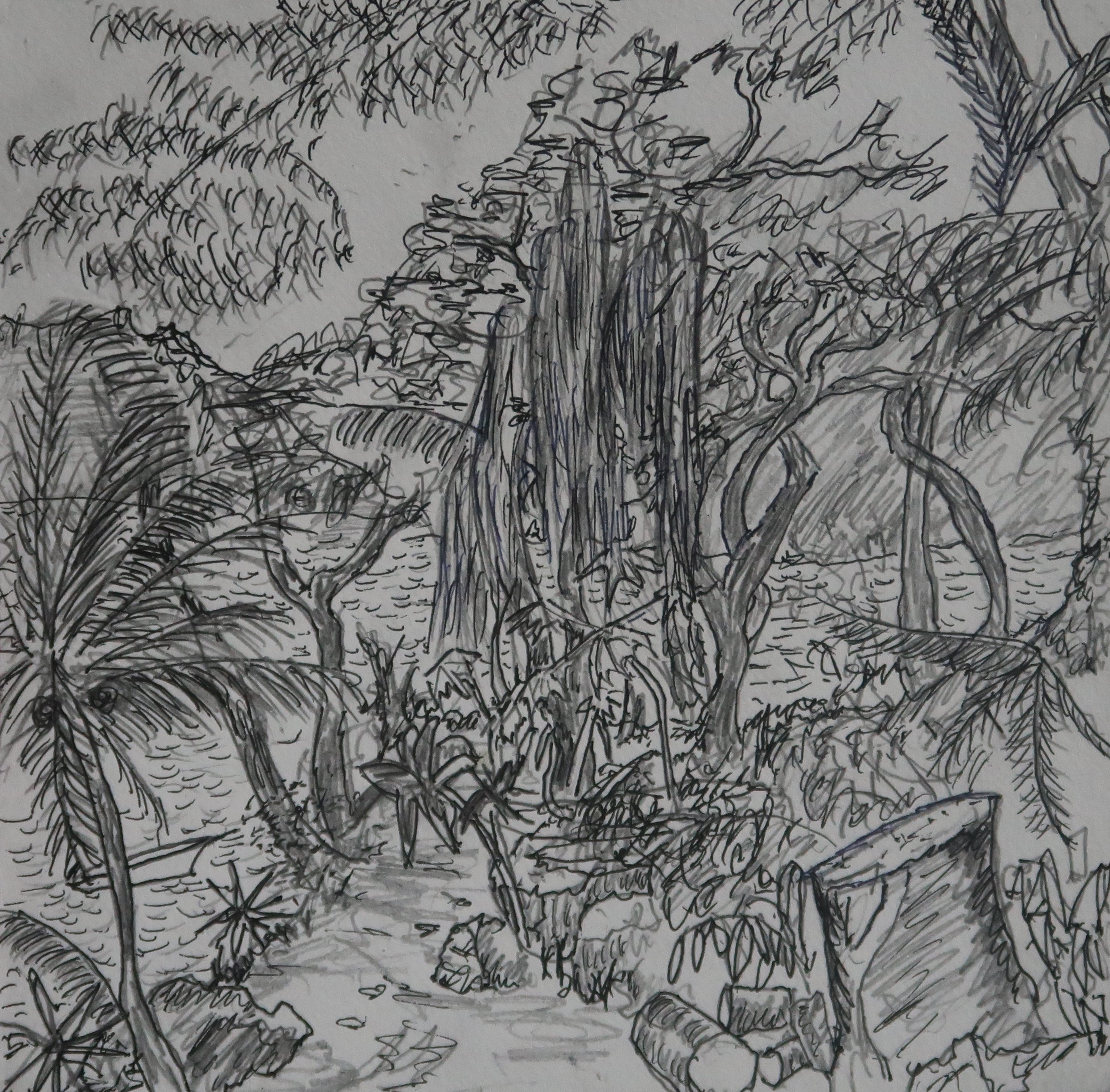
The Island off the Green Coast

morning
Fallen Tree
Old Man’s Beard
Waves
View

And to this post I am now adding a section from Book 23 of my poem The Runiad:

Now here seems far away from the pressing urgency

Experienced in the West. Sure it’s an illusion, but the heat

Seems to mellow their poverty, nobody wears more

Than one layer anyway. And anyhow, life is cheaper.

There’s no shortage of coconuts, plenty of bananas.

You don’t have to be all that investigative. You don’t

Have to dedicate your hours to unearthing things.

Things that prefer to be hidden from us, without the effrontery

Of the small seven-coloured birds that flit through the quiet,

Perch for a sec on the branch of the Bougainvillea, then dart

Into the house. Things better left unsaid. Better not disturb

Their inertia. The boy inhabits the hammock immersed

In his App. Why is that fan of stripes called a dentist fish?

Picasso said something like “I find. I do not seek.”

Those who grow up among palms inherit an aesthetic

Radically different to that of persons accustomed to the blurry

Vagaries that epitomise European foliage. Rather it’s

An aesthetic in silhouette; crisper, more graphic, suited

To the precise woodcut. Each climate asserts its own particular ethic.

Our autumn mists of melancholy, clumping of oaks, ivy-ridden

Walls inspire the generalisations of our romantic tendency.

Here though, against the honed precision of an outline’s

Bladed fans, only the sea comes shambling in, yawning, stretching,

Breathing out, re-inhaling. But someone has drawn back the curtains

Of bougainvillea so that the garden below the veranda becomes

A theatre. Two gentleman, a fallen tree, and the single prop

A chain-saw. One man positions the bough, and intermittently

Now the saw does its biting, interrupting the surrounding sea.

All that is over though. The logs stashed away to the bank

Underneath the suggestion of a crag, among some variegated leaves,

While the tree removed reveals a view of one magnificent stand

Of bamboo, its stout poles ending in spray after spray

Of calligraphy written by delicate leaves. And now the cicadas

Compete with the sea from within the bamboo, sounding

As dry as the sea is wet, abuzz with the gossip that informs

The overgrown bank with its several giant leaves, pots with exotics,

Favoured perches for these tiny, seven-coloured birds

That flit through the house, perch on plates for seeds,

While fireflies kindle instants of light later, in the dark.

Gone before seen, and there’s no way of knowing what

You’ll bequeath, what will persist, what will vanish

Down time’s throat, lives being less than a firefly’s flash.

Seven colours to each of them. From the Bougainvillea with

Impunity they flit, everywhere; emerald, another green as well.

Black and yellow, white, all on one little bird, and more tints

Than that, the male by a trifle more decorated than his spouse. 

Tiny feasts of colour, reminding me that birds have other ways

Of appealing to us, from the long elegance on high of those Magnificent

Frigate Birds to the beady intelligence of the crow family.

Mozart enjoyed employing a starling as a prompter

And as a “creative aid” to composition. One day

The starling repeated the 17 opening notes of the Piano

Concerto No. 17 in G major, adding its own variations;

In particular by inserting a coda on the last bar

Of the first complete measure and singing a G♯

Instead of a natural G in the following measure.

It was the starling’s version that became the definitive

Version of Mozart’s concerto. In June 1787,

The starling passed away. For him, Mozart organized

A sumptuous funeral and a worthy burial in the garden

Of his home, even dedicated a passionate elegy

To his feathered co-composer. Don’t allow a cat onto this isle.x

Or that’ll be the end of all the birds, the blue ones as well.

There’s a plague of Brazil’s most dangerous snake here

Due to a South African Ridgeback’s hunting down of the Coypu.

You just better look where you’re going for once

And check where you sit before settling to do a sketch.

Be mindful of the sun, as one day on a Rio beach did you in

Badly on the back, because when it comes to lotion, you are slack

To use it at first, and thus you almost always end up toast.

Below the tossed palms that slide precise blades against

Blades from another palm, washing through the alleys

And lapping at the hollows of the ear, flexing then relaxing

Its attacks, the surge laps at the rocks by the shore, swollen

Only to subside. It wells up and sinks back again, and I could

Watch it forever, lashing itself into a froth, then

Splashing all the coast within earshot of the open house.

It sinks then wells up again, foaming, awash, pouring

Its current into each hollow before retreating, leaving a

Fleur-de-Lys residue that sinks back from all crevices.

Heard through open rooms in the night as the breeze tosses

The bamboo sprays above our heads, throughout the day,

Then each and every night, not to be turned off;

Foam dissolving into froth. Reassuring that it never ceases….

Now and forever smoothing out its each and every crease,

Then it either fizzes as it pleases or is wounded by a cruiser

Almost lifting out of the water; curls itself about, to dash

Against the shore again before restoring the calm needed

To saunter breezily back but then retire, having healed

Each suture, into a mere background sound, choosing

Again to expand, or encroach on the slab of a point,

Dark now where the wet comes sliding over it,

Only so as to subside all along the shore. The mobile sound of this

Eternal liquid! Maybe it pauses sometimes, but it never

Stops; a power which may not be argued with for long.

Now the sea reminds me of an elephant and how one elephant

I met casually wielded the inexorable power of its trunk

To move what it willed which was me where it wished.

The ocean’s quest for utter peace – entire release from

Restlessness – is a peace near achieved this silvery dawn.

A white heron perches on the prow of a fishing-boat

As the net is drawn in by a man and a boy at the stern.

Some sanctuaries are commonplace, a few far less commonplace

Than others. On this island now, quite content to stare out

At the sea here, I could die. The wave collapsing on its curve;

The next wave relapsing into others, out of which sprout eddies

Whitely fizzing down their ephemeral fringes. What says

The staghorn, the tree-fern? If we can harness the energy

Latent in the banana’s formulation. What of walls made

Out of maize? Staghorn latching on to a cocoanut palm.

Each tree has a different texture to its bark, its leaves as well.

Soft as hair, hard as cardboard, Spanish moss hung everywhere.

Old Man’s Beard they call it here. The Play Love Hotel

Is what this old man notices, as we head back to Rio that night,

Having crossed from the island by boat. Moving in a dark

Fast car – a Casanova outlet, brightly lit with neon on the edge

Of every city. Oklahoma Love Hotel. The Innisfree.

If she agrees to go with you, that is where you’ll go with her.

“I very deliberately stuck my tongue out, teasing Mrs Turner,”

Comments the girl on the screen in the opening scene

You are now watching together. “Touched myself quite visibly for her.”

“Goodness, I am finding it hard to resist being all greedy with you.

But I love us just standing here in our knickers…talking like this,

And getting ready to show my husband everything, so that we

Can be bad together before long. Being your teacher makes it even better.”

Very deliberately she rubbed the front of her knickers.

But just then her husband came in, poured himself a cup

Of tea and sat down heavily near the kitchen table.

Mr Turner was burly, stout in a muscular way. He had

A craggy face and rather full lips for a man of his age.

I liked that. I imagined his kiss. He looked appreciatively

At us in our knickers. I felt a bit embarrassed in a hot

And excited way. He was wearing loose soft pyjamas…

I was acutely aware of how my about-to-bloom breasts

Were exposed. I felt I should hide my nipples in my hands

As I glanced shyly up at him. Then I blushed and did just that.

“Put your hands down, Joanna.” Mrs Turner pulled my hands

Away from what they were trying to hide. There’s no need

To be shy, young lady, about how pronounced your breasts

Are beginning to get, have already got indeed.”

She flicked my tits with the backs of her nails. “Let him see.”

I dropped my hands. Looked up at him with face down.

But I was too far gone. I had to touch myself a bit.

“Let her begin by attempting to hide them, then she can start

Fingering those nicely sprouting tips,” he said,

Countermanding her orders. I duly returned my hands

To my breasts but this time as if they were feathers…

The Runiad, books 1-23 can now be read here on this Heyzine link.

Posted in art, Brazil, Ebooks and flipbooks, The Runiad | Tagged , , , , , , | 1 Comment

Seen in the Park, Catete, Rio de Janeiro

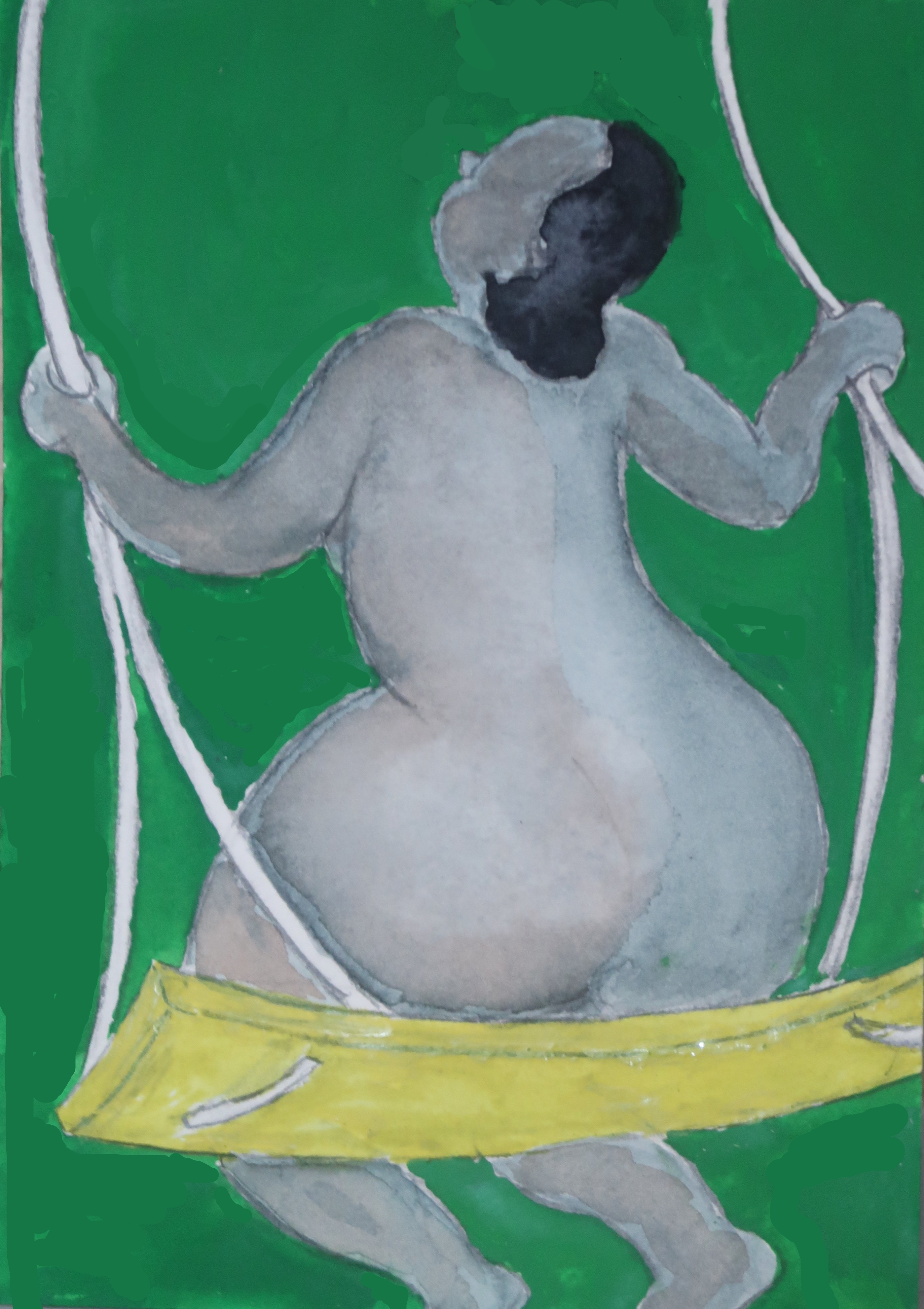
The Swing in the Park
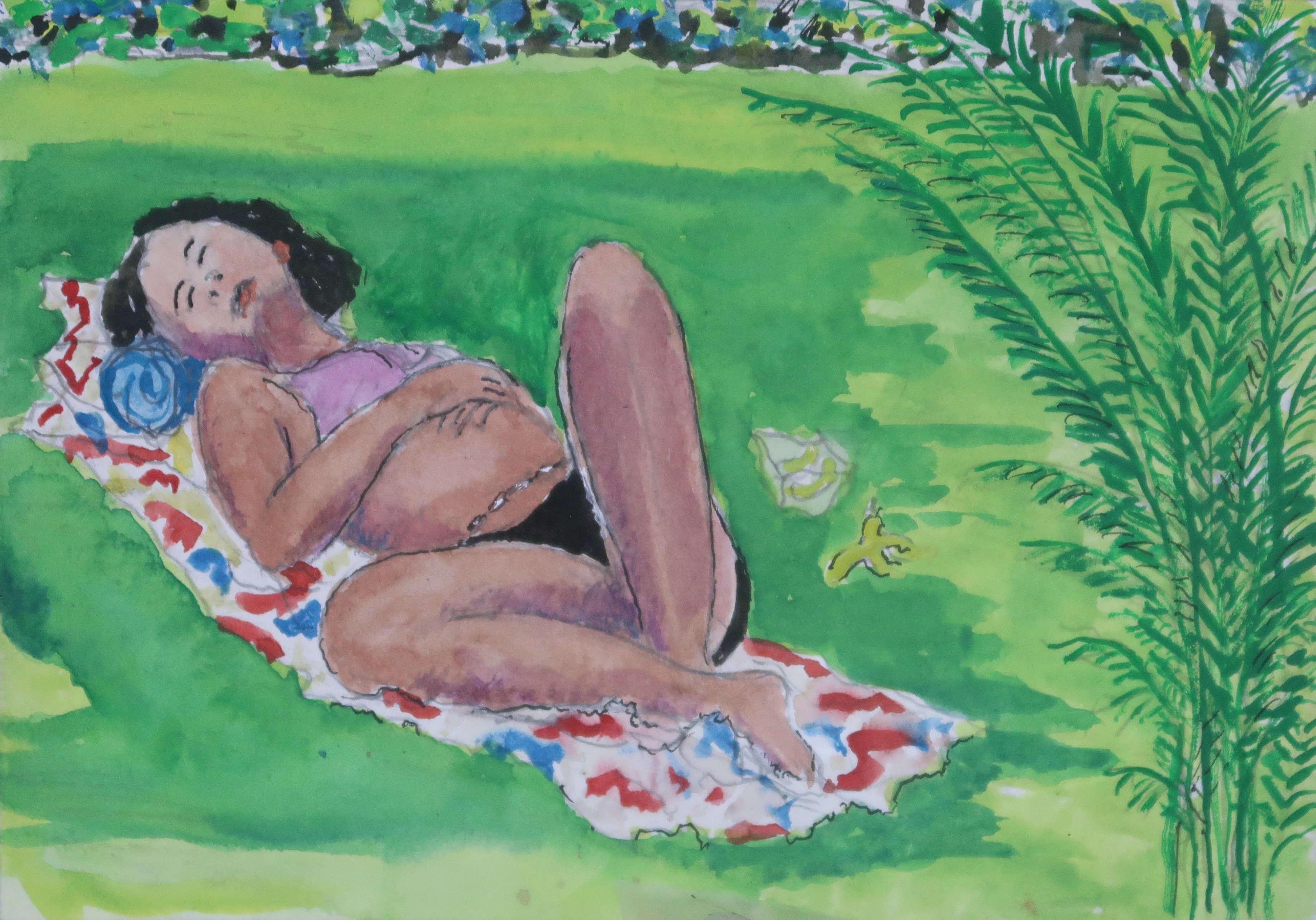
The Sleep in the Park

Posted in art, Brazil | Tagged , , , , | 2 Comments