
x
x
x

x

x

x
Inside the Beltway, it’s a black hole.
Outside? Only desert islands.
Actual desert islands, none with much of a palm.
x
Castaway means left behind,
Less than a dot on the map.
Not in sight. No way borne in mind.
x
Look, it’s not just doom and gloom,
It’s worse, far worse, in fact. You made the wrong mistakes,
The ones that fuck you up.
x
There’s no escape from how your life pans out.
What you were doing was never going
To get you anywhere. Your island is the dullest of all ends.
x
Even the sea can’t be seen from there.
The shore is walled off, the sky
Obstructed by a ceiling. That poet got it wrong.
x
Island? More like a cell
Afloat without a funnel.
You could be staring into a well
x
Or walking down a tunnel
That gets darker, and that’s all it does.
There’s no light at the end of it, whatever
x
Anyone told you. Only those pigs who scratch
Each other’s backs bask in the sun.
How could you cast pearls before such swine?
x


Click on this link https://heyzine.com/flip-book/d1e0b7c35e.html
Click this link for the complete bookshelf of Heyzine publications

Here is the link to new publishing activities
It includes poems, reviews and essays and is currently up-to-date.
Ebook and flip-book publications which can be read for free can be found here

Click on the tag ‘ebooks and flipbooks’ below for other texts available online.
Luciano Borzo
Zios want to erase all trace of Palestinian identity . Ironically , they must admire them otherwise why steal EVERYTHING from them from the garments, koffiye to the food …pretty soon it will be the dabke dance too . Does Freud have a name for that !?
So posted Kenza Ma on social media recently. But I don’t think it is Freud who can provide us with an explanation. I would identify René Girard, the French historian, as a thinker who might supply the answer to this interesting phenomenon. Girard is the originator of the mimetic theory of desire. The name of the theory is derived from the philosophical concept mimesis – which includes a wide range of meanings. In mimetic theory, mimesis refers to human desire, which Girard thought was not linear but the product of a mimetic process in which people imitate models who endow objects with value. Girard called this phenomenon mimetic desire. Girard described mimetic desire as the foundation of his theory:
“Man is the creature who does not know what to desire, and he turns to others in order to make up his mind. We desire what others desire because we imitate their desires.”
Girard’s is a refreshing antidote to Freudian theory.
A child’s reality is scarcely existent. The strongest desire is imaginative: not to be a child, to be a grown up. But not an ordinary grown up. A cowboy, a gangster, a pirate. And then the younger boy may admire his older brother. His older brother has a girlfriend. When he is older, the younger boy will have a girlfriend. But growing up renders this imitative process more complex. For children there is the primal intrigue of parts – the youngest admires a part of the eldest. Her breasts, say. And so, when she ‘grows up’ she must have breasts. This imitative ‘instinct’ removes the accepted notion of intrinsic leanings, i.e. that our leanings are innate, that we are biologically hetero or homo. Older people are role models. Aspiration. Teen desire is for the being as a whole: a crush. It may be for a girl a desire to be the girl she admires in a higher class or to possess a boy like the boy that girl goes out with on dates.
For Girard we imitate our role models and follow in the footsteps of their desire. His mimetic theory is an explanation of human behavior, attraction and culture.
Mimetic desire leads to natural rivalry and eventually to scapegoating. This Girard called the scapegoat mechanism. In his study of history, Girard formed the hypothesis that societies unify their imitative desires around the destruction of a collectively agreed-upon scapegoat.
His theory goes a considerable way to describing the predicament of the Israelis. No amount of propaganda claiming that Palestine was a desert before they arrived can save Israelis from losing their Jewish identity, the identity of the wanderer, whose ties to family and family customs are the real home – which is why the Rothschilds were able to open banks in five major European cities a short while after the Napoleonic wars – the first branch banks. Now, Israelis strive to ‘put down roots’. But who are the people with roots in soil of this territory? The Palestinians.
I’ll share a post from Lowkey here:

When I was in Israel in 1955, falafel was absolutely something Arab, sold only by vendors with tiny street set-ups, not even stalls. Lowkey is spot-on.
There is nothing innate about the existence of the Jews in the territory they have appropriated for themselves with the blessing of the West and its affluent wandering bankers. They have settled without right on Palestinian land. They want the territory for themselves. However, they also seek to ‘be’ the rustics of this land.
The fellahin, a word I recall hearing in Israel, has become synonymous with ‘terrorist’ – and for years I thought that is what it meant. Actually, it means ‘countryman’. Israeli fighters identify with the sabra – the prickly pear indigenous to the Middle East. They want to be indigenous to their new ‘home’ – to be as tough as the prickly pear – to dissociate from the meek millions who went to their fate in war-torn Europe. Girard’s mimetic theory shows how psychologically the Israelis desire to be Palestinians; that is, indigenous to Palestine – cultivating orange groves, herding goats, simmering falafel.
A fair number will find a Palestinian partner, and endeavour to integrate with some chance of success. For the frustrated majority, as Girard so shrewdly realises, the answer is to unify behind the notion that the Palestinians themselves are what obstructs the Israelis becoming true Fellahin. And so the Palestinian people become their scapegoat, their rivals. This unifies the star-of-David mob. And if such scapegoating ceases to hold sway over the new recruit to the IDF, then the only recourse may seem to be suicide, and their army has the highest suicide rate in the world.
What is frightening in this context is the fact that the Israelis have nuclear weapons, and that one of the most potent of Old Testament stories is that of Samson.
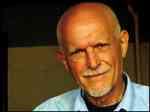
Edward Field is 99 years old today (7/6/2023)x
In my opinion one of the most significant American poets of his time. Why? Because he is one of the first poets to “tell it how it is”. No frills. A sane voice simply trying to describe the world. He is the master of poetry that is as clear (and concise) as prose. Perhaps because of this, his poetry has not been given the attention it deserves. ‘Not poetic enough,’ some might say. But this is precisely its strength, its uniqueness.
WORLD WAR TWO
It was over Target Berlin the flak shot up our plane
just as we were dumping bombs on the already smoking city
on signal from the lead bomber in the squadron.
The plane jumped again and again as the shells burst under us,
sending jagged pieces of steel rattling through our fuselage.
It was pure chance
that none of us got ripped by those fragments.
x
Then, being hit, we had to drop out of formation right away,
losing speed and altitude,
and when I figured out our course with trembling hands on the instruments
(I was navigator)
we set out on the long trip home to England
alone, with two of our four engines gone
and gas streaming out of holes in the wing tanks.
That morning at briefing
we had been warned not to go to nearby Poland,
partly liberated then by the Russians,
although later we learned that another crew in trouble
had landed there anyway,
and patching up their plane somehow,
returned gradually to England
roundabout by way of Turkey and North Africa.
But we chose England, and luckily
the Germans had no fighters to send up after us then,
for this was just before they developed their jet.
To lighten our load we threw out
guns and ammunition, my navigation books, all the junk,
and made it over Holland with a few good-bye fireworks from the shore guns.
x
Over the North Sea the third engine gave out
And we dropped low over the water.
The gas gauge read empty, but by keeping the nose down
a little gas at the bottom of the tank sloshed forward
and kept our single engine going.
High overhead, the squadrons were flying home in formation
– the raids had gone on for hours after us.
Did they see us down there in our trouble?
We radioed our final position for help to come
but had no idea if anyone
happened to be tuned in and heard us,
and we crouched together on the floor,
knees drawn up and head down
in regulation position for ditching,
listened as the engine stopped, a terrible silence,
and we went down into the sea with a crash,
just like hitting a brick wall,
jarring bones, teeth, eyeballs panicky.
Who would ever think water could be so hard?
You black out, and then come to
with water rushing in like a sinking-ship movie.
x
All ten of us started getting out of there fast:
there was a convenient door in the roof to climb out by,
one at a time. We stood in line,
water up to our thighs and rising.
The plane was supposed to float for twenty minutes,
but with all those flak holes
who could say how long it really would?
The two life rafts popped out of the sides into the water,
but one of them only half inflated,
and the other couldn’t hold everyone,
although they all piled into it, except the pilot,
who got into the limp raft that just floated.
The radio operator and I, out last,
(Did that mean we were least aggressive, least likely to survive?)
we stood on the wing watching the two rafts
being swept off by waves in different directions.
We had to swim for it.
Later they said the cords holding rafts to plane
broke by themselves, but I wouldn’t have blamed them
for cutting them loose, for fear
that by waiting the plane would go down
and drag them with it.
x
I headed for the overcrowded good raft
and after a clumsy swim in soaked heavy flying clothes
got there and hung onto the side.
The radio operator went for the half-inflated raft
where the pilot lay with water sloshing over him,
but he couldn’t swim, even with his life vest on.
Being from the Great Plains,
his strong farmer’s body didn’t know
how to wallow through the water properly,
and a wild current seemed to sweep him farther off.
One minute we saw him on top of a swell
and perhaps we glanced away for a minute
but when we looked again he was gone
just as the plane went down sometime around then
when nobody was looking.
x
It was midwinter and the waves were mountains
and the water ice water.
You could live in it twenty-five minutes,
the Ditching Survival Manual said.
Since most of the crew were squeezed on my raft
I had to stay in the water hanging on.
My raft? It was their raft—they got there first so they would live.
Twenty-five minutes I had.
Live, live, I said to myself.
You’ve got to live.
There looked like plenty of room on the raft
from where I was and I said so, but they said no.
When I figured the twenty-five minutes were about up
and I was getting numb,
I said I couldn’t hold on anymore,
and a little rat-faced boy from Alabama, one of the gunners,
got into the icy water in my place,
and I got on the raft in his.
He insisted on taking off his flying clothes,
which was a fatal mistake because even wet clothes are protection,
and then worked hard, kicking with his legs, and we all paddled,
to get to the other raft,
and we tied them together.
The gunner got in the raft with the pilot
and lay in the wet.
Shortly after, the pilot started gurgling green foam from his mouth-
maybe he was injured in the crash against the instruments—
and by the time we were rescued, he and the little gunner were both dead.
x
That boy who took my place in the water,
who died instead of me,
I don’t remember his name even.
It was like those who survived the death camps
by letting others go into the ovens in their place.
It was him or me, and I made up my mind to live.
I’m a good swimmer,
but I didn’t swim off in that scary sea
looking for the radio operator when he was washed away.
I suppose, then, once and for all,
I chose to live rather than be a hero, as I still do today,
although at that time I believed in being heroic, in saving the world,
even if, when opportunity knocked,
I instinctively chose survival.
x
As evening fell the waves calmed down
and we spotted a boat, far off, and signaled with a flare gun,
hoping it was English not German.
The only two who cried on being found
were me and a gunner, the other gay member of the crew.
The rest kept straight faces.
x
It was a British air-sea rescue boat:
they hoisted us up on deck,
dried off the living and gave us whiskey and put us to bed,
and rolled the dead up in blankets,
arid delivered us all to a hospital on shore
for treatment or disposal.
x
This was a minor accident of war:
two weeks in a rest camp at Southport on the Irish Sea
and we were back at Grafton-Underwood, our base,
ready for combat again,
the dead crewmen replaced by living ones,
and went on hauling bombs over the continent of Europe,
destroying the Germans and their cities.
x
Edward Field, from AFTER THE FALL, poems old and new, University of Pittsburgh Press, 2007
Edward Field was born in Brooklyn, New York, and earned a BA at New York University. He served in the United States Air Force during World War II. His books include Stand Up, Friend, With Me (1962), Variety Photoplays (1967), and Eskimo Songs and Stories (1973), Stars in My Eyes (1979), A Full Heart (1981), Magic Words (1997), and After the Fall: Poems Old and New (2007). He edited the anthology A Geography of Poets (1979) and coedited the sequel anthology A New Geography of Poets (1992).
Field won an Academy Award for writing narration for the documentary film To Be Alive (1965). His other awards include the Lamont Award from the Academy of American Poets, the Shelley Memorial Award from the Poetry Society of America, the Prix de Rome from the American Academy of Arts & Letters, and the Lambda Literary Award. Field has lived in New York City and has taught at Sarah Lawrence College and Hofstra University.
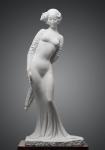
The sculpture of Zhong Zhiyuan
Perhaps a trifle soft on, but there is a charismatic elegance to it nevertheless.


New essay in The Fortnightly Review.
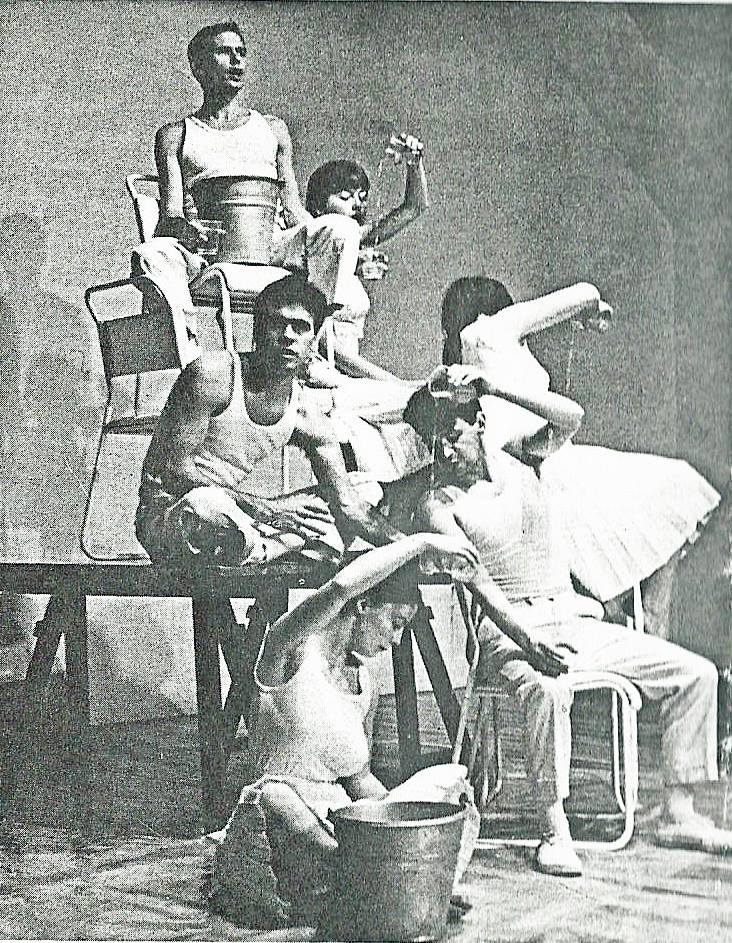
Here is a link to performance art from the seventies in my website archive
The photo above shows the core group of the Theatre of Mistakes: Fiona Templeton, Mickey Greenall, Peter Stickland, Glenys Johnson, Miranda Payne, Anthony Howell.
Some of these listed performances extend into the eighties and the nineties.
For videos of our performances see also the website of The Theatre of Mistakes.


 anthonyhowelljournal