Observations on the Caesura

Here are the conventional terms for metrical feet in poetry.

a line with two feet is a dimeter;

a line with three feet is a trimeter;

a line with four feet is a tetrameter;

a line with five feet is a pentameter;

a line with six feet is a hexameter;

a line with seven feet is a heptameter.

However, it is worth noting that the most interesting meters are those of the primes 5 and 7.

Verse can also be trochaic (falling foot) or iambic (rising foot), and there are other types such as dactyls, but that is not the topic currently under discussion.

Because of four-line stanzas in tetrameter, heroic Augustan couplets and conventional sonnets, we tend to think of verse as always having a regular stress – “written in iambic pentameter” for instance. However, this is not the only way to write verse which scans.

A madrigal such as many of those written by William Drummond of Hawthornden will scan the prime numbers:

Like the Idalian queen,

Her hair about her eyne,

With neck and breast’s ripe apples to be seen,

At first glance of the morn

In Cyprus’ gardens gathering those fair flowers

Which of her blood were born,

I saw, but fainting saw, my paramours.

The Graces naked danced about the place,

The winds and trees amazed

With silence on her gazed,

The flowers did smile, like those upon her face;

And as their aspen stalks those fingers band,

That she might read my case,

A hyacinth I wished me in her hand.

Here Drummond scans trimeter with pentameter. But all primes scan, so the madrigal form could use pentameter juxtaposed with heptameter. Heptameter will scan with trimeter as well and with Endekameter (an eleven-foot line). I have written poems making use of such an extended madrigal structure.

But what makes the primes of particular interest is the irregularity of the caesura. A caesura is a pause that occurs within a line of poetry, and in my view, strictly speaking, it needs to be more than one foot long. Modernists may bend such a rule, fair enough. But if we stick with the rule some interesting ratios become evident.

The caesura on 5 (Pentameter)

3:2

The caesura on 7 (heptameter)

5:2

4:3

The caesura on 11 (Endekameter)

5:6

3:8

9:2

7:4

Of course the ratios can be reversed. But it is the inequality of the caesura which makes pentameter so vital to English poetry.

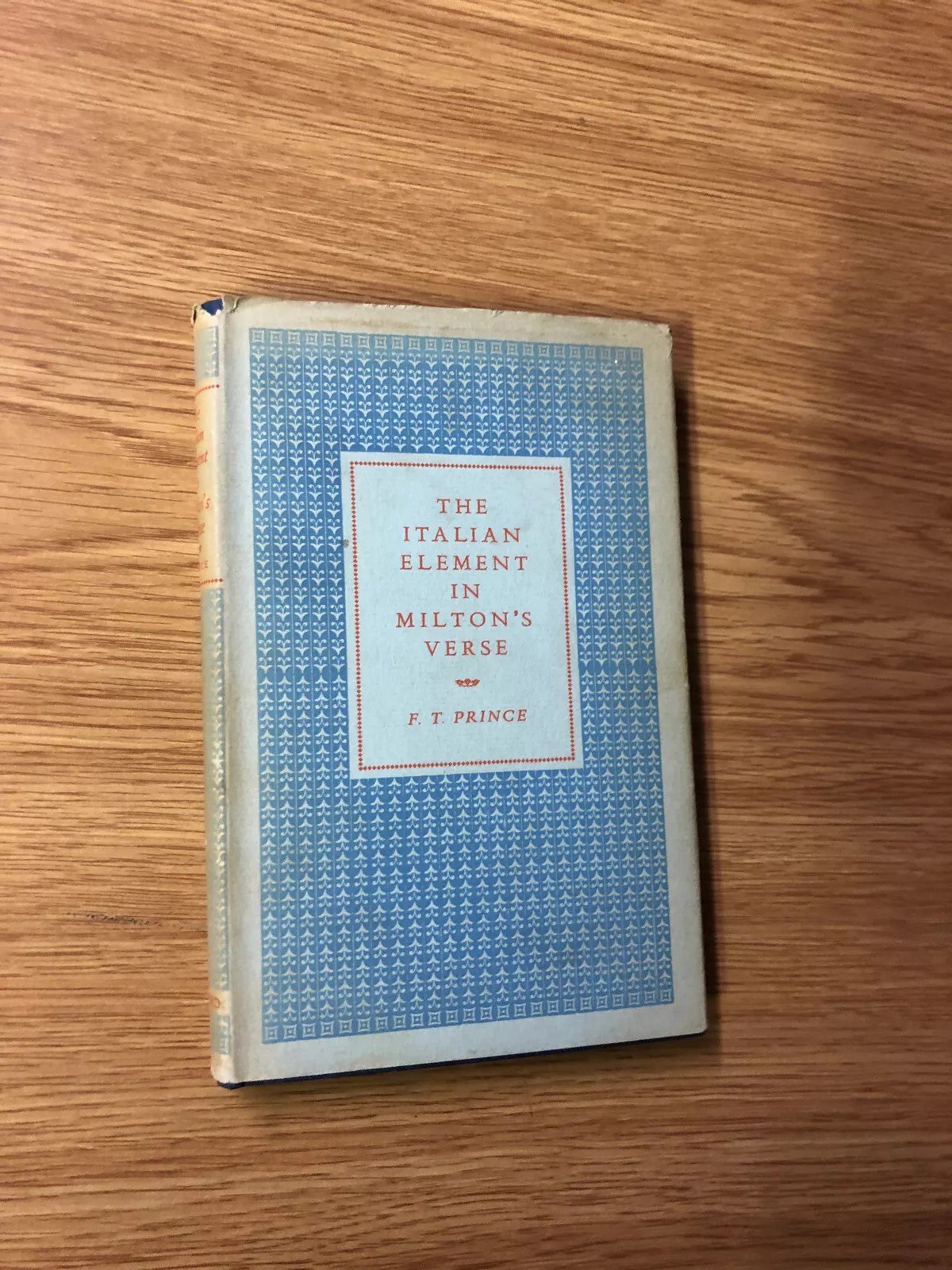
I am writing my epic THE RUNIAD in a meter that is loosely heptameter, because I enjoy the possibility of using two caesurae. A great book dealing with these niceties of the metrical foot in English verse is F T Prince’s “The Italian Element In Milton’s Verse”  Pub: Oxford – 1954.

Posted in Essays, Poetry, The Runiad | Tagged , , , , | Leave a comment

Writing at The Room

Iris Colomb

Paul Buck

Posted in Uncategorized | Leave a comment

Celebrating Edward Field. One hundred years old today!

Congratulations, Edward!

CELEBRATING HIS ASS

they try to block your dick

with their little pills

for blood pressure, prostate, heart

they figure you’re an old guy

so what’s the difference

and just to stay alive

you go along with it, take the goddam pills

but how lucky I am

to live with an antidote to their poison

whatever the depredations of age

he still has one goddam beautiful ass

and just looking at it

I can’t stop pulling on my dick 

I follow him around like a dog

drooling over the ballet of his movements

and can’t stop pulling on my dick 

actually, anything he does

goes to my dick

and he’s walking around naked all the time

I get to watch him putting on his clothes

watch the way he fills his underwear

and even better when he takes it off

and when he does the dishes naked

each cheek as he moves

here and there at the sink

altering its shape, its roundness

and I can’t stop pulling on my dick

and when he bends over

I ‘m riveted by the beautiful

crack of his ass,  and can’t stop

pulling on my dick

and when he does his daily exercises

I’m breathless, I’m breathing hard

I’m sipping the nectar of the gods

oh lord, let me die looking at that ass

with my hand still pulling on my dick

Edward Field, in my opinion, one of the great poets of his time. His poem about World War 2 and being shot down in a bomber is probably the best poem of that war. And there is plenty of other work just as great. He has been overlooked because he was a narrative writer in a very “languagey” context. Fuck that! His work will never be forgotten.

Posted in Poetry, war | Tagged , | Leave a comment

The Runiad – Book 8 – The Mare with the Beautiful Eyebrows

Book 8 of the Runiad is now on the Heyzine Link here.

And an extract from Book 8 is now published in The Fortnightly Review

Which means I am now one third of my way to completion of all 24 books.

Posted in The Runiad | Tagged , , , | Leave a comment

ABSTRACTIONS

To accompany my COLLECTED LONGER POEMS – now published by Grey Suit Editions UK – I am releasing another Heyzine book.

This is my collected ABSTRACTIONS

Click on the link for a free online copy of this collection of my abstract poems.

“I consider as ‘abstract’ my writings and paintings which are generated by some  conceptual or plastic process – such processes may generate narrative or figurative suggestions but these are incidental rather than deliberate. The paintings which accompany these poems are not intended to illustrate the text, rather they are juxtaposed with the text, and any connection between text and image is again incidental. I feel that my notion of abstraction is a reversal of a modernism that moves away from the figurative into abstraction, a reversal of language departing from narrative to find release in syntax. Rather, I begin from some chaotic concept, then allow accident and inconsistency to take me wherever the poem finds its route, which may well prompt a sense of meaning. I readily invite the reader to invent the ghosts of stories, glimpses of scenes discovered by the process.” (author’s note)

This collection includes certain long poems which have not been included in “Collected Longer Poems” because it seemed more appropriate to keep them with my other abstract poems.

On the Heyzine site, my advice is to turn off the sound and expand the page. Click on the arrow at the foot of the right hand page to turn to the next page.

Posted in art, Ebooks and flipbooks, Grey Suit Editions, Key Links, Poetry | Tagged , , | 1 Comment

The Indian Jungle

Very pleased that my review of The Indian Jungle: Psychoanalysis and Non-Western Civilizations (published by Karnac) has just come out in The Fortnightly.

Sadly the author Sudhir Kakar has recently passed away. A link to a website related to his work – the Kakar Art Collective – can be found in the heading to my essay.

Posted in Essays, Reviews, Uncategorised | Tagged , , , | Leave a comment

The Runiad – book 7 – Agape or Eros

Book 7 of the Runiad is now available.

And an extract is published in The Fortnightly Review here.

As usual, the entire epic so far (now books 1 to 8) is available on this Heyzine flipbook link

Posted in Poetry, The Runiad | Tagged , , , , , | Leave a comment

Writing at The Room – June 9 at 3 pm

WRITING AT THE ROOM – Poetry, text, sound, song

3 pm Sunday June 9. Featuring Tom Bland and Dominic Lyne

Hosted by Anthony Howell and Patricia Ahern

The Room, 33 Holcombe Road, Tottenham Hale/Bruce Grove

London N17 9AS – enquiries: 0208 801 8577

Open mike. BYO. (Please come 20 minutes early to book for the open mike.

Tom Bland has two books out, Camp Fear and The Death of a Clown, with Bad Betty Press. He studied experimental theatre and has a special interest in where it intersects with poetry and occultism.

Dominic Lyne is a London based writer. Drawing from his personal experiences, his work aims to shine a light upon the darker sides of humanity and society. His collection The Sky was Empty, but Still the Thunder Rolled is forthcoming through Rebel Satori Press, and his work has been published in anthologies by Guts Publishing, HarperCollins, as well as appearing in SCAB Magazine.

Posted in Poetry | Tagged , , | Leave a comment

Empire Managers Explain Why This New Protest Movement Scares Them – Caitlin Johnstone on X

I recommend this absolutely brilliant analysis of the manipulation of ‘narratives’ by Caitlin Johnstone! There is a link to her site and this article at the foot of this post.

Blinken and Karp

The US secretary of state and a Bilderberg surveillance tech oligarch have both made some very interesting admissions about the burgeoning protest movement against the US-backed slaughter in Gaza and the problems it poses for the empire they help run.

During a vitriolic rant about university demonstrators at the Ash Carter Exchange on Innovation and National Security on Tuesday, Palantir CEO Alex Karp came right out and said that if those on the side of the protesters win the debate on this issue, the west will lose the ability to wage wars.

For those who don’t know, Palantir is a CIA-backed surveillance and data mining tech company with intimate ties to both the US intelligence cartel and to Israel, playing a crucial role in both the US empire’s sprawling surveillance network and Israeli atrocities against Palestinians. Karp is a billionaire who sits on the Steering Committee of the Bilderberg Group and regularly features at the World Economic Forum and other platforms of plutocratic empire management.

“We kind of just think these things that are happening, across college campuses especially, are like a sideshow — no, they are the show,” Karp said during his rant. “Because if we lose the intellectual debate, you will not be able to deploy any army in the west, ever.”

Everyone should listen very carefully to Karp’s words here, because he’s giving the whole game away. He’s making it very clear how crucial it is for the empire to stomp out this protest movement and the zeitgeist upon which it rides, because the very existence of the imperial war machine depends on it. At a time when most imperial spinmeisters are trying to dismiss the importance of this movement and what young people are doing on college campuses around the world, this is a really extraordinary admission from someone who lives deep in the guts of the imperial hydra.

Such conferences are great for obtaining useful information from swamp monsters that you don’t normally hear, because when they’re surrounded by like-minded empire goons they tend to get a lot more loose-tongued than they are when they’re more aware that they have an audience of normal people.

We saw this illustrated again in a conversation between Senator Mitt Romney and Secretary of State Antony Blinken at the McCain Institute last week, during which both acknowledged some facts that generally go unstated by such creatures.

After bemoaning Israel’s lack of success at “PR” regarding its Gaza assault, Romney just came right out and said that this was “why there was such overwhelming support for us to shut down potentially TikTok or other entities of that nature” — with “us” meaning himself and his fellow lawmakers on Capitol Hill.

“How this narrative has evolved, yeah, it’s a great question,” Blinken responded, saying that at the beginning of his career in Washington everyone was getting their information from television and physical newspapers like The New York Times, The Wall Street Journal and The Washington Post.

“Now, of course, we are on an intravenous feed of information with new impulses, inputs every millisecond,” Blinken continued. “And of course, the way this has played out on social media has dominated the narrative. And you have a social media ecosystem environment in which context, history, facts get lost, and the emotion, the impact of images dominates. And we can’t — we can’t discount that, but I think it also has a very, very, very challenging effect on the narrative.”

Notice how he said the word “narrative” three times? That’s how empire managers talk to each other, because that’s how they think about everything.

This is because empire managers are always acutely aware of something that normal human beings are not: that real power comes from manipulating the stories — narratives — that people tell themselves about their reality.

They understand that humans are storytelling animals whose inner lives are typically dominated by mental narratives about what’s happening, so if you can control those narratives, you can control the humans.

They understand that power is controlling what happens, but true power is controlling what people THINK about what happens.

They understand that whoever controls the narrative controls the world.

That’s what’s going on with all the mass media propaganda, Silicon Valley algorithm manipulation, plutocrat-funded think tanks, and mainstream culture manufacturing in New York and Hollywood. A few clever manipulators understand that you can control a society by controlling its dominant narratives.

Our rulers don’t think about things like normal people think about them. They don’t think in terms of doing the right thing or acting in a way that benefits everyone. They don’t think in terms of truth and honesty or the lack thereof. They only think in terms of what stories people are telling each other, and how those stories can be changed in a way that advances the interests of the empire they manage.

Empire managers — and highly manipulative people in general — do not use language in the way that normal people use it. Normal human beings use language to connect and communicate, whereas manipulators use it only to extract things they want from people and exert control over them. They do this by working to control the narratives that people have about their material reality.

That’s why when Romney and Blinken are talking to each other about why people are so upset at Israel, it never even occurs to them to discuss how Israel’s public image is being hurt by its own actions, or to suggest that it could improve that image by simply ceasing to behave in a monstrous way. All they talk about is “the narrative” of what Israel is doing, and how people having the ability to share ideas and information with each other online makes that narrative harder to control.

So while normal people are looking at the bloodshed and horror in Gaza and screaming it needs to stop at the top of our lungs, our rulers are hearing us and thinking, “Oh no, we need to find a way to get them to stop believing that narrative and get them to believe another one.”

That’s what we’re seeing with all the attempts to stomp out free speech both at demonstrations and online. They understand that if they lose control of the narrative, they won’t be able to deploy their armies anymore.

So please don’t make the mistake of thinking your attempts to disrupt their narrative control aren’t working. Don’t let anyone tell you your protests don’t make a difference or your dissident speech poses no threat to the powerful. If what you’re doing wasn’t working, empire managers wouldn’t be losing their minds right now.

Here is the link to this article on Caitlin’s site

Posted in Politics, war, Whistleblower Lit | Tagged , , , , , | Leave a comment

Cherem – for Palestine

A new video on Youtube

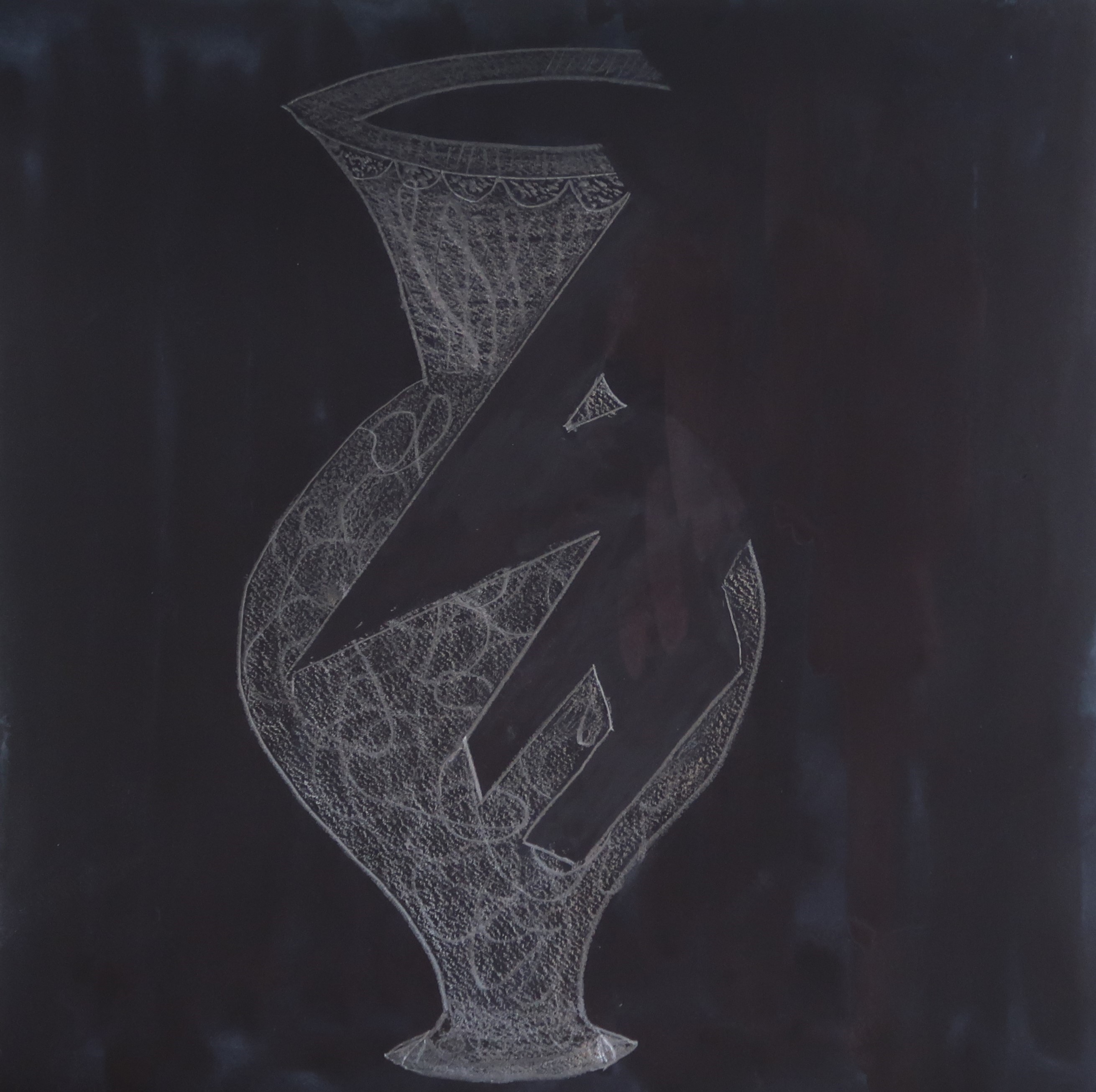
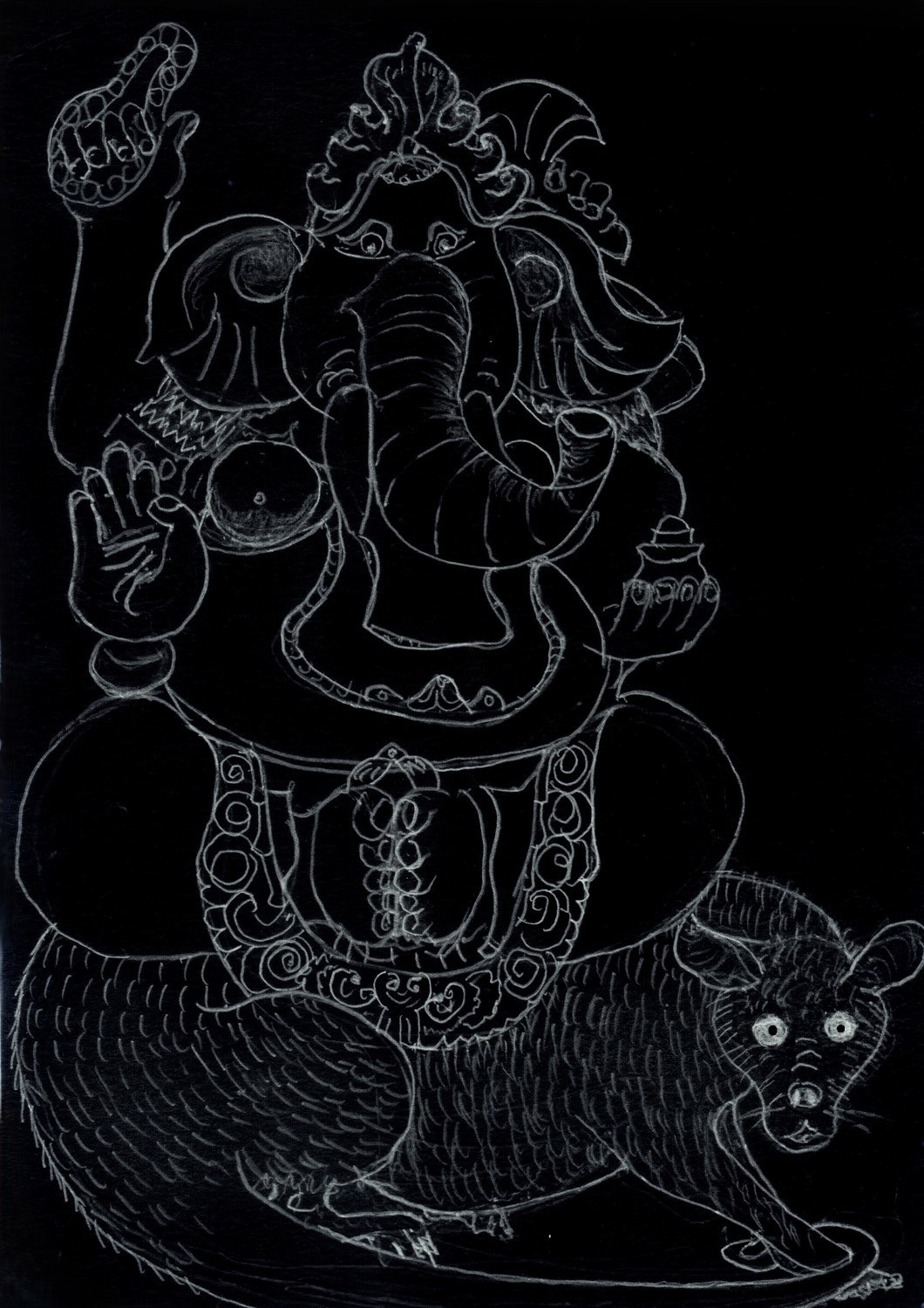
Cherem is a slideshow created with lead pencil on black watercolour.


“Extremist rabbis fool the Jews by citing ancient texts

That seek to prove that genocide is sacred if pronounced “Cherem”.

Cherem dictates that irritating obstacles or even cities

(and the living sheltering within their walls) are designated

As ‘devoted to destruction’ on religious pretexts.

By enacting a cherem, an object or a race gets removed completely,

Obviating any risk that it might be integrated into their society.”


From The Runiad, Book 6

Posted in art, The Runiad, Video, war | Tagged , , , | Leave a comment