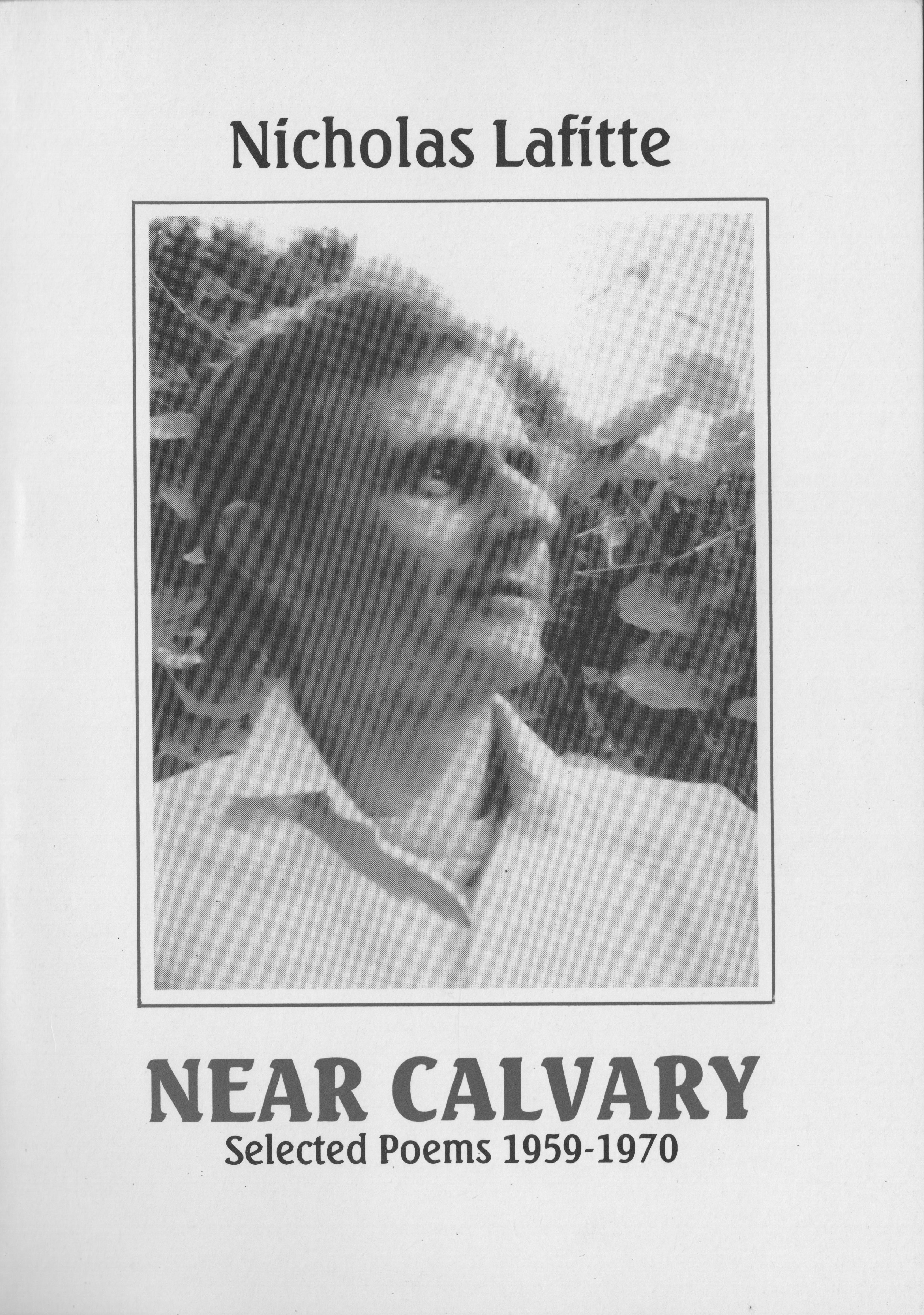
Nicholas Lafitte committed suicide at 27 after a long battle with schizophrenia. Arguably this highly gifted poet threw away, along with his life, a greater literary legacy. It’s probably best however to refrain from such speculations and resist the temptation to billet Lafitte with the likes of Douglas, Keyes et al. Anyhow, he did live and write for at least three years longer.
Lafitte is more of an obsessional than confessional poet; more a Plath than a Lowell, with the odd lyrical smatter of Lorca. His poetry swings between polarities of stark intellectualism and morbid religiosity reminiscent of the ‘mania’ of Christopher Smart (the title ‘The Madman Compares God To A Great Light’ says it all). It would be shallow to put this down to schizophrenia; there’s evidence of deep ontological concerns which are perfectly rational, if a little obsessive.
Lafitte’s style can be stream-of-consciousness:
It is the leopard-coloured sand You see, supine beneath these, ultimate Fins of the sea-scales I lie On the sea’s edge, a heavy sand to be squeezed As who would squeeze a flannel with my one Eye against the sun I see the sheer Rock face soars up unperspective- Wise to where trees shatter the sky
(‘This, Is The Sea’).
It can be casual and direct like the Roman love poets:
Love is not loving or being good or kind, is rather a sort of shared disturbance in the emptiness, ripple in a pool of bleakness. To say I love you as you once said to me does not demand a gesture like, say, a valentine or kiss. Love is.
It can be supremely descriptive: ‘the damson twilight, half creamed clouds/Of smoke hung like laundered sheets from the beamed/Roof tree’ (‘Evening Over Malta’); ‘the trees scorched ochre, chrome yellow’ (‘And the blue grass taut and dry’). It can be succinct and evocative: ‘men,/with freckled hands sip beer in silence’ (‘To A Sicillian Prostitute’).
Typically of many mentally afflicted poets, Lafitte invests a neurotic animism in the anxiety-free natural world: ‘The old wasp/Sun stings the window pane’ (‘To A Sicillian Prostitute’); ‘the January sun/Must always dwarf the summer, see/How it stretches skies across the city’s black!’ (‘Poem For Robert’); where the evening is a yellow glass,/And battered crows comment scornfully’ (‘Seven Last Words’); ‘The pathology of autumn synchronises/ Breakdowns with the falling of the leaves./A neurotic sun travels round the sky’s rim’ (‘In The Clinic’); ‘Climate is mortality’ (‘Calvin’s God’).
Some phrases of Lafitte’s read like sections of Van Gogh’s paintings: ‘knives of rain’; or Max Beckmann’s: ‘oiled existence skins’.
‘In The Clinic’ is the accessible mental illness piece which had to be written, but still surprises metaphorically: ‘November is/The staff nurse with the clinical smile’. It includes the motif of the head as a helmet which crops up sporadically throughout the collection: ‘Schizophrenia’s/Worse, that’s when you wear a balaclava/Helmet in the summer’.
Lafitte’s introspection is limitless: ‘I am no macro-lover,/nor even very nice’ (‘If There’s God Above The Blood-Bathed Heavens’). It verges on the solipsistic: ‘I AM MY WORLD’ (‘Homage To Wallace Stevens’).
Lafitte is gripped in a morbid theology, a faithless faith blighted by a questioning intellect:
There is no final metaphor. Only this, Inevitable, fidget with the images. Canterbury carried by anthropomorphic Frenzy demands male ministers.
At the end of this piece Lafitte, as if exhausted with trying to sum up the ‘sensed otherness’ of spirituality, sighs a final metaphor: ‘men fumbling with matches in the night’ (‘Thoughts At Night’).
Some parts of this collection read like a philosophical self-help pamphlet getting in a bit of a tangle. Lafitte is a soldier of doubt who comes through the smoke of the battlefield in spite of himself, in spite of his final act. His mastery of poetic styles is breathtaking as is his descriptive inventiveness. He is only let down by occasional over-theologizing.
So is Lafitte’s philosophical epitaph to be: ‘My god has gone; we are all/alone now, each in our desperate bed’ (‘Letter from Mwanza’)? Powerfully typical of this poet’s gifted pessimism, but I prefer: ‘Yet shall/My love endure the summer of my strength’ (‘Seven Last Words’).
I remember him reading his elusive poems under a gnarled sycamore at the far end of a field on my mother’s Hampshire farm – Purdies Farm – that lovely summer when we held an arts festival there in the mid-seventies I guess. The horses cropping grass as they listened nearby. Amikam Toren did a ballet for cars. Susan Hiller and Susan Bonvin squabbled over encroachment of Susan Bonvin’s string piece into Susan Hiller’s dream field. The fledgling Theatre of Mistakes did a free session among the horses. David Coxhead philosophised under the corrugated awning attached to the barn as the sun set over the wooded heath. John was very much part of this mixed group of artists, which included Anthony McCall and Andrew Eden – all editors of Wallpaper magazine, which we found wallpaper covers for, from the ends of rolls, and it wasn’t a magazine with articles, it was a magazine with art-works and poems and musical scores and concepts, and each editor had a slot (there were twelve editors and John was one) – and other contributors could only get into the magazine if an editor gave up a slot to that contributor. We were all committed to a somewhat French notion of a café society, where visual artists exchanged ideas with poets and composers and this was in reaction to the over-rigorous demarcations of London culture, where poetry was remorselessly meaningful and poets like John and myself and Tom Lowenstein and Alan Fuchs all reacted to this, and joined forces with the French group Siècle a mains – writers living in exile from Paris in London at the time and championed by Anthony Rudolf. We had set up a writer’s workshop which took place in my wife Signe’s Hampstead flat where we were ruthless about our own poems and we talked enthusiastically about the New York Scene and John Ashbery and Clark Coolidge and Jimmy Schuyler. And this was because we wanted to engage with abstraction, as we saw the visual arts were doing, and at the time I took up a way of writing which was extremely abstract and systemic while John’s writing mediated between abstraction and meaning in a way which I was sometimes dismissive of back then; but John’s ineffable hovering has definitely stood the test of time, whereas I have moved on or away from my purist abstract outlook. So it was that we became writers. John went on to found Vanessa magazine, and also he started the Many Press. I feel that Winter’s Not Gone – the pamphlet of mine that he published – with design and wonderful cover illustration by Peter Tingey is the most handsome of any chap-book that has been done of my poetry. Most memorably, John also published Near Calvary by the immensely gifted poet Nick Lafitte, who committed suicide in his twenties, a collection I edited and wrote an introduction for. John has written poetry which will last, and I will also always appreciate his fine work as an editor and a publisher.
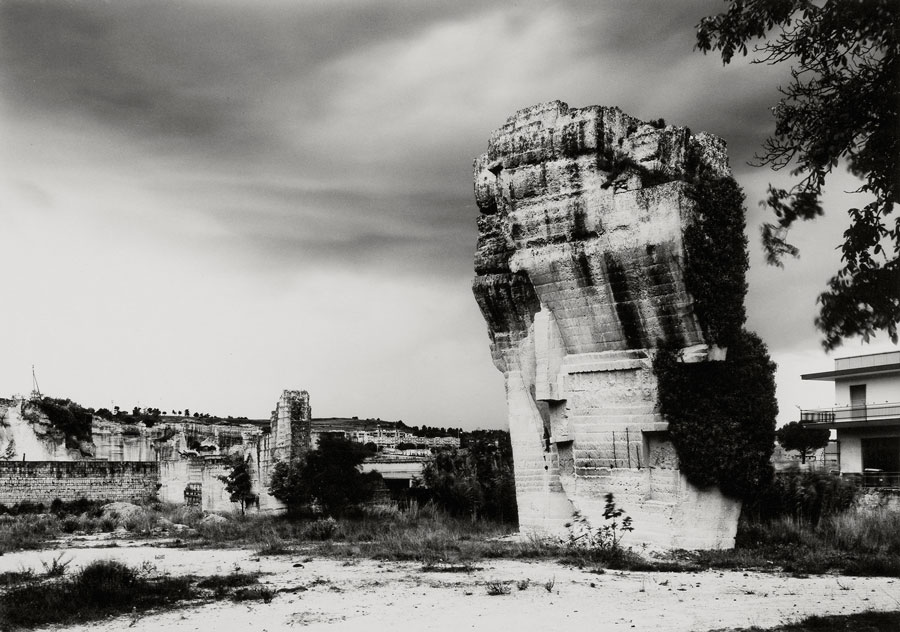
Italian-American photographer George Tatge studied English Literature at Beloit College, Wisconsin. Tatge moved to Italy in 1973 and began working as a freelance photographer and writer. He served as Director of Photography at the Alinari Archives between 1986 and 2003. Tatge was awarded the Premio Friuli Venezia Giulia Photography Prize in 2010. His work is represented in major public collections, including the Metropolitan Museum of Art, New York, and the Centre Canadien d’Architecture, Montreal.
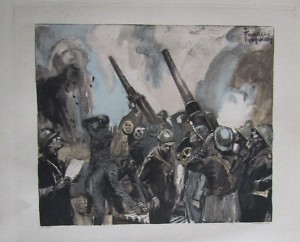
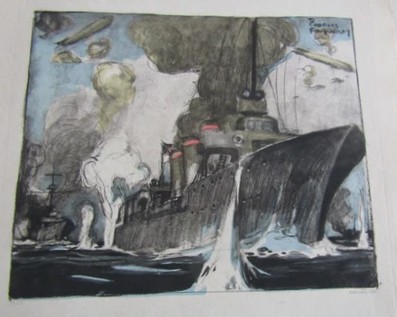
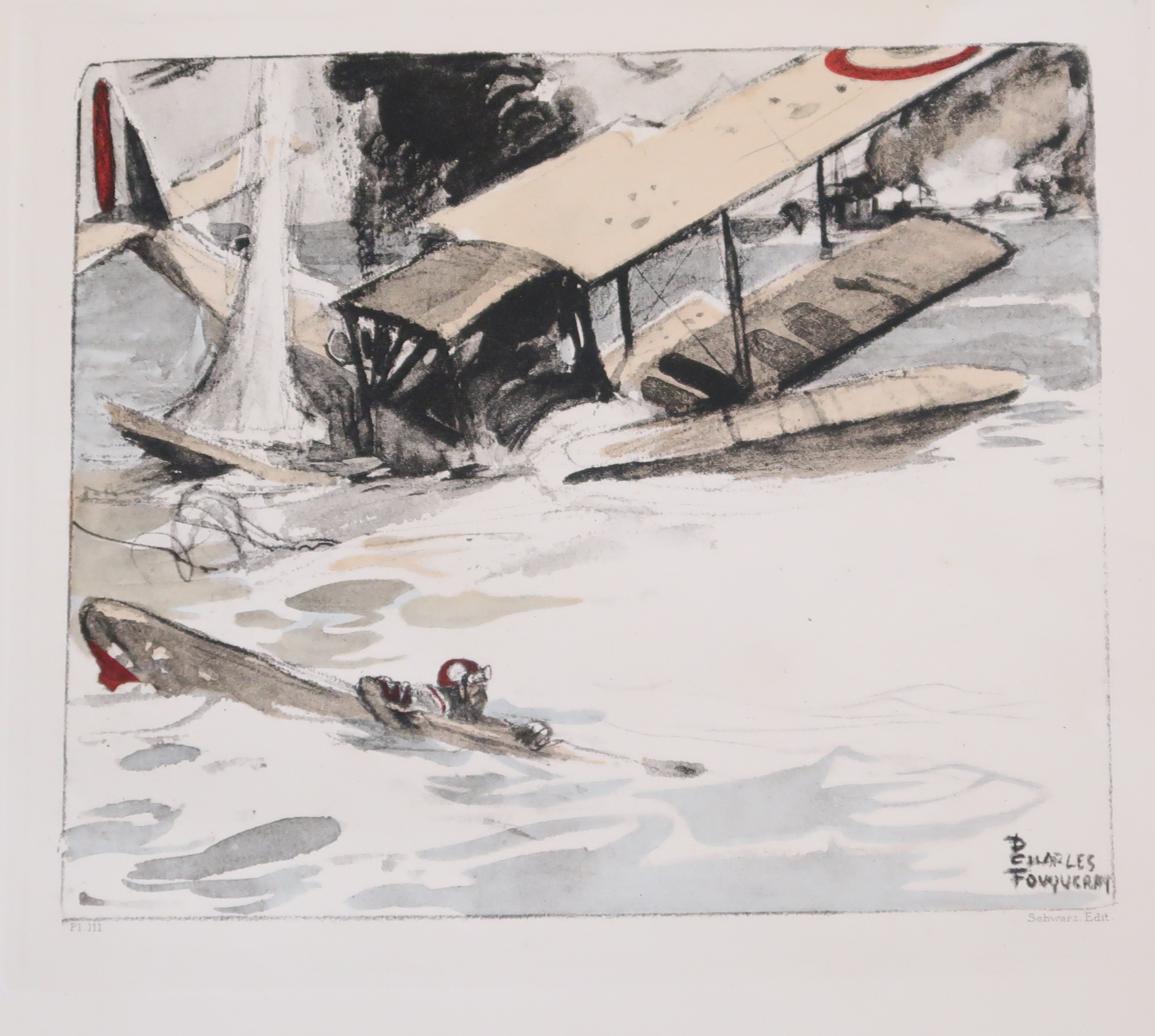
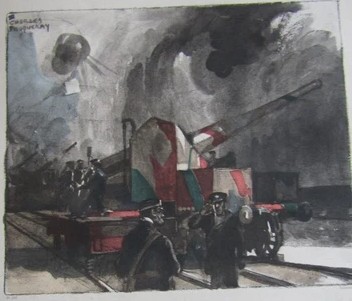
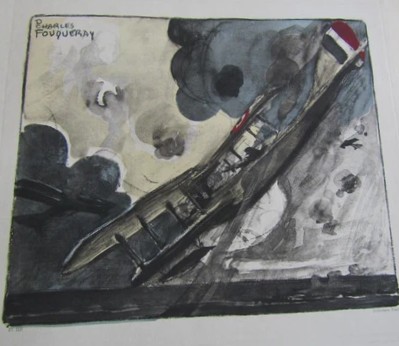
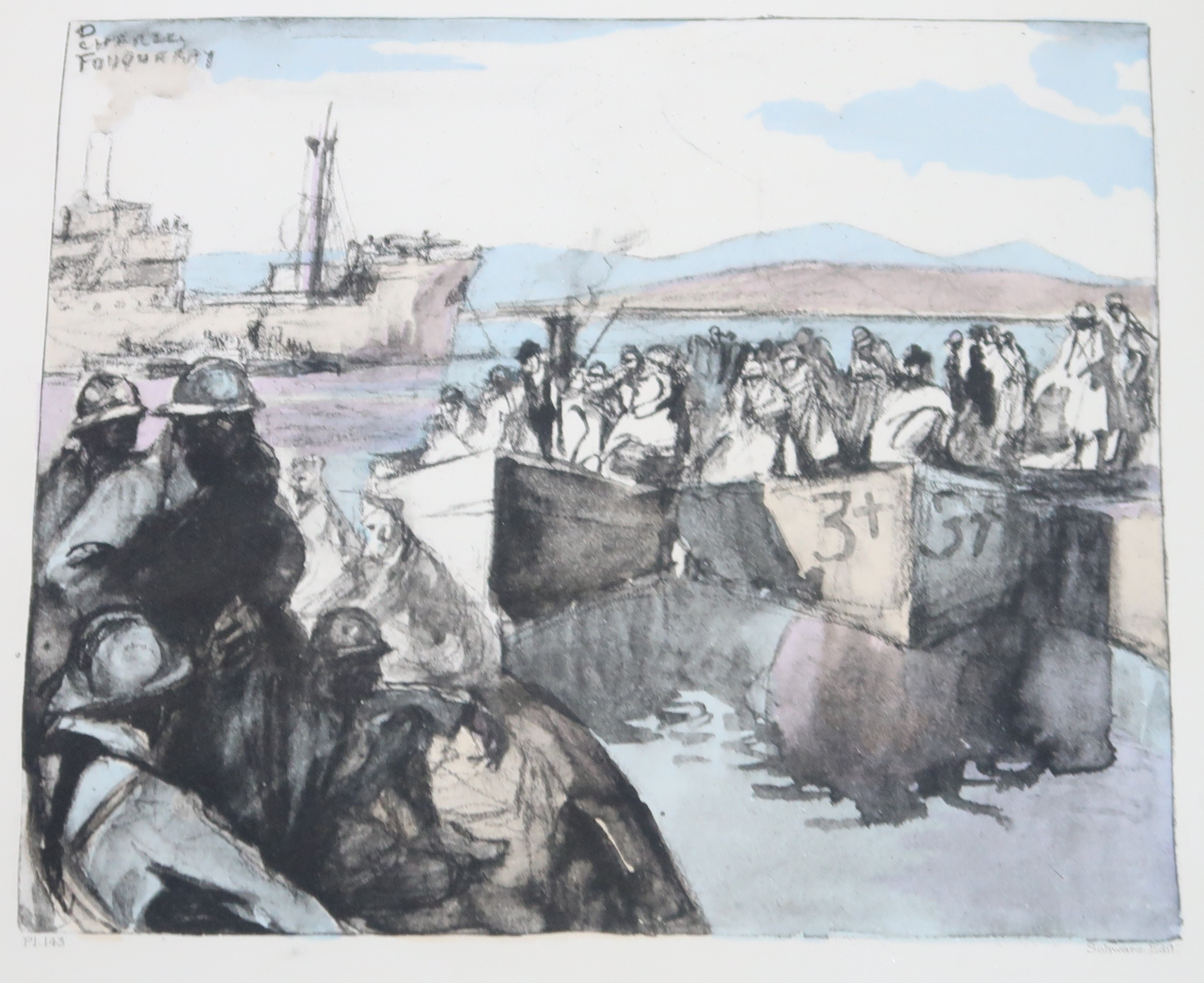
I just acquired 9 wonderful prints by Charles Fouqueray – a war artist I had never heard of.
Charles Dominique Fouqueray (Le Mans, 23 April 1869 – 28 March 1956) was a French painter. He studied at the École des Beaux Arts in Paris under Alexandre Cabanel and Fernand Cormon. From 1908 he was Peintre de la Marine, following the career of his father, a naval officer. He was recipient of the 1909 Prix Rosa Bonheur, then in 1914 the first Prix de l’Indochine.






 anthonyhowelljournal