This is one of the best poem/films I have come across. It often uses a constant moving image (reeds moving, waves breaking etc) which I have always found the ideal backdrop for focusing on the language, and Kristian Evans – who I have never heard of before – seems to me an excellent poet.
The final draft of my epic poem the Runiad is now completed. Click on the link to read Books 1 to 24:
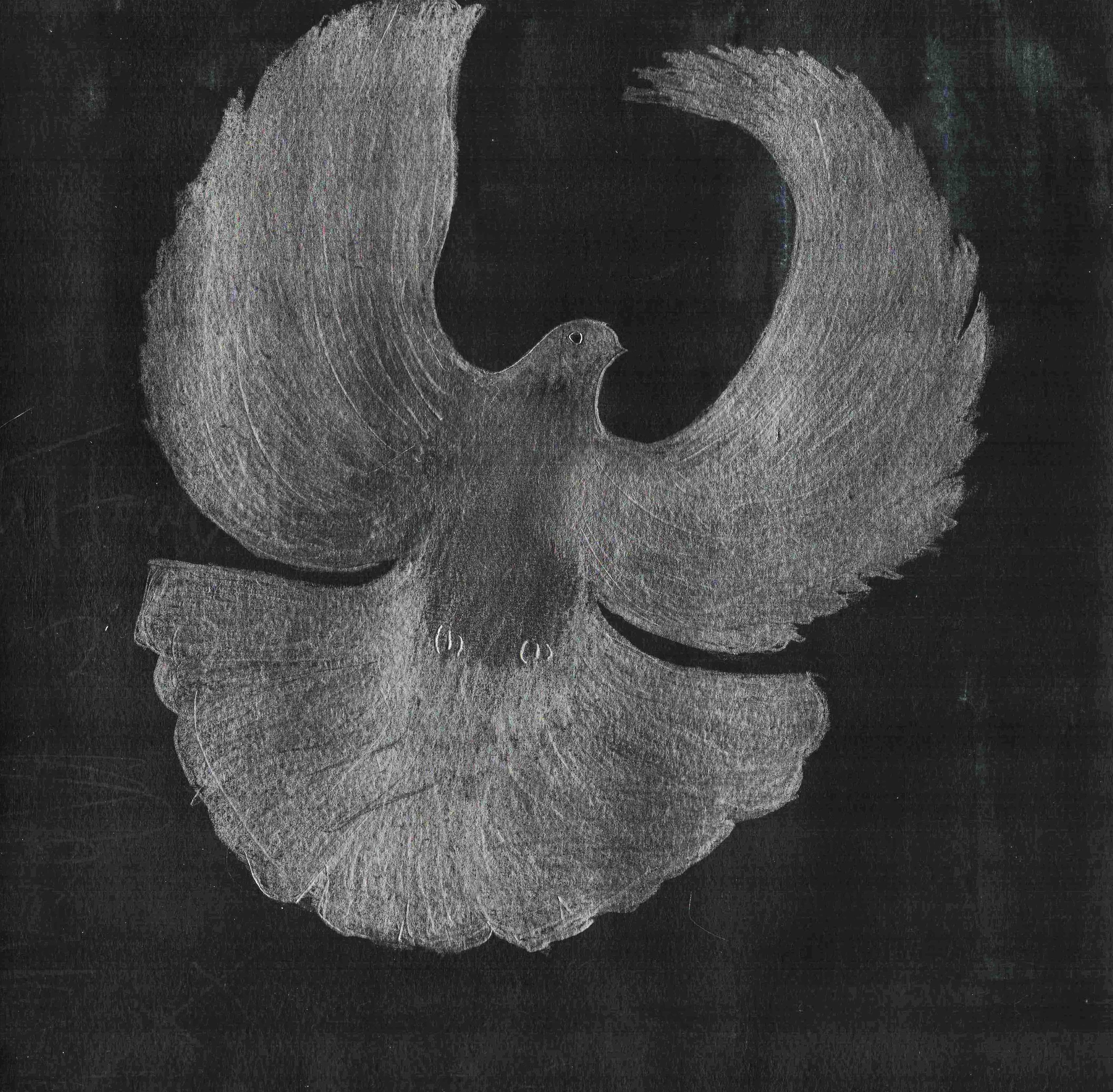
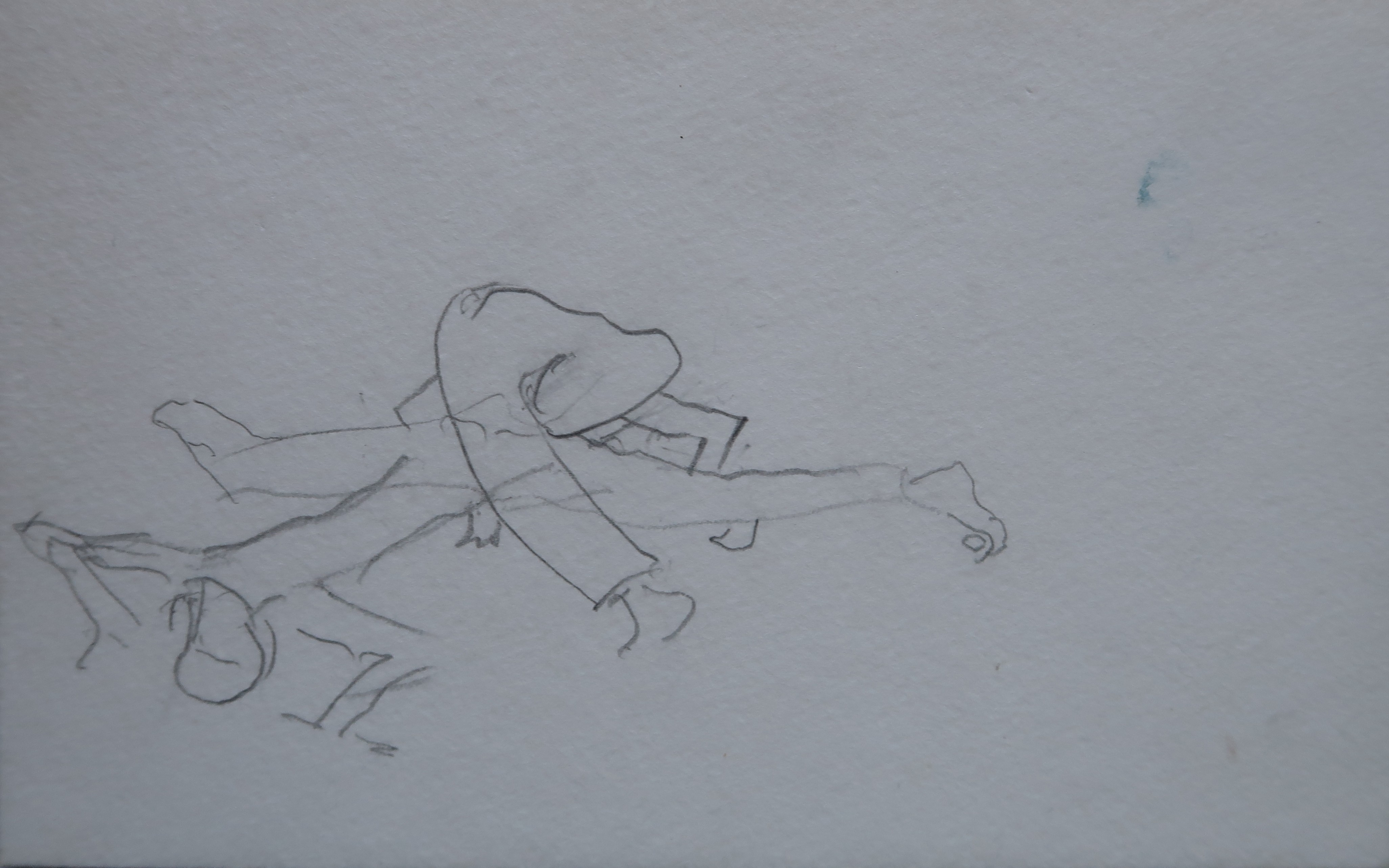
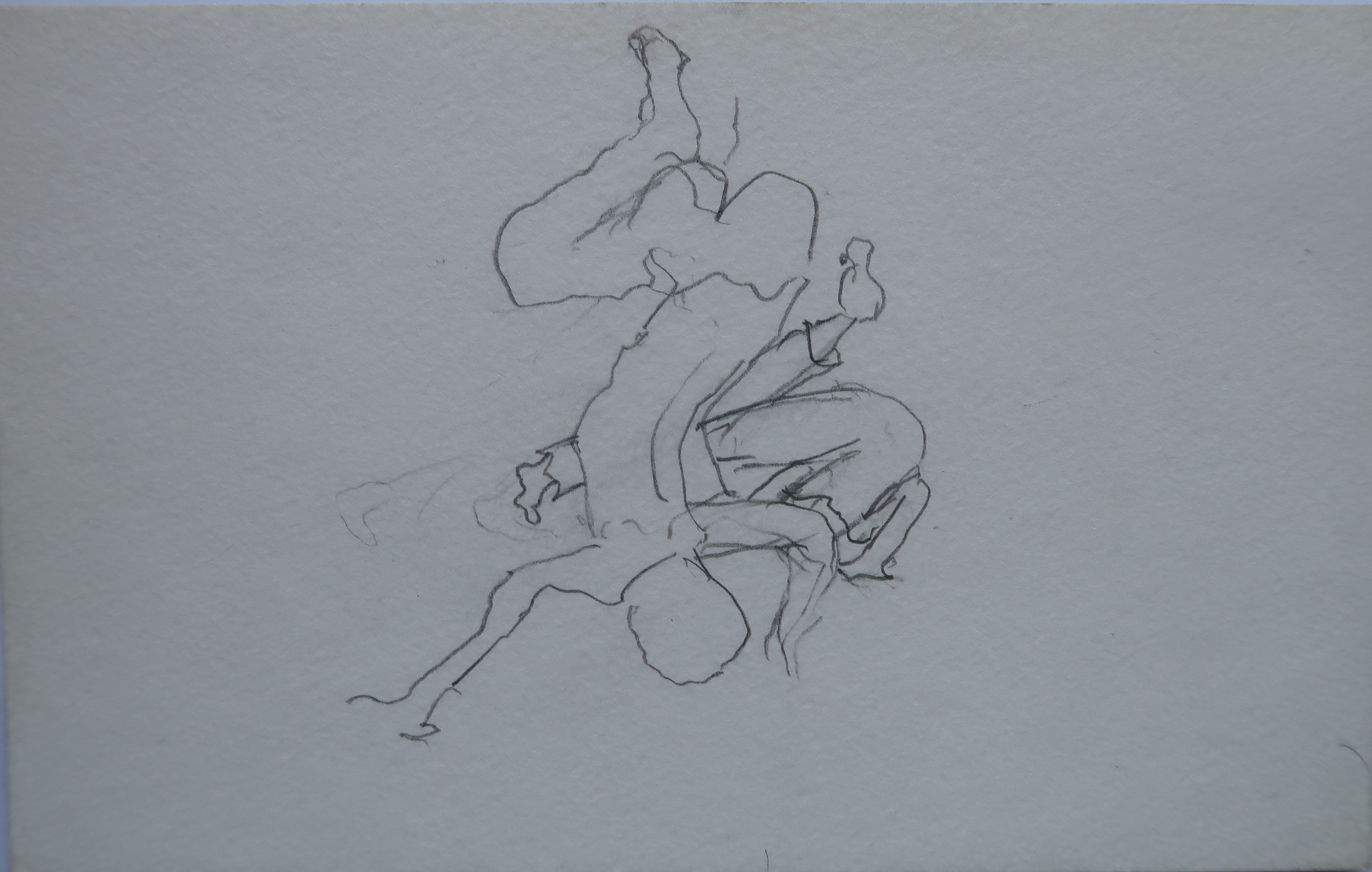
This link above opens the final version with my own illustrations. Since they are done with graphite on a black ground, these illustrations will be difficult to reproduce in book form.
Thank you to the 2000 readers who have accompanied me as I have been writing it.
I suggest expanding the image and turning off the sound. Click the bottom corner of the page to turn the pages, and the bar below the book allows you to scroll to whichever book you want to read. Contents pages at the beginning tell you the page number of each book.
It’s great to read aloud, and I welcome invitations to come and read from it. Peter Jay is designing a printed version which will be available in 2026.
It is always the same window, one out of which they have climbed
Into the garden; leaving the house to its dreams at the fringes of sleep:
Out of it by the back stairs or in by my half of the bedroom;
Always the same low window in a corner of that parlour into which
And out of which they have climbed in bare feet in the moonlight.
Water their dreams in the back of the parlour with its low window
Opening onto that wing of the garden which has the forest branches hanging over it.
x
That aria in the parlour which is climbing up and up to the bedroom
By the window then opening so freshly onto that sleep into which they glide
Is climbing in through a low window and then up the back stairs
To the door of the guest bedroom or to that of the Moorish bedroom
Next to it. The window-sill is merely a “has been” following the secluded smells
With the same edge of that water which Boy and then Igor, Burhardt, Rudi and Eric
All pronounce bare to the moonlight. The back door of the garden
x
The guest so obscured is through the next window up the stairs.
Jenny and Arja – all pronounce it “Aria” – wash their feet in the house, or wash my feet
Where the smells of the wing in the moonlight are hung
In the parlour opening onto that secluded corner half obscured
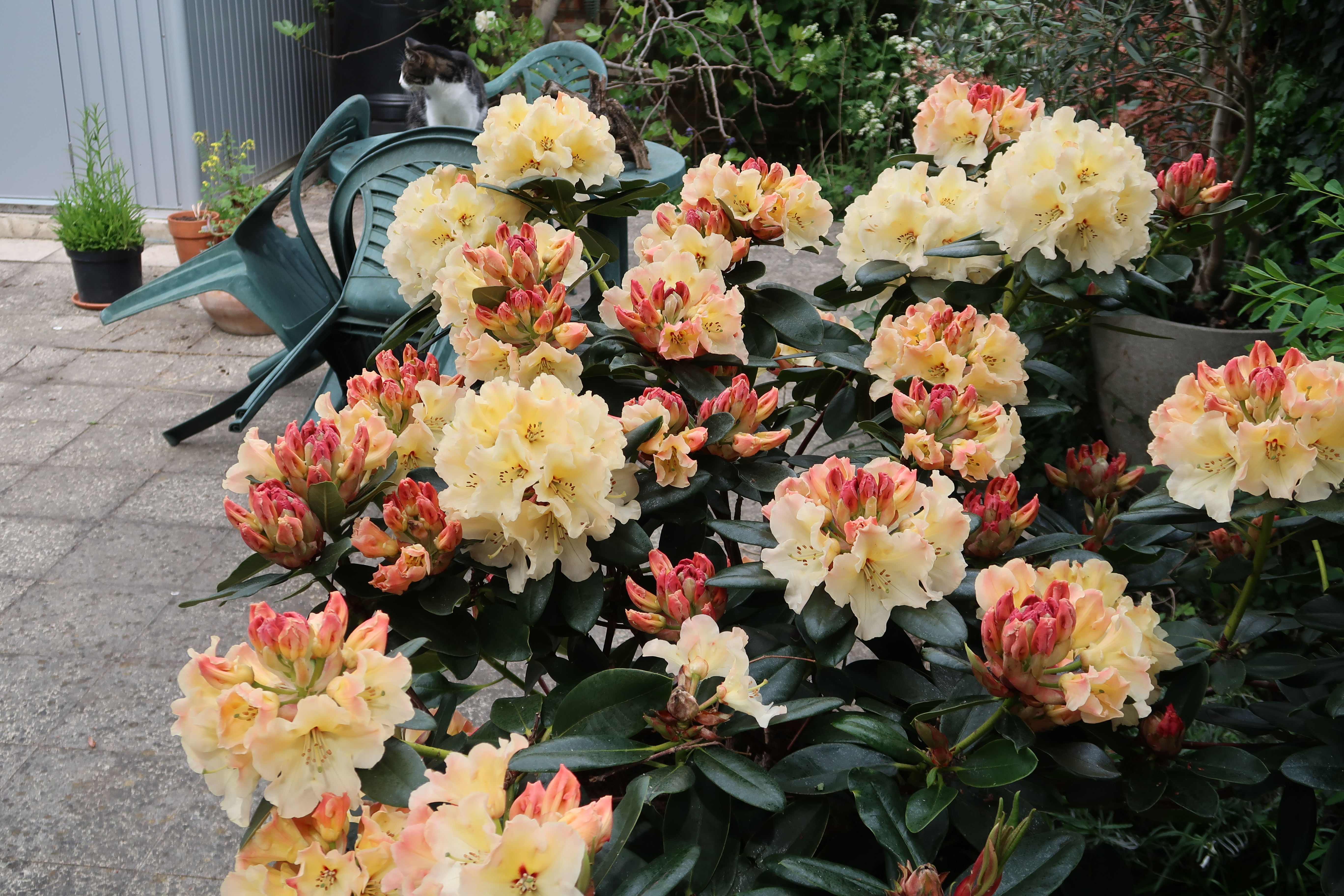
By a rhododendron. Always the same back window climbed. Always,
Always the same low pair of branches out of which they wing,
To glide up the stairs and into the forest. Burhardt is bare and, boy,
x
They are in through that window, getting their legs over Arja and Jeanne;
Rudi is hanging over the stairs next to the Moorish ghost which hides in the wall.
The lawn slopes up to the edge of the low brickwork where the window
Is always the same; the opening, out of which they have climbed onto the fringes
Of kilims where the lawn slopes up to it, a window into and
Out of which they have climbed, Giacomo and Jeanne, getting
Their legs over the sill, or following a ghost which is merely a pair
x
Of split pantaloons up the back stairs to the guest bedroom which has been
Freshly decorated or to the Moorish one next door where the walls are hung
With kilims, one of which hides the door to the bedroom. Which? The one
Next door. Then it is Igor and Eric, at wing in the moonlight, is bare brickwork
Which has feet in it, low in the wall where the walls of the house are hung
With decorated Moorish pantaloons, and into the garden next door
To the window Jenny and Giacomo climbed through – or they split a guest in.
x
This is a poem I call a “Statheron”. In it all the words must be used an equal number of times – that is, a word cannot be used once, or an odd number of times. Here, “rhododendron” is used once, but also appears as the title. The poem can be found in my collection “ABSTRACTIONS” – which is published on this Heyzine link and can be read for free
As well as the scansion of a regular metre such as pentameter, in verse, the madrigal was a form that used the scansion of prime numbers – 3 and 5. F.T. Prince has pointed this out in his book about the Italian influence on English Poetry. All prime numbers scan, and actually so do all regular metres.
Books 1 to 24 (now) of my (now completed) epic poem can now be read on this Heyzine link
I suggest expanding the image and turning off the sound. Click the bottom corner of the page to turn the pages, and the bar below the book allows you to scroll to whichever book you want to read. Contents pages at the beginning tell you the page number of each book.
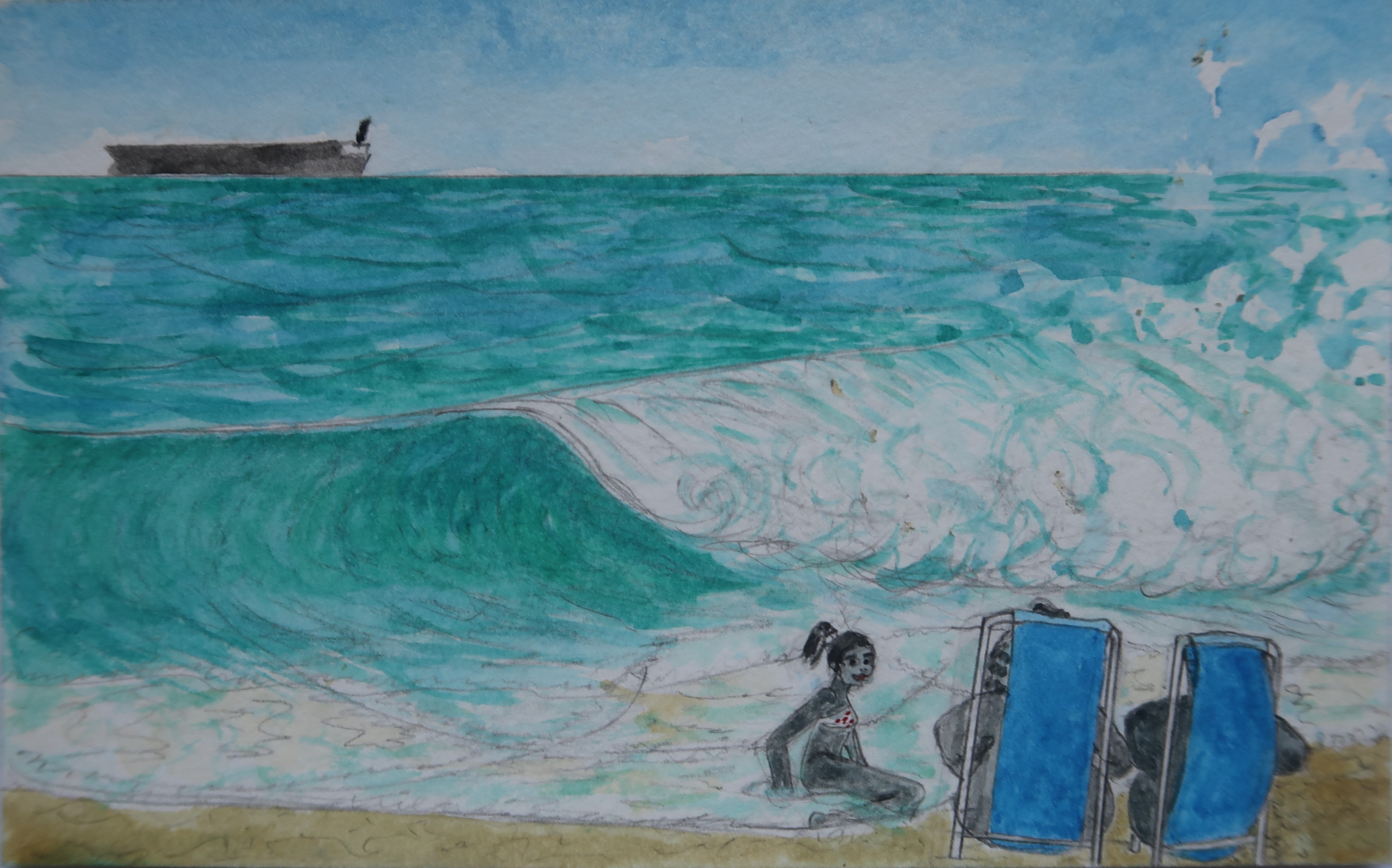
It’s a slideshow of paintings I made in Rio in 2012, when I escaped the London winter to spend summer in Brazil. Below are some poems I wrote at the time:
x
TRISTEZA
x
That pensive spell, the sadness that you see
In Gauguin’s women, for instance, sitting quietly,
A faraway look in their eyes, as if deep
In melancholy thought – it’s not: it’s the heat,
And the way the heat comes back, that brooding gaze,
Abstracted, prompting such words as ‘lointain’,
Yet there is something sad about heat – it wells up at noon,
Prompting you to choose the shaded side of the avenue
And placing a value on sombra rather than sol.
The Romans knew that ghosts appear at midday
In the haze as it wobbles up from the ground,
And as for Brazil it is under that spell
Brewed by the tropics, inducing a trance
Moved by the minor key of the Bossa Nova.
x
x
EVENING
x
I look down onto the trees that hide the light,
Eight floors below, on Siqueira Campos Street.
A roof slides by beneath the spreading leaves.
We keep our doors ajar to tempt a breeze,
Using a sandal perhaps as a door-stop.
x
Most of my view is the fifteen floors of a car-park;
But above the adjacent building there’s a crag
Craning up out of the bush that laps at the back
Of the flats, and between that block and the next
There’s a single palm, dishevelled, thin
x
And very tall, but not of sufficient height
To match the blocks on Siqueira Campos Street
Where one may find the very thing one seeks
Under my room, in the market of antiques.
Needing a break, I lean out, taking in verticals:
x
Variant sets of balconies, shutters and windows.
The day has passed in a whirl, and a fan
Keeps turning over there, and further along a girl
Is stroking her hair, looking out in a dream, like me,
With everything else in darkness, except for her tv.
x
x
HOW TO LOSE YOUR JOB
x
The girl from Ipanema
Swings down the Avenida
Humming to herself
The Girl from Ipanema.
x
The boy handing out slips,
One foot up the wall,
Deep in some reading material,
Doesn’t see her at all.
x
x
THE FORBIDDEN ROSE
x
Her outline may undulate according to the hills,
But her navel is the target when I glance:
It’s in a hollow framed by the wings of her hips,
As she lies on her side, reading a romance.
x
The fingers of her free hand make contact
With her body here and there, brushing off
Grains, adjusting her top, ravelling her hair.
x
She’s a bit like a pony, whisking its tail
While grazing as intently as she reads.
Once only, she pauses, to reach for the nape
Of her lover, who rests on an elbow
x
Behind her, baring her throat to him
As the sea sends in its horses, annexes the beach
And withdraws, then it’s back to her book.
x
x
WAITING
x
A large policeman mounted on a motorbike
Gets his diminutive partner to give him a push.
To no avail – they make ignominious progress
Across the intersection. The bike refuses to roar
Into life, just as the rain refuses to come down.
Everyone is beginning to complain, and the sky
Goes dark, but the clouds are just not
Ready to burst, and pretty soon the heavens
Are empty again. It’s close to carnival time,
When everyone is supposed to let their hair down.
The blast of chill air from the bank is more
Than cancelled out by simmering traffic.
Things with exoskeletons do well.
The cockroaches are positively bustling.
Humans lie prone on flattened sheets of cardboard.
The stones are slicked with dirt, and the air
Is full of dust. It must rain. It must.
But it doesn’t. Every dove has turned into a pigeon.
As for the women, rather than share their beds
They prefer to sleep on the floor. There’s no breeze at all,
And the trees are so still they could be a painting,
The dogs look dead except for their panting,
The canaries are all fainting, and only some rain
Will ease the situation, wash the streets clean,
And with its downpour drench the night in sperm.
x
x
AIRBORNE
x
The butterfly that fluttered through the carnival
Didn’t wear a costume. Why should it have?
Its wings were the colour of rust
And featured a fair spattering of polka-dots.
x
Its flight, about which there was something frantic,
Was only to be seen intermittently, between
The haunches of a gorilla and the legs
Of a female marine. How unlike the vultures
x
Over the favela, that evening we sat
On its brow. Vultures above and below,
Wings outspread to the very last feather,
Gliding with motionless ease…
x
x
THE MODEL
x
A halberd leans against the wall.
It says, in effect, a peasant with a skill
Can bring down a prince
(Charles the Bold, for instance).
This thorny axe may signify
The carnage that was Paraguay,
But then it also stands for ceremonial.
Debret’s young chap arrives at court in Brazil
With a fine cocked hat and a parasol
Followed by his black,
Her arms full of his gear,
Including the weapon shown here.
x
Our painter hails from the boon dogs though.
You can tell it by his beard.
He has just rolled himself a cigarette,
And is sharing a joke with the girl who is on her break
And at his upright, fingering a tune.
From the waist down, she’s wrapped in a shawl,
So he gets the front of the lass
While we get to peek at her naked back.
x
As back-views go, it’s far from academic.
His studio in Montparnasse
Is chock-a-block with props,
But what the room is full of is her smile.
x
“The Model on her Break” by Almeida Júnior, Brazilian artist, 1850-99.
x
IN PRAISE OF SHOPPING
x
Indigenous people from isolated communities, perhaps on the banks
of some tributary of the Amazon, always consume what they catch.
So they can be nonplussed by the constant availability of
everything all of the time – what is one meant to do?
Eat until one bursts, dress until one suffocates?
Of course it feels morally right not to possess something
you very clearly need, since then you can hunt for it without guilt.
However, this demotes the act to the ranks of the merely functional.
To give your shopping flavour, guilt is an obligatory seasoning.
The purest spirit is best expressed when one is out unnecessarily,
looking for some item you may never use.
Even then it has benefits: to say it’s therapeutic is a cliché,
but it’s not just loneliness that it heals.
Shopping can be used as an antidote to Alzheimer’s:
you have to remember where the shop is,
and whether you have already bought the item.
So long as one’s card accepts one, a purchase is always an affirmation.
Buying via the internet is neither as rewarding nor as complex
as handing your card to one of the opposite sex.
Shoppers express the fundamental characteristics of their make-up:
my son likes designer labels, and snuggled his mum’s when he
sucked his thumb.
I am more partial to a bargain: exhibiting a taste for the low-life, I grub
through unsavoury piles in charity stores created for the homeless.
I’m always looking for two for the price of one, perhaps because I’m a
single mother’s son.
I am also an inveterate collector, so if I reach Nirvana I will find it
filled with cut-price CDs, second-hand t-shirts and remaindered books.
But I also like to wander in the presence of up-market shops.
It’s flattering how each offers me its well-appointed wares –
of course the very finest are discreet.
Steeped in the poetry of boutiques, I can lie awake like a girl at night,
reciting their names instead of sheep.
What problems I’d have if I were a girl! Searching for cut-price
manicures, second hand hair-dos and remaindered magazines.
I have been known to buy negligees ‘just in case’.
Not in case I turn into one, but in case I ever again get one
to buy things for: bras, panties, shoes, earrings,
anything wearable but not too practical –
I’ve seldom got it right with a tampon.
Shopping in the heat favours the shaded side, stone arcades,
air-conditioning, comprehensive stores.
Chunks of chilled air tempt one to abandon the pavement
as if the doors were extending invitations.
Others open wide on their own, simply upon sensing an approach.
When I was young and well-formed, women used to do that for me.
x
x
THE MOTHER
x
I am sitting on a rock beside the sea.
My newborn tugs at my nipple.
He feels new to me, and yet
I have carried him everywhere
Since he began. He is still
Something of a stranger, but he is a man.
The gift of his father to me.
We have come here to be naked
By this awe-inspiring sea.
I am addicted to men.
Men who are strong and quick
In thought and deed. Men who are gods
To their sons and daughters;
Who teach them bike and ball control.
I am in love with my man.
I don’t want the others to lie with me.
But I do like to watch as they move around.
Men who are basically sound.
Men who maintain and move big cranes,
Men with large hands,
Wearing hard hats at work,
But here today, beautiful and free.
Not to be dismissed, their qualities of strength,
Speed and skill: that overhead goal,
And the way a guy moved to snatch a small boy
Out of the blur of the traffic.
x
x
SWEAT
x
Switch from the metro maintained by ice-girls
To the platform which is not and your pores
Start to react, as they do up the flights
To the third floor dance under fans
Old enough to be offered a seat
If they were using the metro.
x
Work up a sweat on the beach with a ball,
Wake up drenched in it in the small hours
Or get through several t-shirts on a good
Stiff scramble through semi-vertical
And sub-tropical forest up to some lookout.
Yes, but you also work up a lather
Choosing a t-shirt on the Avenue
Of Our Lady of Copacabana.
x
Be aware that this is recreational.
When it accompanies loading
Pieces from some concrete jigsaw
Into a chute placed above a skip…
Now you get it! Stepping around
Some works into oncoming cars.
x
Measure each bollard, polished tile
Or piece of pavement mosaic
Kicked out of place in pints of it.
x
x
ACAI
x
I think vanity has had a bad press.
I’d say it’s good for you, more or less.
Vanity keeps you at a decent weight.
When you see a 60 year old with a 6-pack,
You can put it down to Vanity.
Vanity sustains the fitness industry.
A special joggers’ and cyclists’ path
Runs alongside the promenades.
There are open-air gyms with shiny bars
And you can improve beneath the stars.
Arpoador beach has an outdoor gym
Overlooking the sand beyond the headland.
The weights are concrete and the bars rusted.
But people train in the rain.
They train because they are vain –
But you can look at them again and again.
Vanity is responsible for all this.
For girls wearing t-shirts which say YOGA,
Thrusting the word out at you.
Beautiful! Vanity improves.
I don’t understand why it ‘s considered a vice.
People who are fit feel nice.
Vanity is justified.
It should be beatified.
What a packed place of worship that would be!
A temple, dedicated to vanity.
Vanity demands you stay healthy.
That is why there’s a juice bar on every corner,
With every sort of juice, including
About seven no European has ever heard of.
Best of all is a giant cup of frozen black sludge.
Too many spoonfuls too fast,
And you get a head-ache –
Gives you a great complexion though,
And if you are going to wear a bikini
That’s just a few pieces of string,
Bear in mind it’s not the thing
We’re looking at, it’s you,
And that part you can’t even see in a mirror.
Pamper it with aloe vera.
Vanity demands you do.
Beware of preachers spouting tripe,
And while you can, stay smooth and ripe.
x
x
THE ARMOURER’S WIFE
x
Not long after her wedding day,
While she’s on her honeymoon perhaps,
I watch her on the beach, at play,
And fall into her traps…
I could be the foam, or I could be
That grain of sand
x
On her inner thigh, and then,
When the wave knocks her down
And bowls her over and along,
The sand gets up inside her thong,
And I could be there, or be the air
Breathing on her, freshening her hair.
x
I could be an earring in her ear
And pass right through the lobe.
I could be her Coke or her Sprite.
An Arab song gets belted out
And she does a dance with her towel.
I could be that.
x
She lifts and lowers a hip.
People start to clap,
And now a lanky young geek
Wants her for his mobile phone.
I’d rate her for her bum alone
With its butterfly inked on a cheek.
x
x
EXISTENCE
x
The red flag tugs at its pole in front of the Mar;
The Windsor’s welcoming mat demands to be swept;
Guests favour the pool at the Othon over the beach,
While who booked a manicure stews in the Palace bar.
x
Blown into wrinkles, the sea is a mass of glissades.
When a wave breaks its spume gets flung to the South.
My paperback flicks frenziedly through its own pages.
I have no means of escape from the sand’s fusillades.
x
Open-air showers go flaring along the horizon;
Pigeons get pummelled, seabirds grapple the clouds;
The palms are engaged in a Dionysian revel,
While kites that are bats get into a sinister flap.
x
Whatever is free or has ends or loose covers vibrates.
Floppy hats, inflatables and parasols get bowled away.
Only the ponderous bulk of a JCB
Seems unaffected, while the shore trembles beneath me
x
As it impresses the sand with its ongoing treads
To which the surf is indifferent, rubbing these out
With a practised swipe, as the wind persists in its mission
Of wiping the rootless off this ephemeral map.
x
x
ODE TO THE SUNSET
x
It’s a February evening. The liners leaving port
Are still in the sun. They gleam on the horizon
Between this beach’s bow and the northern peaks.
Here, the sun’s just set behind the Marriot,
But no one seems to want to leave just yet.
Long, lazy waves keep rolling in, neither too rough
Nor too gentle, at the end of a baking day.
x
It’s lilac out at sea, while a crag behind the front
Is gilded by our burning star, its crown of trees
Picked out against a final beige and cerise.
People are still at play, racing in or wading out
Or rolling about or going head-first into surges,
To surface, adjusting their cossies. Others stroll
Along the slick, wet edge, or simply sit and watch.
x
Nobody sneers at the sea. None of us seem
To have a problem with it as we may with art.
It seems better than tv – more honestly
Always the same and ever changing. Now
The eastern sky has a rose pink hue,
But nobody seems prepared to go.
It’s Sunday. They want to spin it out.
x
They want to mark the waves as they build,
And as they fall, or look at other people:
What they do, how they’re built, who they have
The hots for. The crag darkens. A kite in silhouette
Nibbles at its sheer edge, and on the palmy roofs
Of the penthouses, millionaires and minas
Can be imagined sinking caipirinhas.
x
The sea darkens, green by now only where the waves
Achieve their critical mass and over-bend.
There are still some of us out bathing though
Since nobody wants this day to end,
But the moon has appeared, half-submerged,
If crisp as can be in its own part of the sky
Where the great birds float, incredibly high.
x
The vendors have already gone away,
And the promenade’s been lit, its condos black
Against a deepening red. People
Start to leave at last, reluctantly, as the moon
Begins to shine, brightening with every passing minute.
What ships go forth are nests of light,
And only the breaking surf defies the night.
x
x
GRUMARÍ
x
The leaves
hardly breathe
and snakes
loop round
the branches,
soaking up heat
from cars parked
nose to tail
outside
the seafood
kiosk by
this savage
southern
beach where
the leaves
hardly breathe
and snakes
loop round
the branches,
soaking up heat
from cars parked
nose to tail
outside
the seafood
kiosk by
this savage
southern
beach.
x
xT
These poems were first published in Silent Highway (Anvil, 2014)








 anthonyhowelljournal