On the Heyzine link there is a contents page – p 5. All the pages are numbered and so each book has a page number. At the bottom of the page is a horizontal scroll bar – use this to get to any specific page.
On the Heyzine page, I suggest turning off the sound and enlarging the text. Pages can be turned by clicking on the arrow at the foot of the page to the right, while clicking to the left turns the pages the other way.
I’m very grateful to the Fortnightly for being able to publish extracts from each book as each clean draft gets completed, and of course I am still at work, re-reading previous books, improving what I have already got down as what seems my first clean draft of any book appears pretty rough-hewn after a while.
I am also pleased that the Heyzine book has now attracted 800 readers. So I’m sending out a big thank you to these readers. It is definitely encouraging to know that I am being accompanied as I continue my journey.
At 38:27 that is my great uncle Felix (Pinhas Rosen) sitting two from the left from Shamir. Head of the Liberal party and Minister of Justice, he brought in proportional representation, which has been blamed for enabling extremist splinter groups to gain control.
My grandfather Martin Rosenbluth was the most prominent tythe collector for the National Home for the Jews, first in Germany, then in Austria, then in the USA.
I have also written a “non-fiction novel” which deals with my deeply conflicted non-Zionist feelings about my father’s family (my father died before I was born)
This can be purchased from the Fortnightly Review or from Amazon.
Further posts about Israel can be found under the category ‘Politics‘
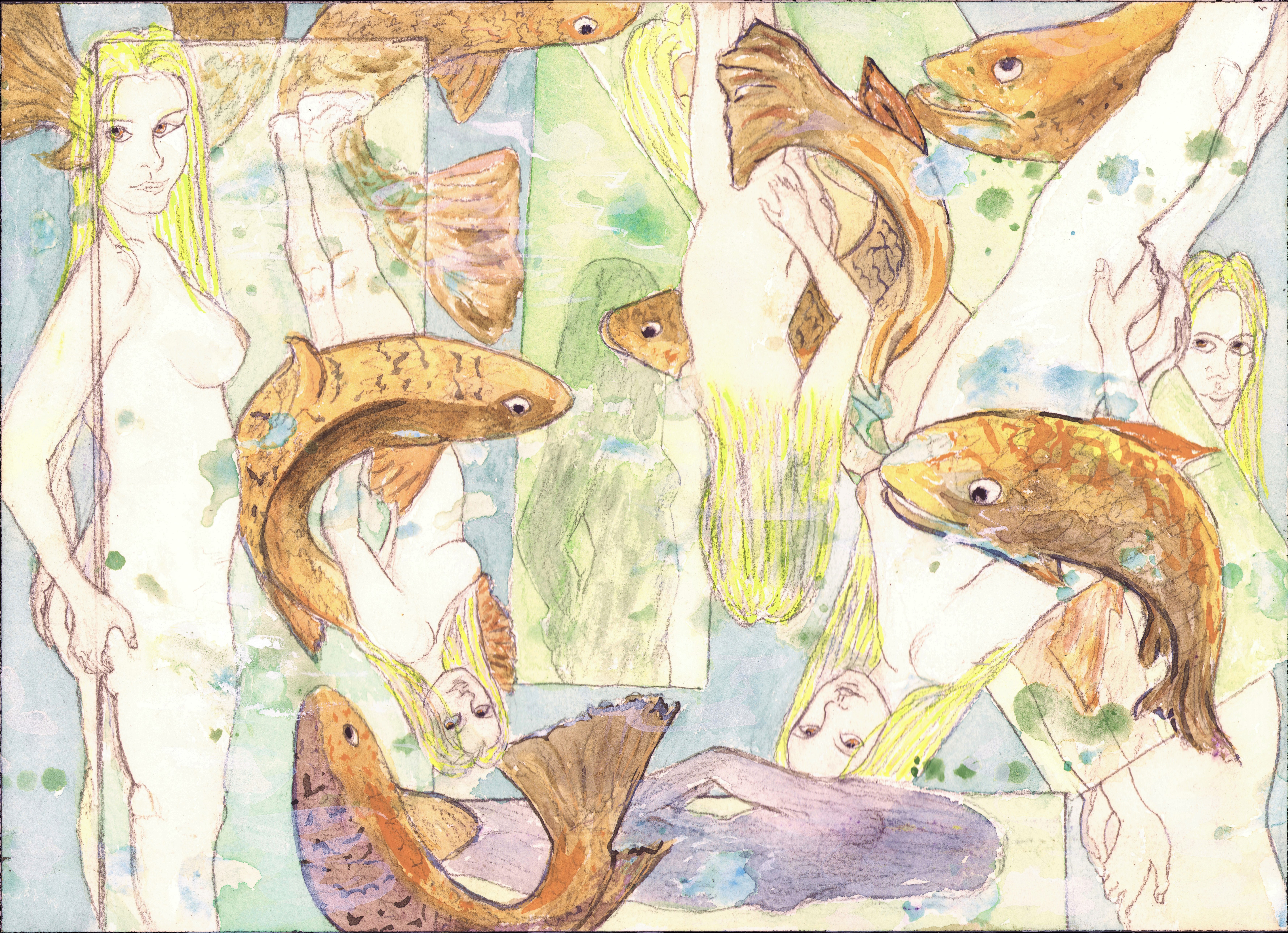
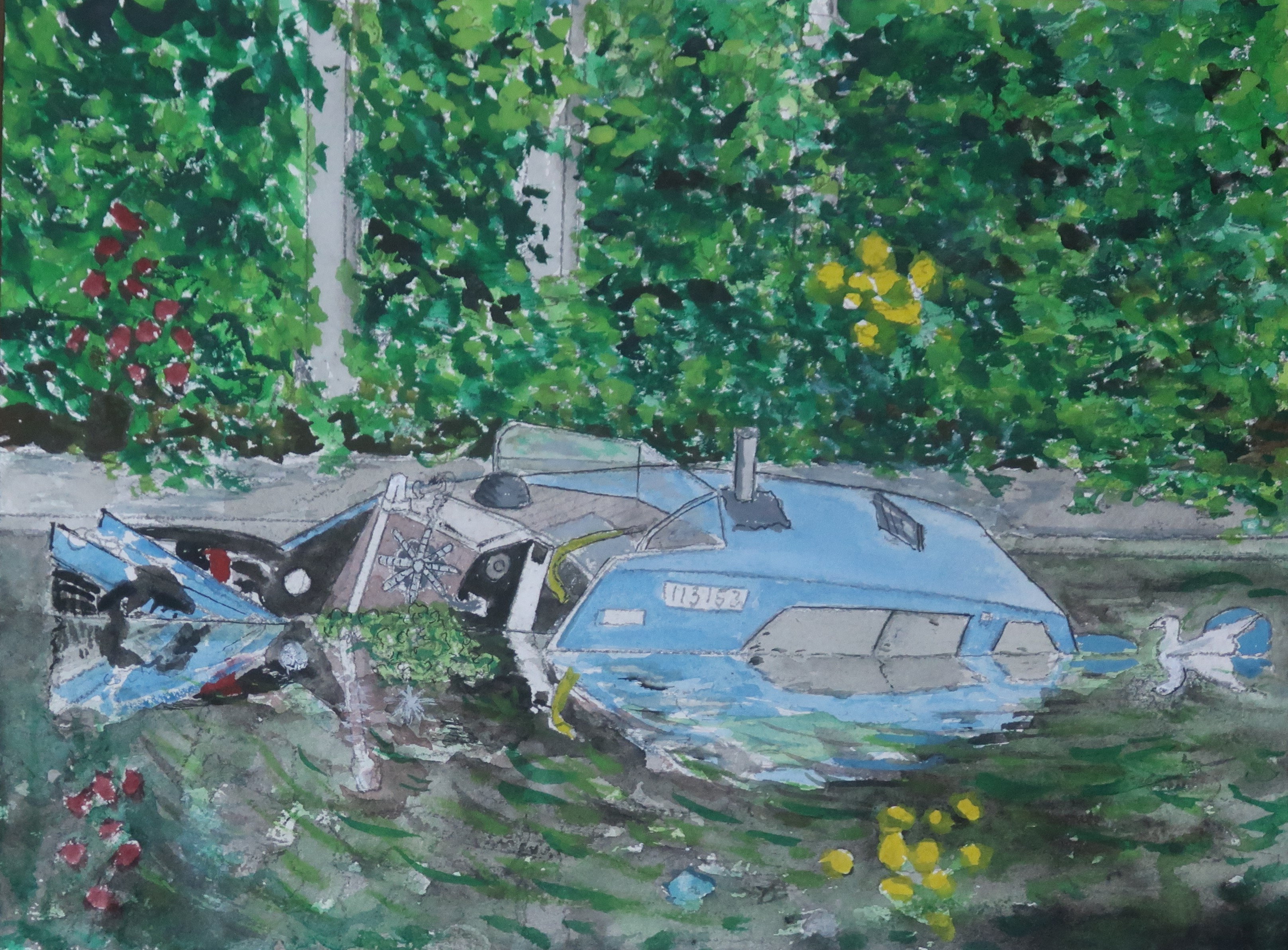
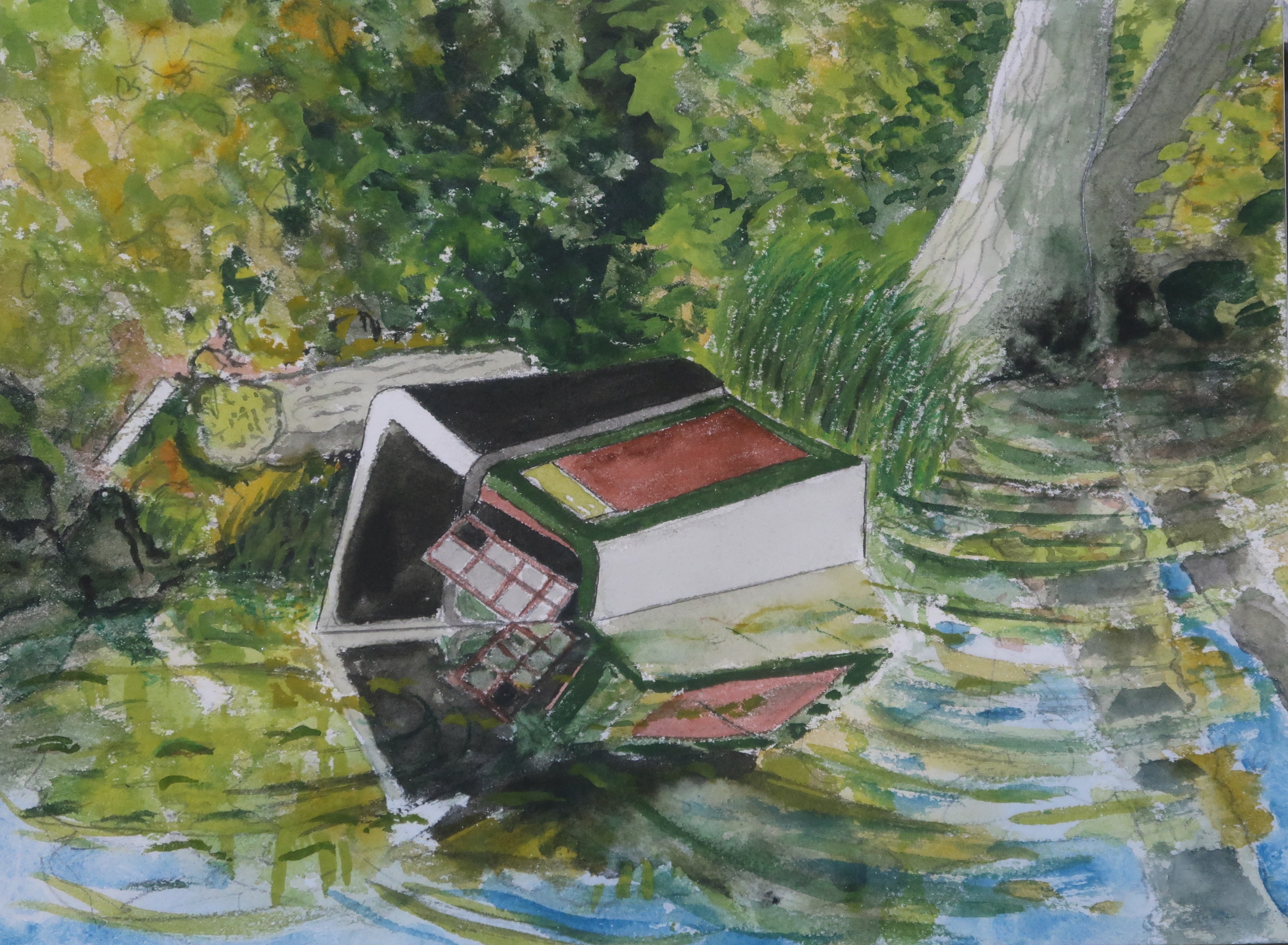
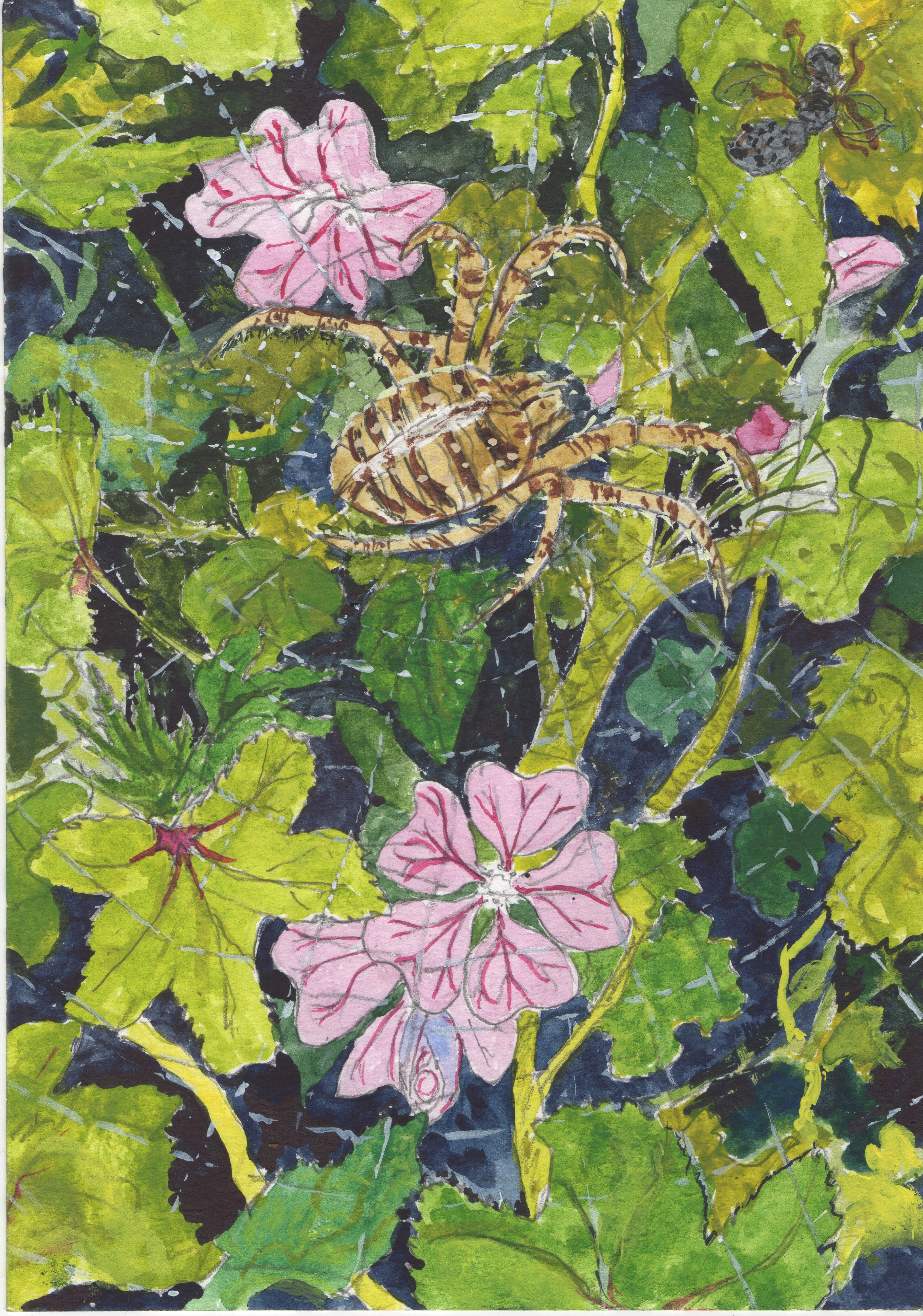
Here I introduce my 2024 slide-show. It uses my watercolours which can be viewed any way up. Please don’t open the link to the video if you are likely to be offended by explicit images. The video is for adults only.
It features stencils cut out from porn mags and other photos, chosen for their qualities when turned with a very slow fade through 90 degrees. Thus rotated through 360 degrees.
The slide show is silent. I suggest you open Spotify or Youtube, choose some music that you happen to like and play it in the background.
If you try to discover anything about recent Russian history online, you will only come across articles that project an uncompromising loathing of Russia and its President Vladimir Putin. The only books that get reviewed about Russia are those such as Putin’s People: How the KGB took back Russia and then took on the West – a book expressing loathing of Putin, which, as might be expected, secured a glowing review in the Washington Post. But loathing of Russia goes back further – to the Crimean War – and to the notion that the UK and Russia were rival empires – as is well explained by Professor Glenn Diesen discussing Russophobia historically considered. He is the author of Russophobia: Propaganda in International Politics (2022). The discussion takes its point of departure with Richard Cobden’s “Cure for the Russo-phobia” pamphlet (1836), and it can be found on Youtube:
Russophobia relaxed somewhat in the Yeltsin era. However it revived tenfold when President Putin came to power.
The story of why the West seemingly “loathes” Russia today cannot be separated from the takeover of US, British and European media outlets by right wing magnates and Jewish oligarchs. Their antipathy to Russia’s very popular president has its roots in the aftermath of that corrupt Yeltsin time, when, after the fall of the Soviet Union, Russia was ruthlessly exploited by an unchecked capitalism that preyed on all Russia’s natural resources and thriving industries, pretty much bankrupting the country so as to line the pockets of these latter day colonists. In the early years of this century, when Putin very sensibly decided to re-nationalise the extractive industries of this huge country, confiscating Yukos Oil, and booting out or jailing corrupt magnates and media barons – known in Russia as oligarchs, the ancient Athenian name for a tyrannical elite of wealthy bandits – thus ridding Russia of Boris Berezovsky, Vladimir Gusinsky, Mikail Khodorkovsky, Bill Browder et al – these corrupt millionaires fled to Israel, to the Ukraine, to Cyprus and to the USA.
With much of their immense wealth already salted away overseas, these unsavoury characters were welcomed by the far right players already incumbent in Western intelligence and security services – the CIA, the NSA, MI6 and Mossad among others. These far right players had first been installed in the aftermath of the second world war, when many high-ranking Nazis were spirited away from any risk of trial and punishment at Nuremburg, in order to share their knowledge about Russian intelligence with Western security officers (see also “Operation Gladio”). Several of these shadowy and highly compromised figures ultimately rose to prominence in the upper echelons of NATO. These were the parties who welcomed the tycoons expelled from Russia. Many of these tycoons had already invested in Hollywood. And it is the case that this story of how we learnt to loathe Russia cannot be told without reference to the corruption of what is now known as the “legacy media” – the mass media institutions that dominated our lives prior to the “Information Age” introduced by the computer.
Another factor in the development of Russiaphobia is the long term support by Russia of Syria, since the time when Syria was nearly overwhelmed by Muslim extremists supplied with weapons by the West via the spurious Syrian Liberation Front. Basically, Israel and its lackey the USA have been depicting President Assad and his father as dictators for years and years because Israel considers Syria a major threat (having stolen the Golen Heights from Syria). While Sunni Islam is the largest party, Assad always gains the Alawite vote which, combined with Shia and Christian votes clearly carries the majority – so he is definitely a democratically elected leader. Again, note the role of the media in accusing Assad of war crimes (utterly spurious). Note also that Donald Trump assassinated generals Qasem Soleimani and Abu Bakr al-Baghdadi. Soleimani’s memory is revered in Iran because he had been the general who defeated Daesh and the violent Sunni Jihadists entirely and thus destroyed any chance of a sharia Caliphate being established. Trump is a Zionist and acted at the behest of Israel in revenge for this – which clearly establishes that it is in Israel’s interests to support the Jihadists, several of whom are Mossad agents. It also explains why Sunni Saudi Arabia sits on its hands regarding the slaughter of the Palestinians.
Unfortunately, however, I have now to update the view put forward in the above paragraph, since Assad has fallen and Julani – a Sunni Jihadist – is now master of Syria and slaughtering its Christian, Alawite, Druze and Shia minorities. Most alarming, to a supporter of Russia such as myself, is President Putin’s recent welcoming of Julani in Moscow. Here is a link to Vanessa Beeley’s analysis of what may be going on – and it makes for depressing viewing. All I can do here is reiterate the old saying, “Nil admirari.”
Legacy media refers in particular to print media, film studios, music studios, advertising agencies, radio broadcasting, and television. Legacy media institutions are centralized and communicate with one-way technologies to a generally anonymous mass audience. They address ‘couch potatoes’ and are popular with that stratum of the middle classes that still likes to sit reading their favourite paper while sipping their coffee on a Sunday morning. And what is wrong with that? I hear the indignant response. Nothing, except that these old media can no longer be trusted to deliver an independent and unbiased account of what is happening in the world. Where did that perversion of what mass media tells us begin? Well, at some level, it has always been true that mass information has been controlled, but there used to be an ethos of ‘putting the other point-of-view’ across, of a Vox pop, perceived as integral to democratic ideals. You can see this notion being threatened by a scandal that affected South Africa in the months prior to the ending of apartheid: it was known as the “South African Information Scandal”.
This refers to a covert campaign to influence Western public opinion in favour of keeping the apartheid system. Here are some quotes from The Life of Secret Agent turned Hollywood Tycoon Arnon Milchan by Meir Doron and Joseph Gelman Gefen Books 2011. They concern the attempt to erase criticism of apartheid from the world media between 1977 and 1979.
If there was one key financial facilitator in South Africa’s covert global propaganda campaign to improve the image of South Africa, it was Milchan. “I acted at the request of my own country,” Milchan told us. Eschel Rhoodie directed a steady flow of funds from the Department of Information’s front company Thor Communicators, through European accounts controlled by Milchan, who created multiple front companies to purchase key media outlets critical of South Africa.
He and South African operatives David Abramson and Stuart Pegg focused at first on African media such as West Africa, an important magazine published by Afrimedia International Ltd. He purchased administrative control over African Development, a quarterly magazine. He was involved in the purchase of EurAfrique, a monthly magazine read in all of the French-speaking African states. He then spearheaded an effort to gain control of the British publishing giant Morgan-Grampian, which was to be the crown jewel of the operation.
Through Morgan-Grampian, the plan was to take control over several prominent newspapers and magazines in the West, including the Observer in England, L‘Expresse in France, and the Washington Star in the United States. “What better vehicle than Morgan-Grampian to be in charge of such takeovers?” Eschel Rhoodie wrote in his 1983 book The Real Information Scandal.
In November 1977, Rhoodie released $1.8 million for the purchase of enough shares to assume control of the Investors Chronicle in the UK, a deal that failed to materialize. Essentially, Rhoodie and Milchan, acting as partners, coordinated all of these activities using the secret funds. It would explode in their faces.
P 117-8
The South African Information Scandal was a worldwide sensation that detailed a campaign involving dozens of projects to cow the opposition press at home and buy friendly coverage abroad. (In 1978) Rhoodie took the brunt of the blame in the scandal while the key financial figure, Arnon Milchan, dodged the bullet. …..
Shortly before the fall of apartheid, South Africa transferred almost all of its nuclear material to Israel, including the tritium and its six existing bombs. The South African government then reported to international agencies that it had “dismantled” all of its nuclear weapons.
While ambivalent toward apartheid at first, Arnon gradually grew to oppose it in an active way.”
P 126
But today one can see clearly that a very similar operation has led to the successful takeover of the BBC, the Guardian, the Times, the Washington Post and countless other legacy media outlets and, of course, Hollywood itself (consider the documentary about the Jihadist “white helmets”), in order to erase criticism of Israel’s policy towards Palestinians and its neighbours since Netanyahu came into power, if not before – and this operation has actually been welcomed by the British and US secret services – because they were infiltrated by extreme right wing elements a long while before. It has also been put into place in order to vilify President Putin and Russia, because the oligarchs booted out of Russia, the settlers installed from the Ukraine on the West Bank and the corrupt regime that took over Kiev through Victoria Nuland’s support of the Maidan coup d’etat in 2014 are all part of the same swamp. Israel and Ukraine remind me of a Moebius Strip – and Cyprus and Kosovo can also be included in these territories given over to criminals, globalist criminals, who hate the multi-nodal BRICS countries and who wish to destroy and break up the unified state of Russia.
A brilliant account of how the formerly liberal-minded Guardian newspaper has been taken over by these anti-Russian and indeed anti-libertarian views to become a mouth-piece of our security and intelligence services has been written by Matt Kennard and Mark Curtis and published by the website Declassified:
But there is more to this story. A figure that often appears on talk shows, always welcomed as a hero and always vehemently critical of Putin and Russia is the oligarch Bill Browder, who engineered it so that Obama would pass the Magnitsky Act. The Magnitsky Act, formally known as the Russia and Moldova Jackson–Vanik Repeal and Sergei Magnitsky Rule of Law Accountability Act of 2012, is a bipartisan bill passed by the U.S. Congress and signed into law by President Barack Obama, intending to punish Russian officials responsible for the death of Russian tax lawyer Sergei Magnitsky in a Moscow prison in 2009 and also to grant permanent normal trade relations status to Russia. Furthermore, the Global Magnitsky Act of 2016 within the NDAA 2017 authorizes the U.S. government to sanction those foreign government officials worldwide that are human rights offenders, freeze their assets, and ban them from entering the U.S
Bill Browder is one of the most vehement US critics of Russia. He made a huge amount of money in Russia after the end of the Soviet Union. Basically he is an out-and-out oligarch in Russian eyes.
So remember that from after Glasnost, instigated by Gorbachev in the 1980s to Putin kicking the oligarchs out of Russia in the early years of the millennium, we welcomed Russians. They bought our handbags and came to dance tango with us. And then after the oligarchs settled in Ukraine, Israel and elsewhere, we decided to switch the cold war on again. I date a great deal of this new hatred of Russia to this Magnitsky Act, passed by Obama when he expelled a slew of Russian diplomats from the US and imposed sanctions. However the Magnitsky Act was based on a colossal fraud perpetrated by a crook. That crook was Browder.
The link on Vimeo I posted on my journal several years back will not work. But Vimeo used to be the only way to watch The Magnitsky Act. This is a film about Bill Browder’s fraud (which he attributed falsely to the Russians). It is made by an anti-Putin Russian film-maker, who initially started making it for Browder, until, as he did his research, he realised what a crook Browder was. Browder has successfully blocked this film on every conceivable platform and channel.
I posted this link August 2018. Back then it worked, and one could watch the film that exposes the evil manipulations of this evil guy. I’m sorry, Browder has managed to close it down on Vimeo. You can try the Off-Guardian for more information. I have asked Piraya Films to message me about how it may be possible to upload or buy this documentary. If there is a way, I will post it here.
This link currently does allow you to rent the movie for £5.0 or buy it for £10. Top right hand corner links to where and how to get it. Scroll down below for updates. How long this link, which came directly from the film company, will last, I am not sure. Meanwhile the link at the very foot of this page gives a good resume of this business. Most Europeans don’t know what the Magnitsky Act is. Most Americans believe Obama was right to impose sanctions on Russia based on it. Turns out Obama was manipulated by Browder –and aided and abetted by John McCain et al. Turns out, the story of the theft of millions by Russian police and authorities, and the murder in prison of a “lawyer” working for Browder, is a fake.
This Act is one origin of all efforts to return to the cold war. And this is why it is important that all of us should watch it. Meanwhile Browder has had the movie blocked on all social media channels and public outlets, so this is the only way to get to see it, for now. Browder will find a means to block it soon, you bet your life.
Also, listen to the interview with Alex Krainer at 35 mins on the broadcast – scroll down to find it. His book Grand Deception has of course been pulled from Amazon and other sites.
UNDERSTAND – your right to see the truth has been taken from you.
Browder is also implicated by the Panama papers. In these there is a fraudulent attempt to link Browder’s “stolen” money to Sergei Roldugin – who is supposedly Putin’s “bag man”. Only, as Nekrasov points out in the film, the dates and amounts do not add up. The Papers also link Browder to Soros – through the Soros Institute and US Gov front OCCRP (which can also be linked to the Ukrainian coup). The late, great Robert Parry was over the case. Unfortunately, it was among the last reports he wrote. RIP.
So as you can see, everything in the West, social media included, conspires to encourage your fear and loathing of Russia and its president. And you have to do a lot of work to get underneath this carpet of lies and realise how dark forces are attempting to manipulate your view. This is gaslighting on a grand scale.
*****
Another cog helping turn the wheel of Russia hatred is the purported poisoning of Sergei Skripal and his wife. We were all told that Novickok was used to do this, and that other British citizens had died as a result. This is all a fiction created by the British deep state. Novichok is a total invention, a fiction devised by MI6 to rid themselves of the Skripals. Skripal, a spy for the West arrested in Russia and subsequently exchanged and released to live in the UK, had helped the totally discredited Christopher Steele invent slanders on Trump prior to his first election. MI6 were scared he would spill the beans on this.Wikipedia’s post on Novichok should be taken with a massive pinch of salt. It is all “allegedly” or “reportedly” – in other words it is all bollocks. If there was any poison involved in the Skripal case, it came from Porton Down, our own chemical weapons hub near Salisbury.
For comprehensive analysis and total exposure of this fraudulent story, read Long Live Novichok – the British poison which fooled the World by John Helmer, the sequel to Skripal in Prison. (see also “Dancing with Bears”)
Alexander Perepilichnyy, who collapsed and died outside his Surrey home in 2012, was allegedly due to give evidence in a case which implicated Russian tax officials, and was also said to have been poisoned by some radioactive substance developed by Russia. This was dismissed in court. But the smear in the press at the time shows us again how Russophobia has been engineered by the UK press, by British authorities and their nefarious intelligence services (which are not in the business of intelligence gathering, only in the business of spreading slander of all things Russian to the British public and to the Western world. We have already seen how Russian tax officials were the target of libellous attacks by the criminal oligarch Bill Browder.
The globalist West, particularly US war-hawks, Europeans and Zionists, are desperate to engage in full-scale war with Russia – to counter the rise of BRICS and the ushering in of a multi-polar society. US hegemony is at risk. But this is also an elitist hegemony that unites all Western oligarchs. NATO, the EU and Keir Starmer (with his flat in Tel Aviv) are all committed to expanding the proxy war in the Ukraine into a full-scale war with Russia – an enemy they have invented which justifies a massive increase in military spending, at the cost of disability benefits, pensions and social services. But this enemy is a fake enemy. Mossad, MI6 and the CIA are all committed to the Nazification of the West. This is their agenda.
Where can all this anti-Russian feeling be countered? I suggest that you ditch the legacy media and follow Judge Napolitano and his guests, as well as following the Duran on independent media such as Youtube, Rumble, Odysee and Substack. The experts interviewed on these channels are far better qualified than I am to analyse current events and trace their histories. But the truth of the matter is that more and more of us are waking up to how the deep state controls our opinions. And finally, it is worth investigating the Bank for International Settlements – but that is another story.
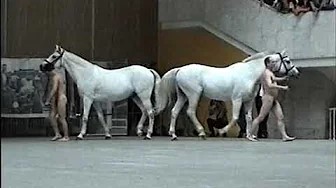
Originally performed in August 1998 as “The Return of the Horse to the Riding School” in the Manège – Saint Petersburg’s Central Exhibition Hall, formerly the Imperial Riding School, during the Second Festival of Experimental Art and Performance.
Sculptures: The Dioskouri
Horses: Baikal and Pirat of Ekatherinehoff (Catherine Park)
with thanks to Larissa Skobkina, Oleg Janouchewski, Yaroslava Polskaya, Emmanuelle Waeckerly, Tim Gadaski, Vladimir Yaremenko-Tolstoy, Paul Granjon and The University of Wales Institute Cardiff
Homage to the Horses of St Petersburg – August 1998.
They can’t be rid of the hammer and sickle without knocking down the airport building. And now there are newly wedded couples hurrying towards the 1940-45 monument for a photograph and colossal dormitories in the distance, where the couples will live perhaps beneath their framed apotheoses. The plump lady who has met me steps off the bus and laden with bags I follow her down the deep escalator to the metro. Funnel like lights and no adverts, then an avenue of candelabra along the platform and a large tondo of Lenin at the end of it. We emerge onto the scruffy grandeur of Nevsky Prospect. Curving colonnades flank the dome of a great church on one side of this eight lane boulevard, while at the end of a canal another church sprouts onion domes in whirling ice-cream colours. Everything comes with columns attached, with added statuary too, and later the Neva glitters in front of me and the hoof of Peter the Great treads on a snake. Here more brides queue up to blush as their grooms pop corks and cameras click. It is leafy too. And the girls have fine long necks and buxom mothers. Three old ladies in tight knee-socks lean on their sticks as again we roar through the dark earth. Lovers bump each other’s foreheads on the long ride up or down from the open air. Here she straightens his lapel as she passes me. Angels encircle golden domes; naked youths restrain mettlesome equestrian marbles. These are the Dioskouri flanking the classical portico of the Imperial Manège, now the Central Exhibition Hall. Bride after bride arrives for her captured moment. Here and there revolutionaries have been executed and czars have been blown up with bombs. In the now excessively expensive Astoria, Yesenin committed suicide. Clapped out vehicles sport pink and yellow ribbons. Is this the season of weddings, or is everybody perpetually getting married in Saint Petersburg? Father Neva poses with one neatly cropped groom. As rivers go, he is portly and looks fairly affable in a genuine beard, a blue dressing-gown, a cardboard crown and rubber boots. But he sports a serious metal trident. Bouquets are left underneath Peter for luck. And the next day you fly away to the Black Sea. I drink meat soup, eat caviare blinis. Silver flowing river. Coach-loads of shirt-sleeved soldiers. Metal ladies overlook the prospect. Elegant lamps flank leafy walks where the cops relax on white wooden benches. Then two bombshells in black miniskirts and white blouses stroll past us and a combo strikes up under a lime tree: a drum-kit with fleshy neck and walrus moustache, an accordion with bushy eyebrows, cap turned wrong way round, together with a balding, rat-faced saxophone. They rattle away at John Coltrane as the bombshells bypass the horse-dung in the avenue across from the Manège.
Where we sleep at the end of some long metro line there is endless woodland. Silver-legged birches and motionless poplars. Cèpes and girolles are on sale in the markets. But out this far from the centre, I feel some lack of horse-power in myself, a sluggishness in the close mosquito heat. It is just no use expending any energy attempting to alter some authority. The city seems so grand on the face of it, so distant and so stately. And the tourist horses are dogs. They hang their heads, lank and skinny flanked. I count their ribs as they doze by the column with the high cross in the huge square behind the Hermitage. Then I sit for ages with the curator and get nowhere. To move from my seat to the door brings out a sweat. You pick up the phone as if buried in mud. The curator is a blank wall. The policewoman closes the entrance at five and throws out those inside at six. Tiny tired horses move like enslaved fleas as they tug their carriages across great squares the size of Steppes. Under parasols there’s only Pepsi by the Neva. The lingerie of Charme on the Nevsky is of course imported and expensive. Shall we sleep on the island? Shall we watch the bridges rise in moonlight? Ancient as modernism, the constructed tower’s reflection stagnates in the circular scum-sullied pool below it. Rubbish is dumped here, and great ambitious blocks made of dusty glass and cracked sheets of plastic have aged considerably more than Stalinist granite. Everyone has a husband or a wife – mostly from the west. Sometimes the husband is a removed film-star. The children speak beautiful English. Thank you. Where will I find my strong white horses? The Dioskouri and their prancing steeds represent a homage to the genitals. Breeding was good in the old days, or monstrous. Now there are shabby anoraks and cheap synthetic frocks and if you wear nylons you flaunt them. The mushrooms are like lovely loaves of bread. Brown as the crust of good bread, they lie on their sides like tops in cardboard boxes, offered for kopeks in markets close to the fringes of enormous forests. Here there are bunches of pungent dill and the purple leaves of lettuces as well as chives and spring onions. The plum tomatoes are dry and tasty. I slice cold meat off the bone. Good cheese. We inspect apartments with meandering corridors as in dreams, apartments high in the eaves of enormous buildings, their stairwells and lift shafts out of Piranesi. Then there are roads so wide here that you can’t see across to the other side. So have another vodka. Downed in one. And another. Downed. You wake to the whir of the fridge, the whine of the mosquito, the wail of the train with a long way to go, the cough of some dilapidated bus. If the mosquitoes let you sleep, you sleep to the forest’s inhalation.
A night later there is the glitter of the moon on the sea. We are high in a tower above it with an owl skimming from the bannister to the rail below the ceiling. The owl lives under the stairs, and flies around the room fairly anxiously after the detonation of a cork. We drink interminable toasts. The woman from Culture TV is a pig. Only she’s more loathsome than a pig, and far more plump, and she keeps asking her idiot sickly questions very softly. What if a child had seen you naked and become frightened? She starts singing old Russian songs. These she sings weakly, before trying to sleep with Emmanuelle, stroking her hair – so pudgy, drunk and nasty. Peter from the Saint Petersburg Times is forced to translate her journalist queries and of course resents it. All this in the luxurious penthouse of the famous Oleg, hippie and painter, with a lovely wife, his fourth. Oleg is pint-sized, very nice, and trying to be nice to the frump from TV. Raw fish: slices of sturgeon, tench and trout. Gherkins to die for. I maintain each borscht is like a fingerprint – unique to the household or to the restaurant that creates it.
Then a taxi takes us to Catherine’s park – Dimitry who will run with me, and Yaroslava, my Siberian friend. We go to inspect the horses she has found for me. Baikal and Pirat. Baikal like the lake larger than England somewhere in Siberia. These are fine white creatures, and quite as Greek as the statuary they will emulate. We trot them round and round, Dimitry and me, then wind them through the trees. Baikal flexes his hog-maned neck. Dimitri needs to be more assertive with Pirat. There’s a long wait for a bus on the way back on a broad street by a canal. At last we reach the Moscow gate – a chariot surmounted monument to some triumph over Napoleon painted green and quite like Marble Arch. After this we sail down to the fantastic Marxist Marbles underground, paean to the Soviets, sculpted airmen and sailors on every column and on into a kaleidoscope of fine canals still sunlit at nine, palaces of the Stroganovs, Molotovs and Yusupovs. Saint Petersburg as opulent as Venice. And I step into the Idiot Cafe, close to Dostoevsky’s haunts, for beer and honeyed cheesecake with diminutive Dimitri and extended Yaroslava. But the next day it is Dimitry who asks whether he will get paid as well as the horses. Not as well. He won’t get paid at all. I feel that he should be doing this for the glory of it. Isn’t he an artist?
Black clouds sail like furies over turbulent canals. After five, as an artist tries to push past her, our female Cerberous reaches for her gun. None of the authorities ranked above the curator want my horse performance to go on. No shoes, no dung, no genitals. Red and white chimneys strangle the onion spires. And the water comes cascading down some lift-shaft, pouring over the lights, turning the stairs into waterfalls. It smells of mold and piss. A gross misconception about money surely sapped the vigour of this society – that and the colossal extravagence of the arms race whose radioactive junk now rots worse than corrosively in the Arctic. Slowly the poison the whole blood-stream fills. The waste remains, the waste remains and kills. And the sea here, even the sea, is dying since they built the dam which fucks up their ecology. We too, we too will be fucked up, fucked up by our very triumph over this ourness. An ourness which sought the otherthrow of otherness and lost. Nowadays in the deep, deepest shafts in the world – our engineers were proud men – we listen to audio advertisments as we ride the escalators. Commercials are blared over a system which used to encourage an identification with the mass, its exhortations urging on a triumph over all private ownership. Yet the city is a testament to privacy on a lavish scale. Palaces rub shoulders with proud horses. And now the downpour forces me into MacDonalds. The palaces crumble. Everything rots. Slime slicks the windfall dropped from the rotten bough of communal ourness. Maggot infested, its bruises darkening and expanding; its centre corrupt, hollowing, hollowing out into nothingness. The water floods the lights in trams. Everything short-circuits. And now they come to remove the electricity in our exhibition hall. Nobody has paid the bill. Collective spirits lie around in big dirty puddles, puddles of our melancholia, as we tramp across the city lugging our possessions along with us. Today a beefeater stands outside the BHS instead of the slender redcoat in the busby. Come on, Barbie, let’s go party. In my superior way, I complete my press-ups. Dr Finlay! Only the horses in Catherine’s park have pride. And a Garfield clock. The naked poets mooch off to make love in their Dacha. They live only for pleasure. 101 Dalmatians. Others celebrate their traditional lethargy. Ringo Starr and Hugo Boss. Only the white horses and the white busts of the Romans in the Hermitage exhibit any arrogance, firmness of jaw, virility. Leonardo da Vinci. Leonardo di Caprio. Now we are in the No-Man’s-Land of neitherness. Neither the other nor ourness. Nivea Cream. Nowhere to go-ness. Nothing to do-ness. Nicholas II. This is the dank and lugubrious end to the white nights. The summer rains turning autumnal. The year straining towards October. God knows what hell this place must be in winter. Only the churches are leaved with gold – and that gives me no comfort. Ineluctably the world has turned, and now we are rolling backwards. Only consider the freshness of the sunset, or the tartly perrenial qualities of the caviar. Or sour cream. Or pungent dill. Or crisp parsley. I lie in bed imagining the bulbous erections of mushrooms, girls with lots of legs, boys built like tanks or willow wands.
Pushkin is celebrated at one underground station while Lenin is celebrated at another. In this apartment run by the mosquitoes the ripped wallpaper is an abstraction by Tatlin. You need to be philosophical to live here but I am not a philosopher. I notice when my feet swell in my shoes, or when my shoulder aches beneath the bag-strap. And I can’t help but lie awake waiting for the next vicious attack, cannot simply ignore it and make instead castles of dreamy thought modulated by the plashing of the rain in the afternoon or evening. Oh I would like to have more lovely thoughts. But everything peels and cracks, grows sodden, stings. An acrid stench sweeps out of the tunnel and everyone gags on it, tears in their eyes. Fungus spreads on warped working surfaces. They have sunk a nuclear sub in the water supply. And I am more interested in the muscular movements of my horses now than in the furry hollows of not-so-available females. Their softnesses are for another time. I have only myself to blame for being alone. The police know all about my intentions and intend to suppress them. They disapprove of energy since this is opposed to authority. The gods we know from the Hermitage prefer their clouds to the world below them which is a world where cabs crash heavily through pot-holes and the clouds become huge puddles on the ground. Pass me the revolver. It is hopeless. The country is in a mess but would you like a cognac? No, Vladimir, I would not like a cognac. Not at eleven o’clock in the morning. Me, I would appreciate a fierce, full-blooded attack of Soviet athleticism – proud chests, parallel faces, firm jaws and noses. These are in disgrace – relegated to the back of the hut behind the manure heap at the stables – a bold young sailor and a vibrant female diver. No such celebration of simple vigour is possible now. And Lenin’s mummified corpse cannot be permitted not to rot just for the sake of some jaundiced pensioners. Put it in the ground. Long live the dollar, the mark and the pound. And yet my nostrilled Baikal paws the ground. The sailor and the strong young diver share the yard with several broken troikas. Everyone is tired, exhausted by incompetence, intransigence. No one knows quite what to do, but a vet says well we need autocracy, it’s just how things work around here. The Russian soul is stimulated by terror. Terror, not vodka, keeps the head clear. Pray for this in the Church of the Saviour of the Blood. Think of the bust of Philip the Arab and hope for such a leader. Who was Alexander Herzen? How was the anti-corrosion conference? Where can I buy me a Fabergé egg?
The water of the canals is black, for storm clouds seep into them and dark thoughts are entertained above them. The bridges lift at night to let in boats. No, Emmanuelle, we are neither nomads nor homeless. We are tourists. And now there are vague affirmations – my plans may well succeed – if anyone remembers what they are. We are welcomed into a salon filled with beds, built-in sleeping platforms, and one huge bed with wall to wall mirrors creating an infinity of huge beds at either end of it, some exhausted boy asleep in each of them. The owner is pudgy; friendly yet phlegmatic in his bare feet. I am making here a centre of mystical sex. He plays video tapes to illustrate this: body-painting done to fake flamenco. The wallpaper is loud glitz, imposing on the eyes. Water-colours copulate on this. We leave him to his shiftless, tacky tangos and Yaroslava rescues me from the drab mosquito appartment on the island. No more rusted baths, flushless loos and crockless kitchens. She lives with her mother in a leafy suburb. These monumental yellow blocks, Egyptian in scale, are Joseph Stalin’s palaces for the people. They loom above the trees in sunlight. Under the trees there are puddles and slides, and girls sitting on the tops of the slides with long legs in the evening smoking lights. Birds float down, flap up. I’ve a nice clean bathroom to myself, a bedroom with a polished floor of parquet, a Russian Blue called Gosha, few mosquitoes and a cooked breakfast. Masha used to own a timber factory. Cat goes nuts now – heavily well fed.
Back in Saint Petersburg proper the black water cannot reflect the flushed sky an hour before sunset, the heavy flotilla of clouds. These deep canals run coldly beneath tall spires of gold; each street made up of truly massive palaces since Peter the Great gave noblemen plots of land by the Neva provided they built palaces of stone there. I am sitting with the curator and a lovely arse comes in now – Anna. Black culottes, black boots, black hair and glasses. Presumably with two hundred servants you had no problem making an arrangement, and no call to protect yourself. On Nevsky there are low-ceilinged shops with second-hand books, good prints. They still use the abacus to calculate. I buy two etchings by Alfred Kubin. Very cheap. I walk and walk. Back in the exhibition hall our nudities are disapproved. Especially the nudity of statuesque Emmanuelle performing body cubism high on the tower across from the tower where I perform. The artists at the Manège come into conflict with each other. Sounds clash with sounds. Performances impinge on performances. Still there’s applause for my workshops and collaborations. Not for naked cubism. But there’s lovely cold Ockroshka soup and red caviare in the Idiot where Emmanuelle and I commiserate. One afternoon later, we go up onto the roofs to inhale the sight of Saint Issak’s cathedral. Metal roofs, painted with red lead. And Russian hippies among metal chimneys rolling up on one side of the ridge while a single worker renovates the other incline. Rain forces us down to meet the fashionable Nadia who won’t go up there and ruin her slacks. She is sheltering in an arched gateway. We troop into a tall, dark building, take the lift up several flights, then wander past an old woman who nods some affirmation as we head down her gloomy corridor, then turn corners in darkness. Nervous laughs. And faint music we trace finally to a small cafe deep in the heart of this building. Here Nadia presides, regal as Catherine, aimiable in the grand style, despite the shabby ambience. We speak in French as Catherine would have spoken. She’s more French than Emmanuelle, yet entirely, absolutely Russe. I remark that Dostoievski would have eaten here, not at the expensive, obvious Idiot. Nadia considers it ill-bred of me to have alternated beds with E in the suburbs. No sense of gallantry. But who needs it, says E, we’re working artists. No one who didn’t know could become aware of this convivial corner’s existence hidden in such a monolith. Is it a sign that winter drives everyone into the interior here? And is the town thus honeycombed with pleasures? Does each grim facade, its loggias held up by griffons or river-gods, darkly secrete within its labyrinths barbers and massage parlours, galleries and boutiques? Yes, and miniature theatres, and indeed treacherous cellars as in the Yusupov Palace. This is the palace where Rasputin was murdered and murdered and murdered again. It floats above a canal close to the Marinsky. The prince had his own small theatre modelled on the Marinsky. It’s tiny, and quite lovely. Here I could declaim the Silvae of Statius. Declaim in a toga worn over a business suit, and thus entertain a small audience seated in resplendent gold and red plush velvet. Meanwhile thousands more could fit into the massive ballroom where the vast candelabra are of papier maché so as not to bring down the lofty ceilings as they did after the reconstruction of the Winter Palace, minutes after the Czar had inspected it. Here in the Yusupov there’s a brilliant private hammam next to the library. They must have read books in the bath. Yusupov was proud of his Moorish ancestry as indeed was Pushkin. The sybaritic bedroom suites are closed for renovations. Rasputin built like a bear was something that smelled like a goat, a figure out of the grotesque carnival of folk myth. This was his fecundity, his power, which he wielded over effete haemophiliac scions. Gnarled logs covered in fungi jerk their bark-covered knees out of the ground in neighbouring forests. It is as if Rasputin came in answer to Peter’s decree concerning monsters.
Behind prestigious street-lamps the clouds roll past the long facade of the Hermitage, a sky webbed by tramlines. I watch it from beneath a red parasol in a windy cafe located across the Neva. Now a coach called Skorpion obscures the view and arrows flap in the sky. The green gods lounge on the roofs, sharing their realm with urns and chimneys. The Hermitage is green and white and gold, the clouds are grey and white, and the sky you glimpse behind the clouds is blue. Inside the majestic building, a mechanical peacock flexes its neck then fans its actual feathers. It eyes the mechanical cock askance, likewise the automated owl. Everything is of gold and there’s a fascination with curiosities: paintings made out of tiny bits of mosaic. The marble busts of Moors here and in the Yusupov constitute the only blacks I’ve seen. Also a black attendant in a Cuyp. I must do something with Lot and his daughters – as has Francois de Troy and others – it’s a theme twinned with Susannah and the elders. Thorthaldsen, the academic classicist, looks better here, and more austere than Canova. I like Santerre’s young woman in a veil. Did Guillaume Cousteau sculpt the fine horses held by boys on the Anichkov Bridge over the Fontanka River? I think so. Falconet’s naughty sculpture of Flora is the only girl with a cunt in the entire Hermitage. This is my second visit and I’m onto the paintings having spent hours before among the Romans. Accurate portrait busts of Caracalla, Philip the Arab, Domitia. And I sensed an intense interest in collecting works emulating the sinewy Lyssipos, who Statius loved, although there are none left now, and precious few in the time of Statius – and later there were only copies and supposed versions by Renaissance Italians. Lyssipos was Alexander the Great’s favourite sculptor. He influenced Pollaiuolo, although there were none left, and became the favourite sculptor of Peter the Great who was striving to emulate Alexander, although there were still none to be found and what his style was could only be gleaned from emulations, copies, versions. It is the thought that counts. Most of the boys are shielded by fig-leaves. But Boilly’s women playing billiards are here, and there are striking works by Perroneau. Of course the Claudes are wonderful, and the Dutch masters, Gerrart Dou, Metsu etcetera, not to mention Breughel and the best Cezannes and Matisses but still, still it’s the curios which prevail as the city’s epitome: Peter issuing his decree, and filling his cabinet of curiosities with freaks, aberrations, monstrosities. He pulled people’s teeth out and kept them did Peter the Great. And he said, All prodigies and freaks of nature must be sent to me, for these are not the Devil’s work, nor due to the hexes of some witch, but the natural product of an expectant mother’s ill-feelings towards her progeny.
This is a notion Cronenburg might appreciate. Next to Peter’s smithy tools, behind the hand imprint and death mask of the Chinese giant but beyond the branch which grows back into being a trunk, we find the heart and skeleton of another giant, no, it’s not Rasputin, who should really be included here, but the giant Bourgois, and then strange toads and lizards. Laevenhoek the microscopist noticed that a dash of cochineal in the preservative made everything more life-like – placentae, arteries, blood vessels. This explains the vivacity of pickled specimens with glass eyes, ruddy cheeks and sanguine brains. Then we have mummified Siamese twins and Siamese twins in formaldehyde, multiple foetuses, skulls with holes in craniums, midget frames, hare lips, flat heads, obscure cysts, double heads, faces with four eyes, legs with two feet each, double headed calves, all of these the fetishes of Peter, kept along with the fetishes found by other, worthier ethnographers. And there are still some scalps here, unlike New York’s Museum of the American Indian in Harlem which thinks it politically incorrect to display them. They hang here in the Kunst Kamera, across the Neva from the Hermitage, along with jews’ harps, rams’ horns, mbiras, coins, sextants and compasses. Here we find alchemical dioramas, immense magnifying glasses, and though he could examine them poor Laevenhoek confused sperm with bacteria. Boil them up together in alembics, shake them in flasks. Here are revolving drums of glass, lightning conductors, sundials – all the sad accoutrements of Durer’s Melancholia. Let us consider our horoscopes and horrors under the microscope. But the foetuses all wear nice little hats of lace, and the isolated arms and the little feet born without bodies have very fine cuffs and sit happily cushioned on their placentas. Cunts without legs, eyeless, noseless, headless, armless concoctions of conceived matter. And in the engravings of the time, pathetic homunculus skeletons dry their tears on their placenta hankies. Outside the building a sweet little thing, all complete in a shortish polka-dot dress, hangs about by the souvenir stall with her granny. Less than a nymphette as yet, nearly plump, but not quite. Honey-coloured skin, lovely calves and above her knees the delicious start of her thighs. You can see what Nabokov was getting at.
Feeling a bit like Balthus must have felt when he saw such a sight, I go by tube and taxi-bus now to a boulevard of tall residential blocks stretching to infinity in the sunset. Every Westerner’s image of Communist Russia. And the next day my horses have their shoes removed outside the Manège by a farrier, and Dimitry and I strip out of our clothes before leading these beauties into the riding-school which has become the exhibition hall. In the days of the czars, the Cossacks would gallop the length of it, halting an inch away from the nose of their ruler. Now the live figures echo the statues outside it. And the horses dung in the hall symmetrically and simultaneously for the first time since before the revolution. We trot them in circles on the marble floor and then take them out of the building and around it and up the ramps onto the floor below the portico, naked once more and walking the horses. Gravely we circle the columns in symmetry. Ghosts of czars and horses nod approval. There’s applause. And I must say I’m pleased with these horses. Ultimately everyone including the police intended this sublime event to happen. The curator wrote a letter and the space was cleared and the clashing sounds were turned off so that the hooves of the horses could appropriate their building as was proper. The pair of them have proved I think that the world can be a better place, for no one got in the way and nothing was forbidden at the last minute. Our nudities stopped the traffic. We were at one with ancient Greece and Russia. Ha ha ha. But Russia was truly at one with her horses. Everyone was pleased with them. Sometimes at work in the world are beneficent forces.
I have read that Haringey Council has voted to triple the cost of parking, as well as ending daily permits so that only hourly ones will be available.
This will completely wipe me out. I will be finished. That would be the end of cheap rehearsal possibilities at my space and make visiting me by car absolutely impossible.
This is completely unacceptable. When I first moved here there was a modest restriction, and always free parking on weekends. Now we rarely get a weekend without a match – on which days permits must be used – so the entire situation will have changed radically if this tripling of the cost of permits is implemented – especially considering it is still always easily possible to park on Holcombe Road. But in addition I am appalled at what this will mean for any old person or anyone who requires regular health or family visits in Haringey. There is also a real paucity of public parking facilities in our area. If there was a system whereby residents could be eligible for a single permit that they could give to a single visitor, the situation would be somewhat alleviated. I do not understand why a person who is a resident can park for free while someone without a car is penalised if they have a visitor.
This is an absolutely crucial issue for me. And even if I had to give hourly permits at the current price, I would be wiped out. Lessons or sessions of any health or dance variety always exceed an exact hour, so I would always need at least two hourly permits per visitor. An impossible expense. I would certainly be unable to pay my Council tax and pay for permits. Haringey would no longer be somewhere I could live. But also the value of my home would be affected as I cannot imagine anyone wishing to move in to an area with such draconian parking. It is especially galling that in the west of the borough – where affluent people live who have the power to sway the decisions of things like councils, the hours when permits are required are much shorter.
All this smacks of an illegal decision to generate income from parking permits, and it is also reflective of the damage the new stadium at White Hart Lane has done to our entire community and their power to get decisions in their favour in the borough. You do realise that a photo of the stadium as a toilet seat is circulating among residents?
There is a lot of anger already about the way residents in the poorest areas are being treated by the Council. This will only exacerbate an already potentially explosive atmosphere. We have had riots before.
I urge you to do all you can to warn the Council off implementing this foolhardy and unfair decision.
Sincerely
Anthony Howell
And his reply dismisses my letter in three paras –
Thank you for your email, I really appreciate you taking the time to get in touch. This is an automatic reply to confirm that your email has been received.
Please read the following points carefully:
If your query involves Haringey Council services e.g. housing, parking, bin collection etc. please contact your local ward councillors who can raise the issue with Haringey Council. You can find the contact details for your local councillors by visiting https://www.haringey.gov.uk/local-democracy/councillors-and-mps/find-my-ward and entering your postcode.
and blah blah blah etc.
Too busy supporting genocide and fucking up the world to do anything about this scandal in his constituency.
On the Heyzine link there is a contents page – p 5. All the pages are numbered and so each book has a page number. At the bottom of the page is a horizontal scroll bar – use this to get to any specific page.
On the Heyzine page, I suggest turning off the sound and enlarging the text. Pages can be turned by clicking on the arrow at the foot of the page to the right, while clicking to the left turns the pages the other way.
I’m very grateful to the Fortnightly for being able to publish extracts from each book as each clean draft gets completed, and of course I am still at work, re-reading previous books, improving what I have already got down as what seems my first clean draft of any book appears pretty rough-hewn after a while.
I am also pleased that the Heyzine book has now attracted over 700 readers. So I’m sending out a big thank you to these readers. It is definitely encouraging to know that I am being accompanied as I continue my project.
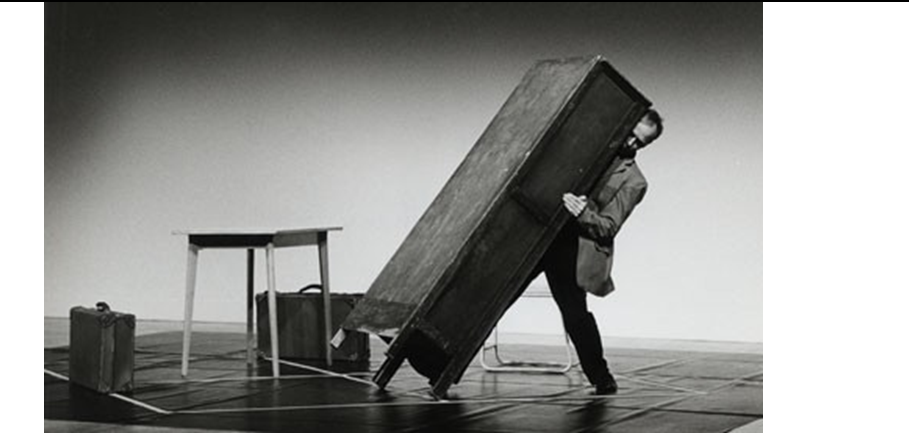
Table Moves, Birmingham Art Gallery, 1985 – Photograph: Judith Ahern
Stewart Lee
The Observer, Sunday 17 October 2010
‘I was 16,’ says Stewart Lee, ‘and susceptible.’
It was my schoolfriend Simon Smith, perpetually ahead of the curve, who made me see the then-unknown REM catch fire at a small student gig in 1984. So when Simon suggested we see some “live art” by a man called Anthony Howell, I said I’d go. I was 16 and susceptible.
That night, we sat on plastic chairs in a semi-circle in the gallery cafe, around two suitcases, a small table and a wardrobe. A compact little man came out and moved the suitcases and the table around in inscrutable silence for 40 minutes. Then he climbed into the wardrobe and it fell over. I was in a hot flush of embarrassed hysteria throughout, terrified I would wet my pants and shriek with laughter, puncturing the mood for the two dozen spectators.
So this was the pretentious shit those middle- classGuardian-reading wankers I learned about in my parents’ Daily Mail were watching?
I composed myself for the second half. Howell came out again, with his smug and insolent face, now lit only by oil lamps, and clambered noiselessly about the same furniture holding two pails of water.
Howell had his impenetrably important work to do. We had been invited to watch. And this time I was spellbound, amused, moved to tears even, and converted, though into what I didn’t really know.
I never saw Anthony Howell perform again, but his passable poetry washes up in secondhand bookshops and he appears to have made a sideways move into tango. Simon Smith, meanwhile, went on to head eBay Australia. I remain eternally grateful to him for that night in Birmingham. There’s no end of punters posting online their loathing of my work, especially when they feel out of step with the crowd. “Everyone around me was loving it,” wrote one this summer, “and I hated his guts.”
I know how they feel. I suspect that if I had seen my current act as a younger man, its passive-aggressive monotony and veiled performance art strategies might have left me equally irritated. But I take some comfort in the fact that Table Moves, which I remember with great fondness, also appeared to me, at first, to be intolerable.
Introducing a new Heyzine online book: here is the link
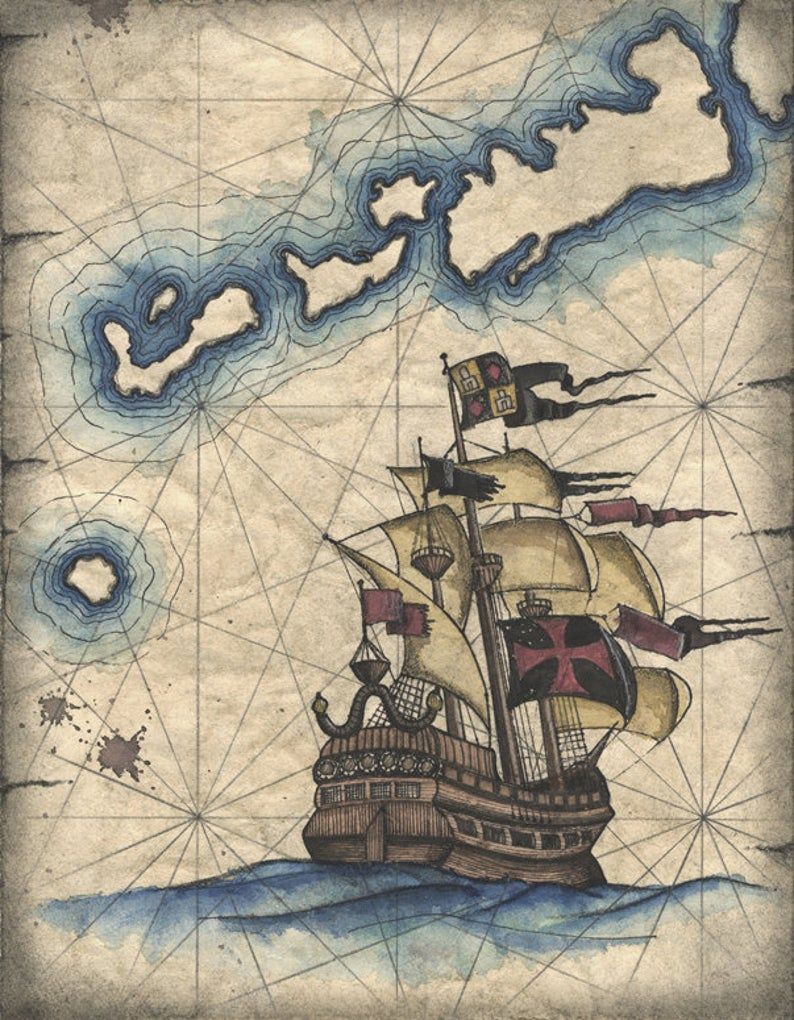
Major Stede Bonnet was an authentic pirate of the Caribbean. However, he was also a landowner and gentleman of Barbados, and the only pirate to have purchased his own ship. Historians have always been perplexed by the enigma he presents.
Drawing inspiration from documents written at the time, the author has created a complex figure whose character emerges through the letters gathered together by the Governor of Charleston, Carolina, at the time of Bonnet’s controversial trial. The letters lead us deep into the turbulence of his times, a Caribbean turmoil, with an unsettled Europe as its background –peopled by Bonnet’s confederates such as the notorious Captain Teach – and Israel Hands – a real pirate whose name was pilfered by Stevenson for Treasure Island – along with many others.
We also make acquaintance with his wife through her letters, culled from a separate archive, which deal with his friends and his enemies among the corrupt “plantocracy” of Barbados. The result is an engrossing tale, set against a backdrop of skulduggery where the machinations of a privileged aristocracy are always equal to the depredations of the “brethren of the coast”.
Major Stede Bonnet is my pirate novel, written more than twenty years ago. Click on the link to read it for free. I suggest turning off the sound and expanding the text. Click on the arrow in the lower right hand corner to turn the pages. You soon get the hang of it.











 anthonyhowelljournal