Well, as for Srebenica, that Ursula von der Liar is begging us to remember, I don’t buy it. Let’s remember a few other events. The bombing of the Serbian broadcasting house, exterminating all Serb journalists. The expected prisoner exchange, when thousands of Serbian soldiers were supposed to be returned, but who never appeared. The ethnic cleansing of Serbs from contested areas of Yugoslavia, when children had to drive the trucks because there were no men. And remember that Srebenica was entirely reported by pro-Western journalists, and that Yugoslavia had the largest standing army in Europe (after the fall of the Soviet Union) and that Yugoslavia was a wonderfully successful communist country, and that these facts made it the target of the CIA and MI6. This was a colour revolution everyone bought into, long before we understood the role of the deep state in global affairs. The whole period should be re-examined, in the light of our contemporary consciousness of what happened to Libya, what happened to Iraq, what has just happened to Syria. Back then we were all far more naive and loved blowing our little whistles. And right now poor old Serbia is going through it again. Let’s explore the cracks in the narrative.
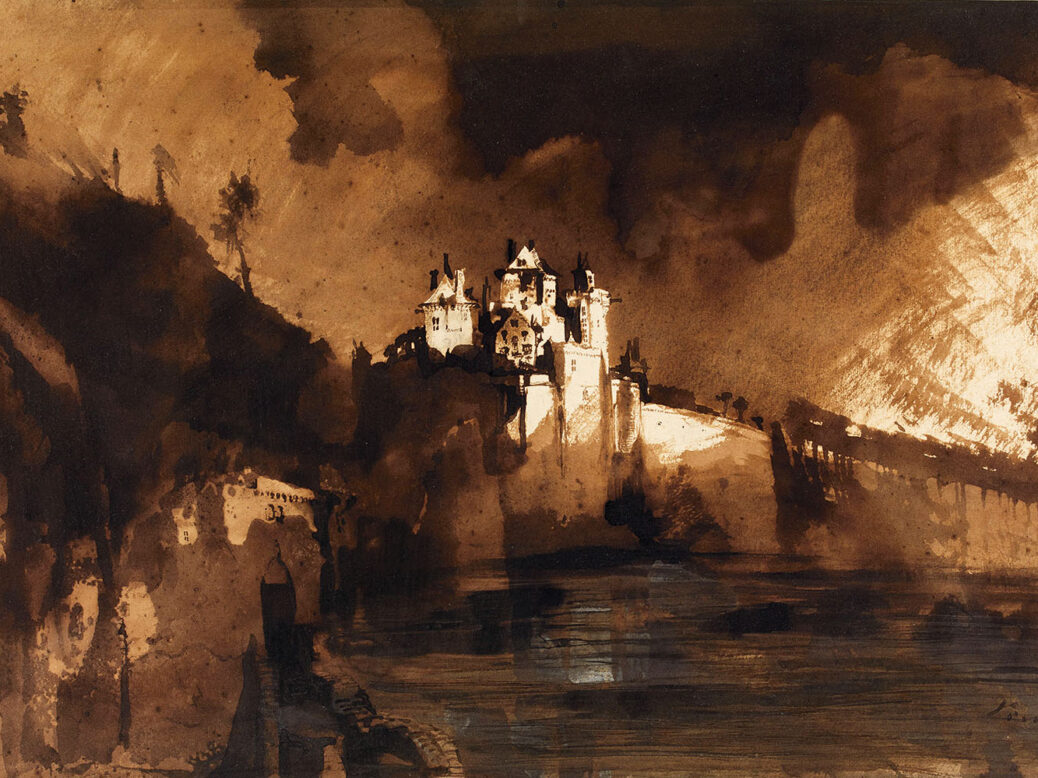
I am fascinated by the art of Victor Hugo, recently seen at the RA. Here is a link to my essay on his work and that of Alexander Cozens. Modern Art is Over: Embrace Deep Art
There is also an article about his work in the New Statesman.
I don’t see Hugo’s work as “modern art”. The first use I can find of the word “modern”, applied to a creative act, is George Meredith’s brilliant sequence of sonnets – “Modern Love”.
This is a sequence of fifty 16-line sonnets about the failure of a marriage, an episodic verse narrative that has been described as “a novella in verse”. It first appeared in 1862. I get the sense that it was Meredith’s intention to bring love “up to date”. This notion has persisted. Modern art is up to date – it’s the latest thing, and it always has been. Neither Cozens nor Hugo seem to have been interested in being up to date. If anything their work is nostalgic, harking back to a more gothic age, a romantic notion that had already faded.
The trouble is, today, being up to date is in itself dated. Modern art has simply come to mean trendy art; more aligned to the world of fashion than to artistic aspiration. Today, genuine originality will often seem unfashionable, out on its own bizarre limb.
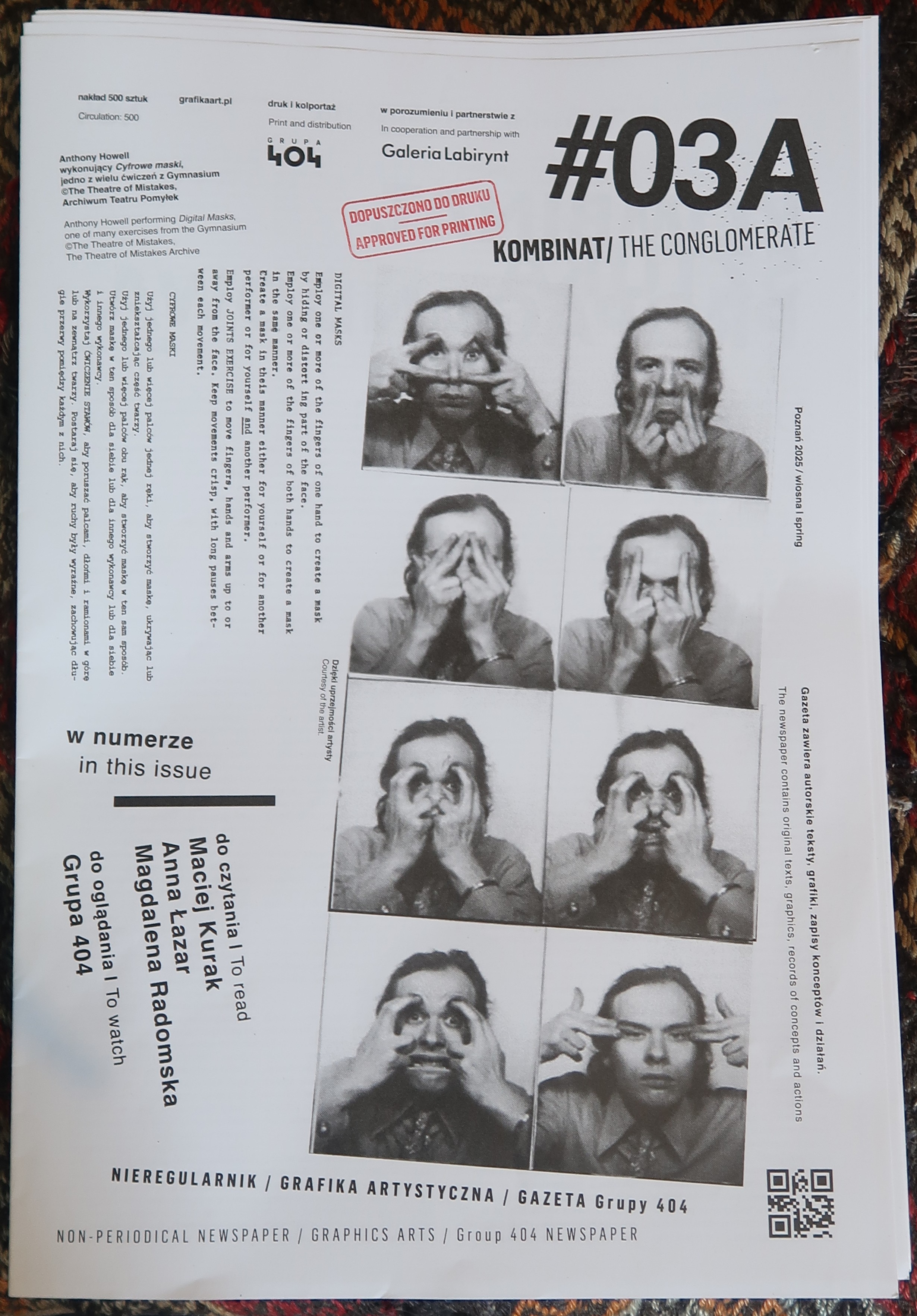
Very pleased to see this work by The Theatre of Mistakes on the front cover of Gazeta Grupy 404 – an arts magazine from Poznan in Poland.
Design by Maciej Koziowski.
It features a brilliant article on the relationship of art and propaganda, as well as poetry and other great pieces of writing, much of it in English as well as in Polish.
Why Runiad as the title of the epic poem I have just completed?
Rune is a word which may be translated as ‘a secret, a mystery, a rumour or a whisper’. It can also suggest an enigmatic or incantatory line of verse. I chose Runiad as a contrast to the term “Ruliad” – which is a mathematical term defined as the sum of all possible theorems. My Runiad is therefore intended as an imaginary sum, the sum of all possible rumours, spells and charms. I wrote the poem over the years 2023 to 2025. It traces certain of my own experiences during that time, as well as the gossip heard, the rumours circulating during that time, the so-called conspiracy theories (as opposed to provable theorems).
When I began it, I had no further clue as to what its content might be. I knew that there would be twenty-four books, each twenty-three pages long, with three seven-line verses per page (except for the last page, which could have between one to three verses on it). This would bring it out to being the same length as the Odyssey. It was clear that I needed to know no more than this structure, to have no preconceived notion as to the poem’s content and to only “half-know” what it was I was writing. I wanted the poem to discover its content as it was being written. In a sense I wrote it as if I were a ‘seer’, or, in the sense used by William Burroughs, an antenna; picking up the lines as if they were vibrations or airwaves.
Shiva, the god of balance, was a guiding force – so I tried to balance art with science, legend with fact, love with war, dryness with juiciness, journalism with conjecture. It is intended to be read aloud, and to be read on the page.
The complete poem can be found by clicking on this Heyzine link.
It can be read from start to finish, or it can be read by choosing a book – or even a page – at random. John Ashbery referred to a system of prognostication called “Sortes Virgilae” – by which a personal reading was obtained by opening a page of Virgil’s Aeniad at random. The same method could be applied to the Runiad.
This is one of the best poem/films I have come across. It often uses a constant moving image (reeds moving, waves breaking etc) which I have always found the ideal backdrop for focusing on the language, and Kristian Evans – who I have never heard of before – seems to me an excellent poet.
The final draft of my epic poem the Runiad is now completed. Click on the link to read Books 1 to 24:
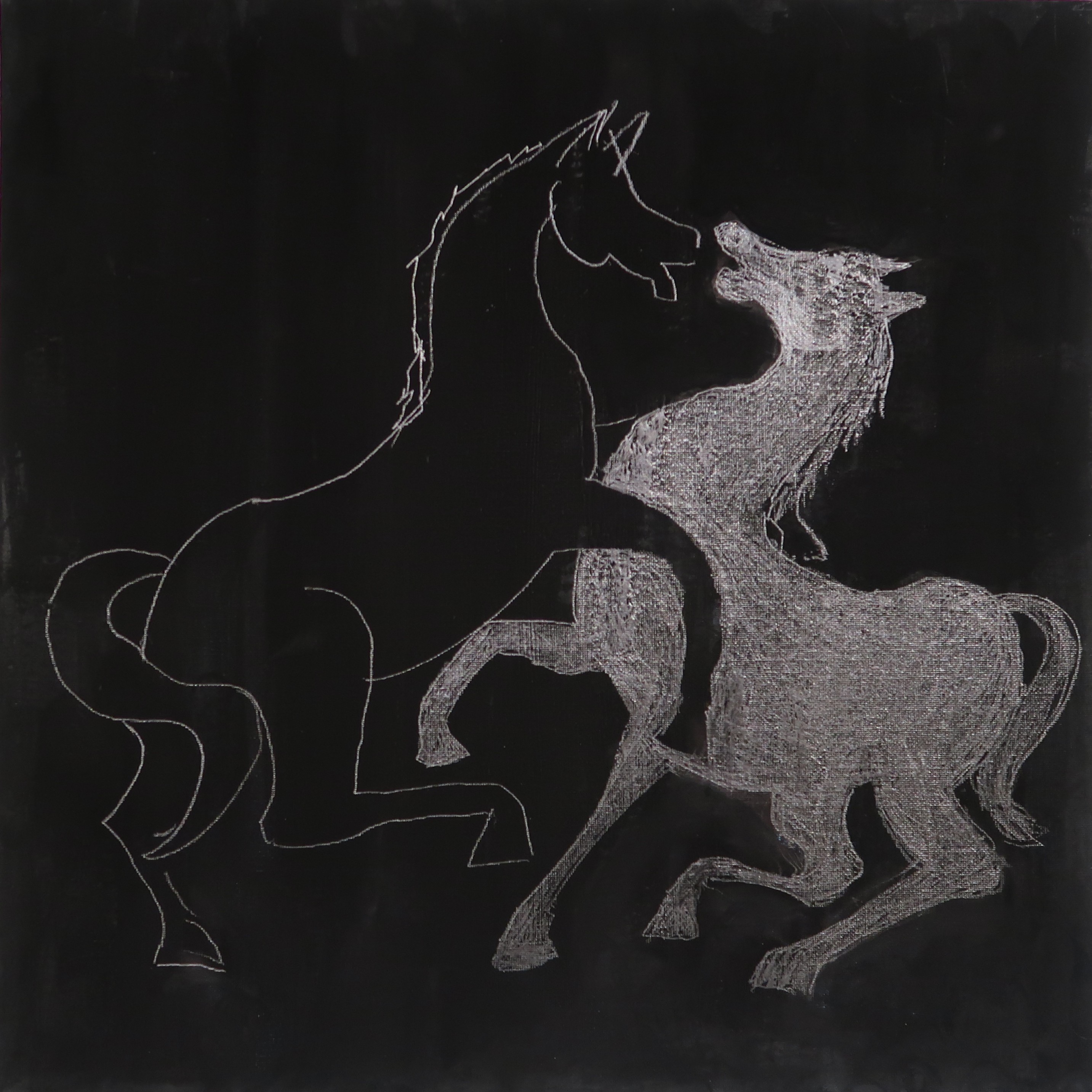
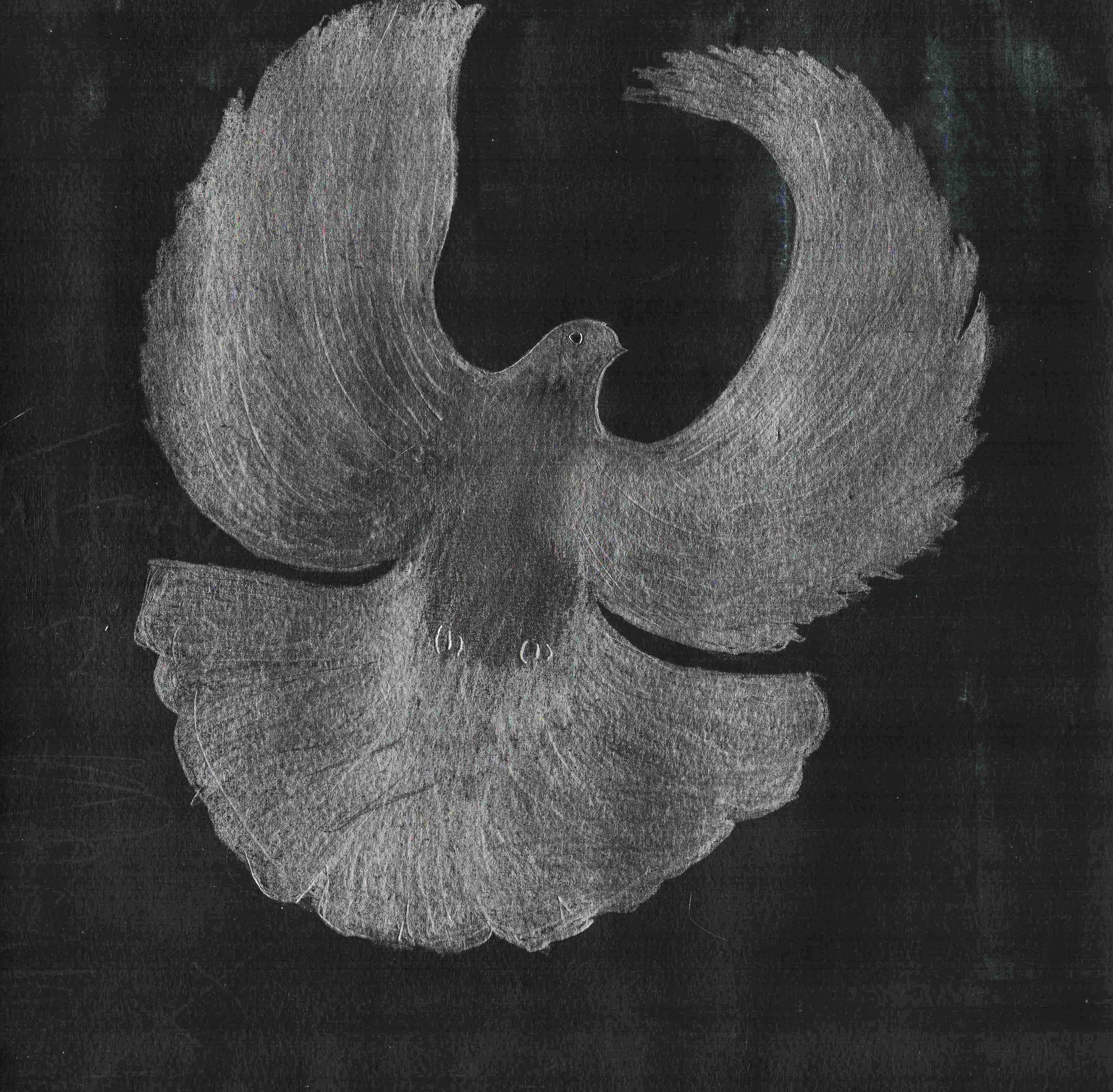
This link above opens the final version with my own illustrations. Since they are done with graphite on a black ground, these illustrations will be difficult to reproduce in book form.
Thank you to the 2000 readers who have accompanied me as I have been writing it.
I suggest expanding the image and turning off the sound. Click the bottom corner of the page to turn the pages, and the bar below the book allows you to scroll to whichever book you want to read. Contents pages at the beginning tell you the page number of each book.
It’s great to read aloud, and I welcome invitations to come and read from it. Peter Jay is designing a printed version which will be available in 2026.